🔔 Read us on Telegram — don’t miss the latest automotive news → t.me/motorhub_en
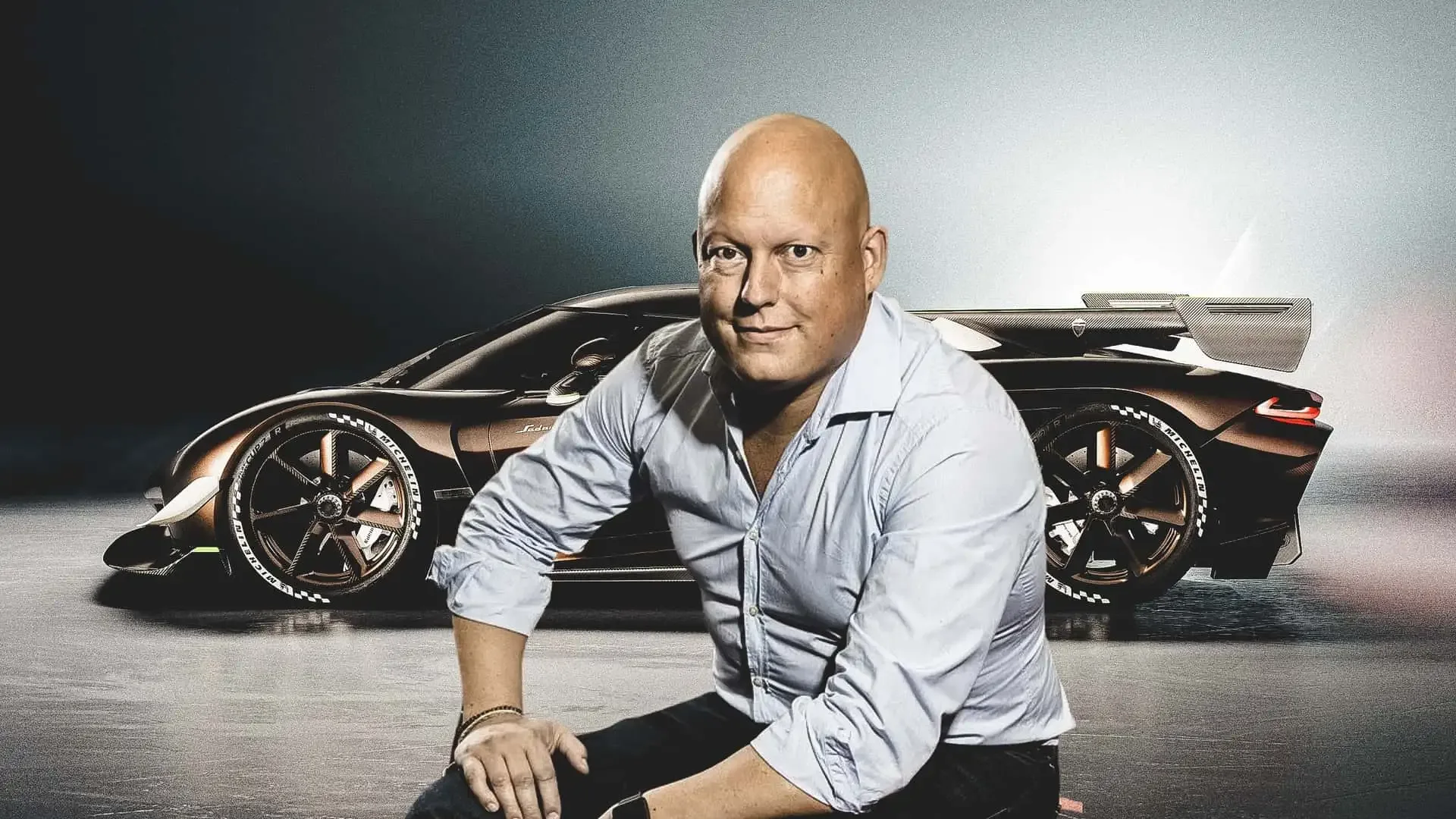
Christian von Koenigsegg, founder and CEO of Koenigsegg, has made it clear: the Swedish hypercar maker isn’t pivoting to electric vehicles anytime soon. Speaking during a tour of the company’s Ängelholm factory for the unveiling of the Sadair’s Spear Lego project, von Koenigsegg dismissed the idea of a full EV hypercar as the right path for Koenigsegg’s future. Instead, the brand continues to build cars powered by internal combustion engines or hybrid systems, a strategy that shows no signs of changing in the near term. The decision isn’t rooted in a lack of technical capability—Koenigsegg has the know-how to build an electric hypercar if it chose to—but rather in a deep conviction about what defines the hypercar experience. “If you’d asked me 10 years ago, I probably would have thought that by 2026 we’d already have an electric Koenigsegg,” von Koenigsegg told us. Back then, he, like much of the industry, saw electrification as the inevitable endpoint for high-performance cars. But his perspective has shifted. For von Koenigsegg, the internal combustion engine is more than just a power source; it’s the heart of the driving experience. The vibration, sound, mechanical response, and character of a combustion engine create a connection between driver and machine that he believes no EV can replicate. “It never becomes an animal,” he said, describing how an EV, no matter how fast or advanced, operates on a different emotional plane.
Koenigsegg’s hypercars aren’t designed for daily commuting—they’re engineered for sensations, engineering, and an almost emotional bond. Features like air conditioning and infotainment are secondary to the core experience. “The real value of a hypercar is elsewhere,” von Koenigsegg emphasized. The environmental debate around hypercars also factors into Koenigsegg’s stance. He argues that the typical comparison between EVs and combustion engines doesn’t apply to hypercars, which are driven infrequently—often spending years in collectors’ garages. A large battery’s environmental cost takes tens of thousands of miles to offset, and for hypercars, that break-even point may never arrive. Von Koenigsegg estimates that a car would need to be driven around 50,000 miles for a small-battery or no-battery option to be more environmentally friendly than a pure EV. With renewable or biofuels, that threshold rises to about 87,000 miles. “Not everyone agrees with that interpretation, but it helps explain the logic behind the company’s technical choices.” Koenigsegg hasn’t ignored electrification entirely. The company explored a fully electric platform but ultimately concluded that a hybrid setup strikes the best balance for its customers.
A smaller battery enables electric driving in urban areas, access to low-emission zones, and quiet operation when needed, while regenerative braking reduces the need for a massive battery pack. This philosophy is embodied in the Gemera, where internal combustion and electric power combine for peak performance without sacrificing versatility. Von Koenigsegg isn’t ruling out a fully electric hypercar forever. The future could change if battery technology advances—lighter, more compact packs with fewer dependencies on critical raw materials might shift the conversation. At that point, other factors like overall vehicle mass and driving feel would come into play. For now, though, Koenigsegg’s position is unambiguous: in the hypercar world, the internal combustion engine still delivers something no alternative has matched. Today, Koenigsegg’s lineup runs on E85, a blend of 85% ethanol and 15% gasoline. Von Koenigsegg hinted that the gasoline portion could eventually be replaced with synthetic fuels, and he outlined a more ambitious vision: fuels produced using CO2 captured directly from the atmosphere and powered by renewable energy. In this process, some of the captured carbon dioxide would be permanently stored underground, while the rest would be converted into fuel. The result, he says, could even achieve a net-negative climate impact.
As for the cost, von Koenigsegg described it as a kind of “tax on nature”—a wry observation that underscores his pragmatic yet forward-thinking approach: keep refining the internal combustion engine while pursuing increasingly sustainable ways to power it.
📱 Follow our Telegram channel for daily updates
Source: Brabus & Premium Tuning — Motor1 (EN) (motor1.com)