🔔 Read us on Telegram — don’t miss the latest automotive news → t.me/motorhub_en
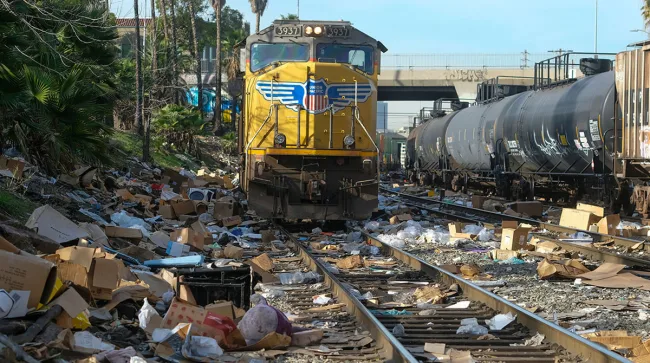
Freight railroads in the U.S. are hemorrhaging more than $200 million a year to cargo thieves, with 75,000 incidents recorded in 2025 alone. The surge in thefts—quadrupling since 2020—has forced major carriers like CSX, BNSF Railway Co. and Union Pacific Corp. to deploy AI surveillance, drones, barbed-wire fencing and armed law enforcement task forces. In Memphis, CSX’s Leewood Yard now operates under 24/7 monitoring after an 80% drop in thefts following the installation of AI-powered cameras and a multi-agency task force that includes the Tennessee Bureau of Investigation, FBI and Tennessee National Guard. The crackdown led to the November 2025 arrest of three men who stole $20,000 worth of women’s clothing, toys and non-alcoholic wine from a CSX train using a black Kia Soul, tracked by aircraft for 11 miles before officers swooped in. The heist was typical of modern rail thefts: gangs target high-value, low-bulk goods like electronics, luxury clothing, alcohol and tires, often liquidating stolen cargo through online marketplaces or independent dealers. Criminal networks—including transnational groups from Mexico’s Sinaloa cartel and U.S. street gangs like the Gangster Disciples—exploit the pandemic-era supply chain disruptions and the rail industry’s efficiency-driven shift to longer, two-person crews. Trains now stretch up to three miles with predictable stop times near depots, creating prime opportunities for thieves armed with hydraulic bolt cutters. Union Pacific has spent over $30 million on security since January 2023, including thermal imaging drones and 41,000 linear feet of cement barriers, while CSX reported over $900,000 in stolen tires alone since 2023. Congress is also advancing legislation to strengthen tools against organized cargo crime, as rail thefts evolve from Wild West-style robberies into sophisticated, high-volume operations. The industry’s liability for lost goods—typically capped at a certain dollar amount—has pushed customers to purchase additional insurance, further inflating the economic toll of the crisis.
📱 Follow our Telegram channel for daily updates
Source: Transport Topics — Michelin & Tires (EN) (ttnews.com)