🔔 Read us on Telegram — don’t miss the latest automotive news → t.me/motorhub_en
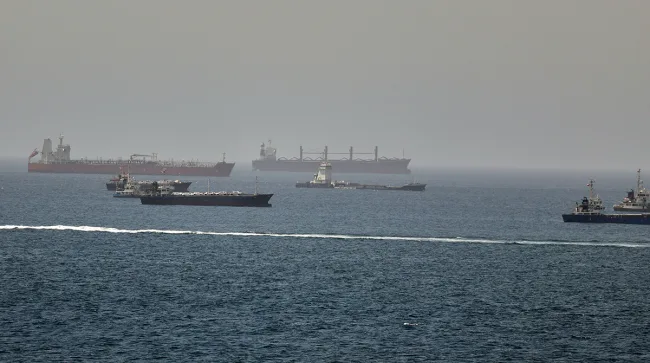
Global shipping traffic through the Strait of Hormuz has rebounded since a U.S.-Iran interim agreement eased wartime restrictions, but the future of the critical waterway remains mired in dispute. The strait, a chokepoint linking the Persian Gulf to the Gulf of Oman and Arabian Sea, is the world’s most vital oil transit route, handling roughly one-fifth of global seaborne crude. Traffic has climbed to 71 vessels between June 19–21, 2026, with a single-day peak of 35 crossings on June 20, according to Kpler data. That’s a sharp rise from the near-total blockade during the late-February conflict, but still well below the prewar norm of 100–130 daily transits.
The interim framework, inked under a 60-day negotiating window, grants Iran temporary administrative control while broader talks with Oman and six Gulf states proceed to define long-term governance. Iran has pledged not to levy tolls for 60 days and claims it will manage the strait in line with international maritime law. Yet the waters remain hazardous: the central shipping lane is still mined and closed, forcing vessels to use northern and southern alternate routes—one through Iranian waters, the other through Omani waters. Many ships are exercising extreme caution, either adhering to Iran’s designated path or turning off their AIS transponders to obscure their movements.
Tensions flared again over the weekend as Iran asserted it had reclosed the strait in response to Israeli strikes on Lebanon, a claim swiftly disputed by the U.S. President Donald Trump warned that Washington might impose its own tolls if a final deal isn’t reached, framing the charges as compensation for U.S. security guarantees in the region. The administration has not detailed how such tolls would be structured or enforced.
Legal and industry experts warn that any toll regime—whether imposed by Iran or the U.S.—would contravene the United Nations Convention on the Law of the Sea (UNCLOS), which guarantees freedom of navigation through international straits. The treaty, in force since 1994, prohibits tolls or restrictions on peaceful passage. Shipping analysts express alarm at how much authority the interim deal concentrates in Iran’s hands. “Almost all the power goes into Iran to determine the arrangements going forward in the future. This is what we really need clarity on,” said Philip Belcher, marine director of Intertanko, a trade group representing independent tanker owners.
Even with the partial easing, analysts caution that restoring full commercial flows—including oil, liquefied natural gas, fertilizers, and other commodities—could take months. The strait’s status remains fragile, hinging on whether negotiators can bridge deep disagreements over governance, tolls, and demining timelines. Until then, uncertainty looms over a waterway that underpins the global energy system and the stability of international trade.
📱 Follow our Telegram channel for daily updates
Source: Transport Topics — Michelin & Tires (EN) (ttnews.com)