🔔 Read us on Telegram — don’t miss the latest automotive news → t.me/motorhub_en
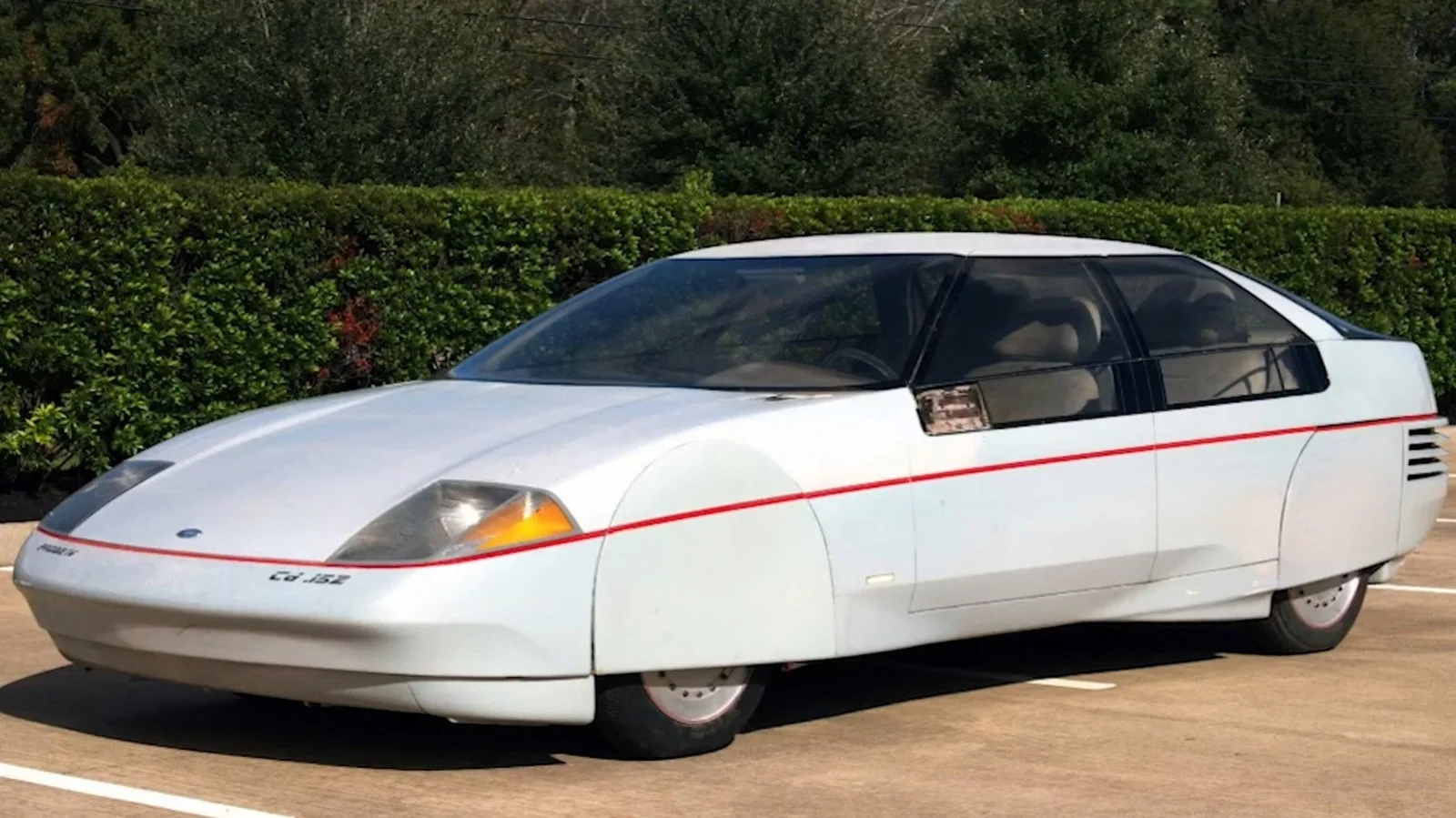
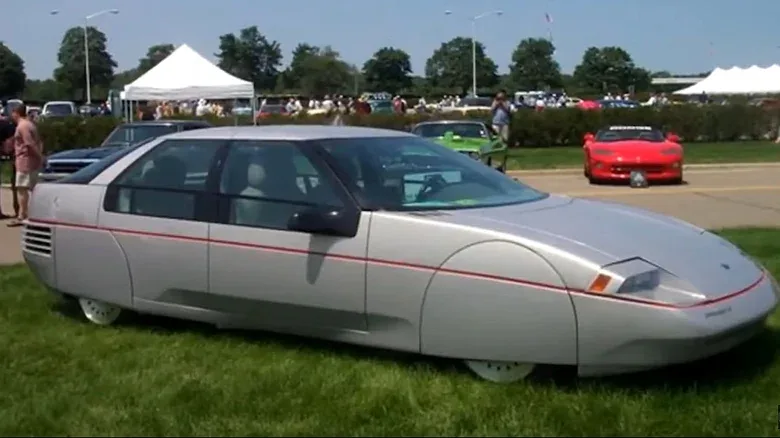
In 1983, Ford rolled out the Probe IV concept—a radical four-door that pushed the boundaries of aerodynamics to deliver a drag coefficient of just 0.152 Cd. That figure remains jaw-dropping even by today’s standards, where most production cars struggle to dip below 0.20 Cd. The Probe IV wasn’t just a styling exercise; it was a rolling lab designed to maximize fuel efficiency through brute-force aerodynamics. Ford engineers spent two years refining the concept, starting from the Probe III’s already impressive 0.22 Cd and aiming for a sub-0.20 target. They nailed it—and then some.
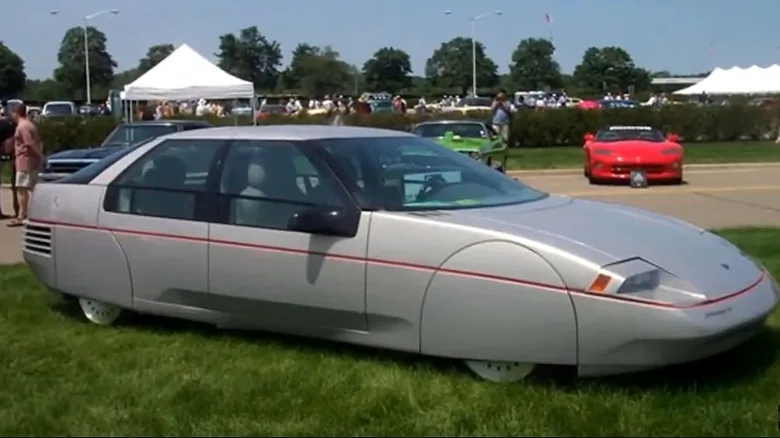
The Probe IV’s slippery shape was no accident. Every surface was sculpted for airflow, from its raked and flush windshields to its covered wheel openings and low-profile hood. The underbody was fully sealed, and the rear-mounted cooling system eliminated the need for a front grille, which would have disrupted smooth airflow. Even the tires were custom-made by Goodyear, featuring run-flat tech with inner liners, unidirectional tread patterns, and ultra-low rolling resistance compounds—precursors to today’s eco-focused rubber.
Inside, Ford’s engineers didn’t just chase aerodynamics; they integrated cutting-edge tech. The car rode on a computer-controlled air suspension borrowed from the 1984 Lincoln Mark VII, allowing ride height adjustments from 6.5 inches down to just 3.25 inches at the front. A speed-sensitive front spoiler deployed in stages above 45 mph to further stabilize the car. Under the hood, a modified 1.6-liter Escort four-cylinder with electronic fuel injection was tilted 70 degrees forward and lowered six inches to achieve a cowl height of just 30.7 inches, ensuring a sleek, uninterrupted roofline.
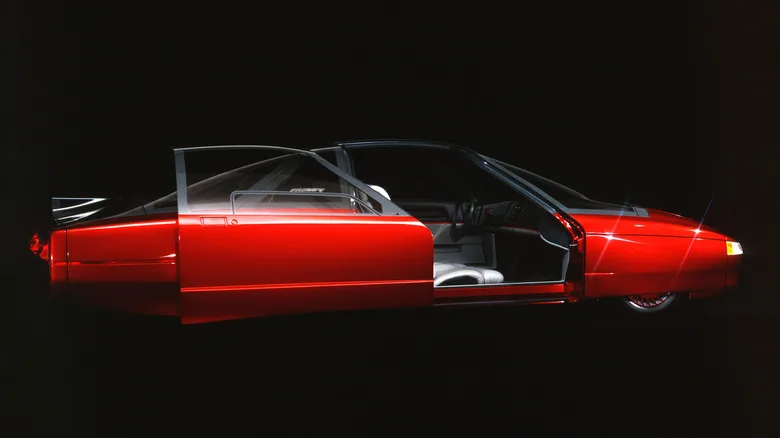
The results were staggering. In Lockheed’s wind tunnel at 55 mph, the Probe IV registered a 0.152 Cd—so slippery that it required 60% less power to reach 50 mph compared to a standard car and delivered a 20% fuel efficiency boost. But Ford wasn’t done. In 1985, the Probe V took things even further, morphing into a two-door with a cab-forward design, swing-out and slide-out doors, and the engine relocated to the rear. The Probe V’s drag coefficient dropped to an even more absurd 0.137 Cd, beating the Probe IV and outpacing modern EVs like the GM EV1 (0.195 Cd) and Lucid Air (0.197 Cd).
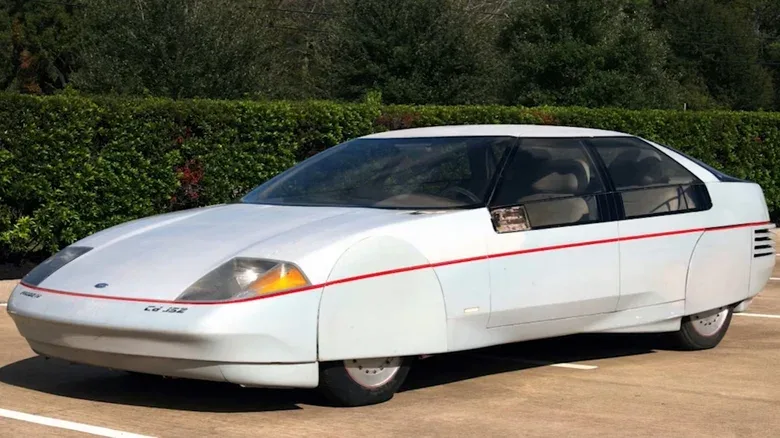
Despite never making it to production, the Probe program left a lasting legacy. Its aerodynamic principles directly influenced the 1986 Ford Taurus, which, while less extreme, still benefited from rounded bodywork that helped it achieve a 0.32 Cd. The Probe IV and V weren’t just concepts—they were a masterclass in how far car design could push efficiency before computers and wind tunnels became the norm. Today, they stand as a testament to Ford’s ambition and the untapped potential of aerodynamics in the pursuit of maximum MPG.
📱 Follow our Telegram channel for daily updates
Source: Jalopnik (Auto Culture & Tuning) (jalopnik.com)