🔔 Read us on Telegram — don’t miss the latest automotive news → t.me/motorhub_en
Concrete highway barriers are a crucial aspect of roadway safety, designed to reduce crash severity and prevent rollovers.
Despite their seemingly simple design, these barriers have been refined over the decades to meet new safety standards, vehicle sizes, and needs.
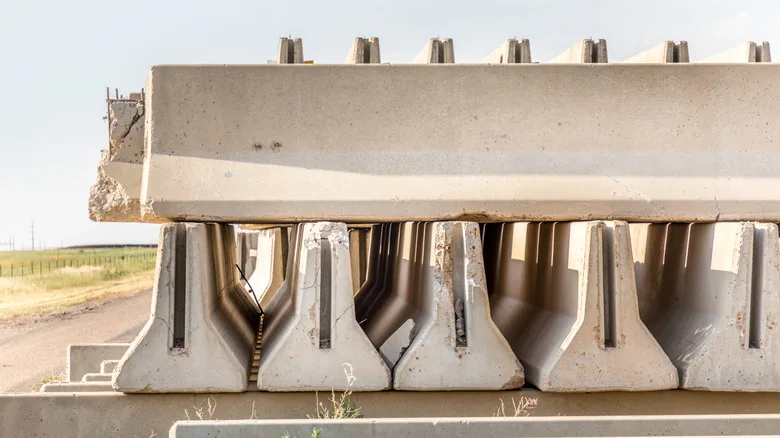
The most well-known design is the Jersey Barrier, which features a flared or safety shape profile with a wide base that tapers up from the bottom.
This design sends vehicles climbing up the wall upon impact to help dissipate energy, mitigate rollovers, and reduce damage and injuries.

Other designs, such as the F-shape barrier and single-slope barrier variants, have been engineered to help prevent small cars from rolling over.
However, no highway safety barrier is perfect, and the evolution of vehicle designs has led to the need for ongoing updates to safety barrier standards.
The American Association of State Highway Transportation Officials (AASHTO) has introduced its Manual on Assessing Safety Hardware (MASH) to replace outdated benchmarks, adding more vehicle categories, higher speeds, and various crash angles.
The Federal Highway Administration (FHWA) mandates full compliance with MASH, which includes testing levels ranging from TL-1 for cars and trucks at 31 mph to TL-6 for cars and trucks at 62 mph, and a tractor-tank trailer at 50 mph.

📱 Follow our Telegram channel for daily updates
Source: Jalopnik (Auto Culture & Tuning) (jalopnik.com)