🔔 Read us on Telegram — don’t miss the latest automotive news → t.me/motorhub_en
In the high-stakes arms race of 1960s NASCAR, Chrysler’s legendary Hemi V8 was the undisputed king of the track—until Ford fired back with a weapon so radical it nearly broke the rules. The result? A pair of engines that never got to settle the score on the oval, but whose legacy still echoes through motorsport history.
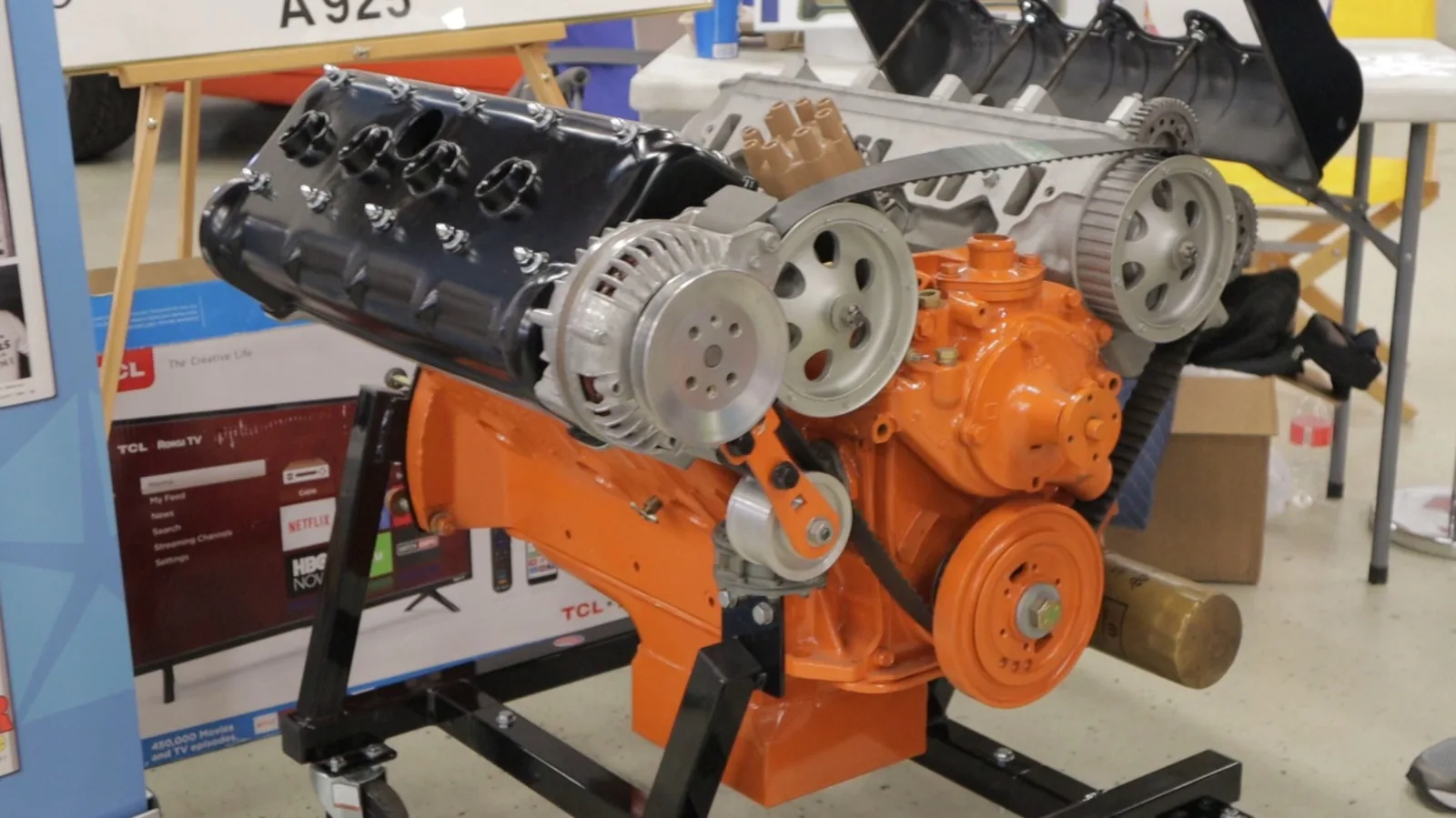
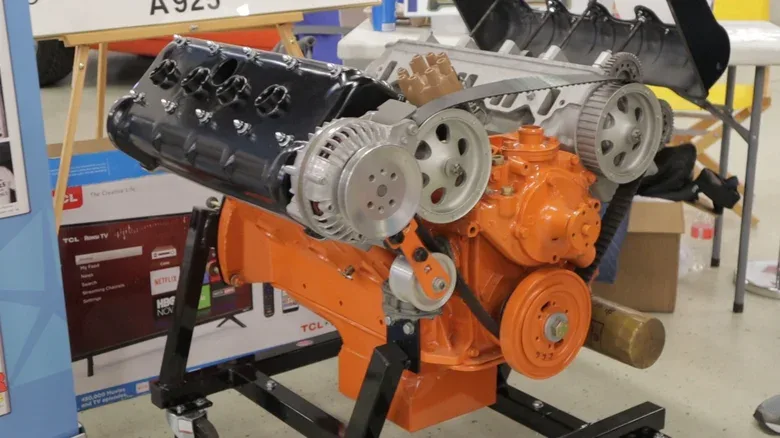
Chrysler’s response to Ford’s dominance in the early 1960s was the 426-cubic-inch Hemi V8, a race-only powerhouse that debuted at the 1964 Daytona 500 with devastating effect. Officially designated the A-925 in Chrysler’s internal documentation, this engine wasn’t just another Hemi—it was a technological leap. While the standard 426 Hemi relied on a single camshaft and pushrods, Chrysler’s engineers equipped this version with dual-overhead camshafts (DOHC) and a radical new cylinder head design they called the “Penta-Roof” A-frame. The heads featured four valves per cylinder, a necessity to compete with Ford’s overhead-cam ambitions, and were crafted from magnesium to shave critical weight. The block itself was modified to ditch the central camshaft and pushrods, with each camshaft driven by a cogged belt from the crankshaft in a triangular arrangement.
The result was an engine that could rev to 7,000 rpm—far beyond the capabilities of a conventional Hemi—and produce significantly more power than the 500 horsepower the standard race Hemi churned out. Some reports from Chrysler engineers at the time claimed outputs nearing 700 horsepower, a figure that would have dwarfed Ford’s upcoming “Cammer” 427. The Doomsday Hemi was, in every sense, a rolling atomic bomb.
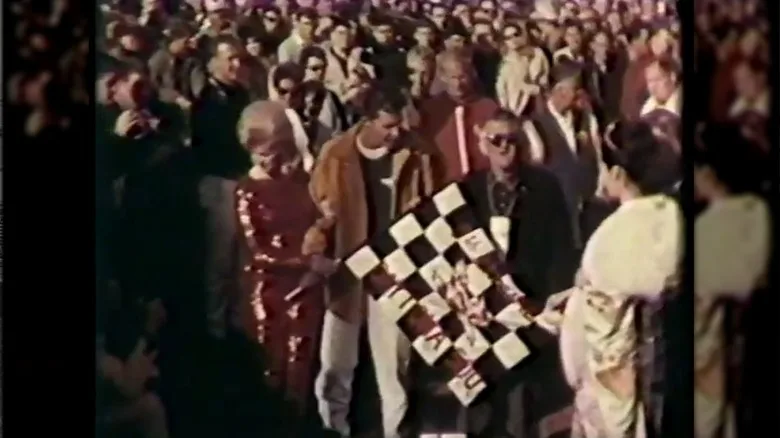
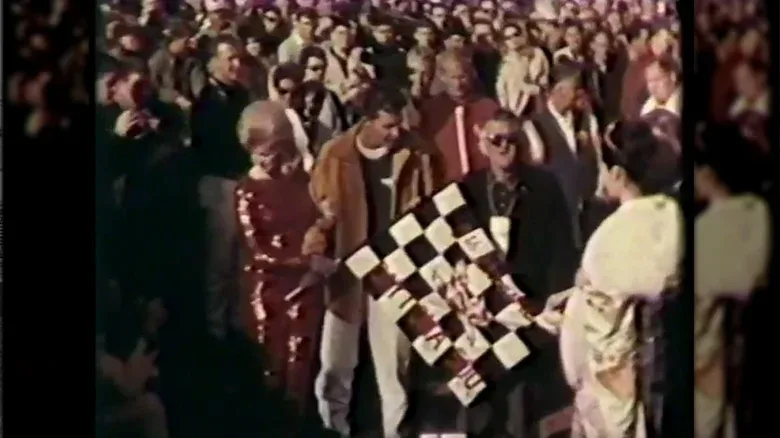
The 1964 Daytona 500 was a masterclass in Hemi dominance. Paul Goldsmith set a new track record with a pole position lap of 174.355 mph—13 mph faster than Fireball Roberts’ 1963 pole time—aboard a Plymouth equipped with the new engine. Richard Petty started second in his own Hemi-powered Plymouth, and the top seven qualifiers were all Hemi cars. Petty would go on to lead 184 of the 200 laps, winning the race by a lap and a half over the closest competitor. It was a statement so loud it echoed through the entire motorsport world.
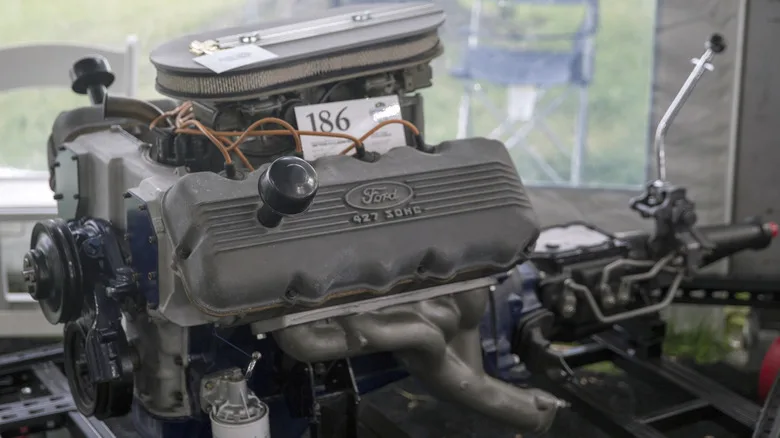
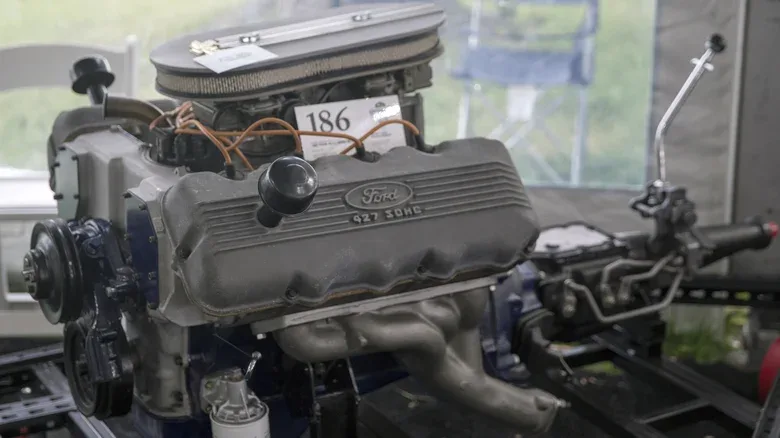
Ford, humiliated by the Hemi’s performance, scrambled to respond. Within 90 days, the Blue Oval developed its own overhead-cam 427 V8, dubbed the “Cammer.” Hot Rod Magazine independently verified that the Cammer could rev past 7,500 rpm and produce over 600 horsepower. Ford petitioned NASCAR to allow the Cammer in competition for the remainder of the 1964 season, arguing its racing pedigree. But NASCAR rejected the request, citing the engine’s “too European” design and its lack of availability in any production car. The United States Auto Club followed suit, banning the Cammer entirely.
With the Cammer sidelined, Chrysler faced a dilemma. Its own Doomsday Hemi—designed to obliterate Ford’s Cammer—was never homologated for production, and NASCAR banned it outright for the 1965 season. The engine that could have rewritten NASCAR history was shelved, and Chrysler was forced to revert to its conventional 426 Hemi, which it finally made available to the public in 1966. Petty won Daytona again that year, proving the Hemi’s legacy was unbreakable—even if the Doomsday version never got to prove itself on the track.
📱 Follow our Telegram channel for daily updates
Source: Jalopnik (Auto Culture & Tuning) (jalopnik.com)