🔔 Read us on Telegram — don’t miss the latest automotive news → t.me/motorhub_en
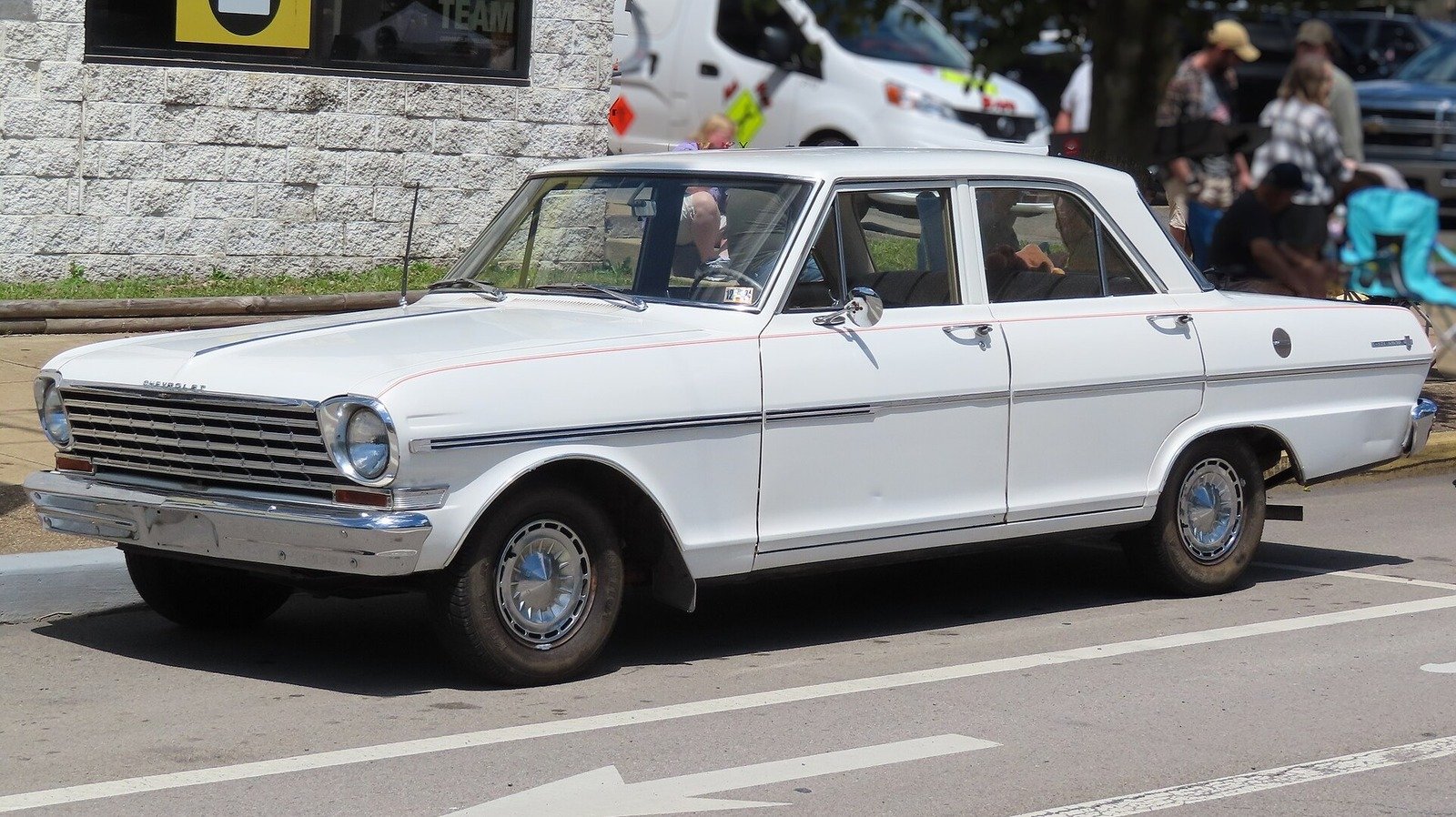
In the early 1960s, Chevrolet and Ford locked horns in a battle that would shape the compact-car segment for years to come. Ford’s 1960 Falcon arrived with conventional engineering and massive first-year sales of over 435,000 units, leaving Chevrolet’s unconventional Corvair—despite its 250,000-unit debut—playing catch-up. The Bowtie brand wasn’t about to settle for second place. Under pressure to respond, Chevrolet’s engineers adopted a back-to-basics approach and delivered the 1962 Chevy II in a breathtaking 18 months—from concept to production line. For context, the Corvair’s development reportedly took nine years, while today’s automakers like GM use AI to shave months off timelines, as seen with the 20-month development of the GMC Hummer EV. The Chevy II was Chevrolet’s direct answer to the Falcon, sharing nearly identical dimensions: 183 inches long with a 110-inch wheelbase, compared to the Falcon’s 181.2 inches and 109.5-inch wheelbase. Under the hood, customers could choose between two time-tested engines: a 153-cubic-inch (2.5-liter) inline-four producing 90 horsepower or a 194-cubic-inch (3.2-liter) inline-six with 120 horsepower. Both powerplants traced their lineage back to the iconic Chevy small-block V8, ensuring reliability and familiarity. The front suspension borrowed tried-and-true components from other Chevrolet models, featuring strut-rod lower control arms and coil springs. Chevrolet broke new ground at the rear with a monoleaf suspension setup, a design that avoided the Corvair’s notorious swing-axle oversteer issues. Assembly was streamlined thanks to an innovative unibody construction process: the Chevy II was built in two separate halves that were then bolted together, a method that reduced complexity and sped up production. Transmission choices were a mix of old and new. The standard offering was a three-speed manual, but the optional unit marked a significant update: the first use of Chevrolet’s re-engineered two-speed PowerGlide automatic. Exterior design was kept simple and functional, earning the Chevy II the nickname “Box Nova.” The naming process itself was a study in corporate strategy. The “Chevy II” name was reportedly coined by Ted Little, then-chairman of Chevrolet’s ad agency Campbell-Ewald. However, the brand’s marketing team preferred names starting with “C,” mirroring Ford’s own naming conventions like Falcon, Fairmont, and Fiesta. As a result, “Nova” debuted as the top trim level in the Chevy II lineup, officially known as the Chevrolet Chevy II 400 Nova. Lower trims included the 100 and 300 series, and the model was offered in multiple body styles: two- and four-door sedans, a two-door coupe (with B-pillar), a two-door hardtop (without B-pillar), a convertible, and a station wagon. The Chevy II name was retired in 1968, with the all-new 1969 model rebranded simply as the Chevrolet Nova. The second generation, launched in 1969, became a legend of the muscle-car era, engineered to handle the biggest Chevrolet V8s—including the monstrous 454-cubic-inch big-block that could churn out 575 horsepower. The Nova name endured until 1978, when production ended. Chevrolet briefly revived the Nova badge in 1985, rebadging a Toyota Corolla, but the move alienated purists and led to its renaming as the Geo Prizm in 1989.
📱 Follow our Telegram channel for daily updates
Source: Jalopnik (Auto Culture & Tuning) (jalopnik.com)