🔔 Read us on Telegram — don’t miss the latest automotive news → t.me/motorhub_en
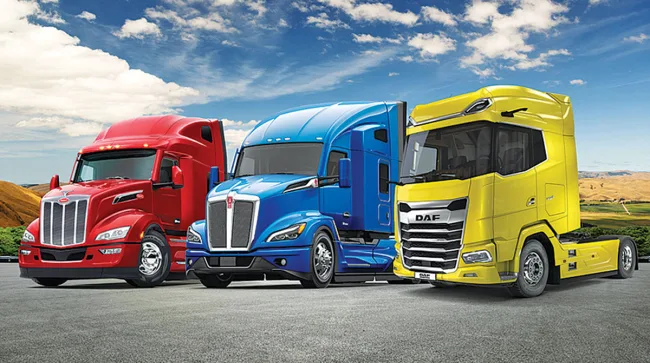
PACCAR, the parent company of Kenworth, Peterbilt, and DAF, will continue selling its current heavy-duty truck engine configurations that do not meet the upcoming 2027 emissions standards, executives confirmed during the company’s second-quarter 2026 earnings call. The decision comes as the Biden-era regulation requiring nitrogen oxide (NOx) emissions to drop from 200 mg/hp-hr to 35 mg/hp-hr takes effect on January 1, 2027. However, the Trump administration has provided flexibility in implementation, noncompliance penalties, and NOx credits, making the transition less urgent for some customers. “We are planning on selling the current product to our customers,” said PACCAR CEO Preston Feight. “That’s the engagement we’ve had with many, many customers—that’s their preferred approach is to ease into this thing.” The company expects the staggered introduction of model-year 2027 engines to boost sales in 2027, as fleets opt for familiar configurations while gradually adapting to stricter regulations. Nonconformance penalties (NCPs) are a critical factor in this strategy. PACCAR executives and analysts estimate that the added cost of a compliant engine could range from $8,000 to $10,000, while expected NCPs are projected to be between $6,000 and $7,000—making the current engines a more economical choice in the short term. This approach aligns with similar moves by competitors like Cummins and Traton Group (parent of International Motors), both of which are also phasing in compliant engines. PACCAR’s decision reflects broader industry uncertainty, as draft EPA regulations were only finalized in July 2026, just five months before the rules take effect. “Uncertainty lingered while the regulations remained in draft form,” said Traton CEO Christian Levin, describing the situation as “bothersome.” Despite the regulatory headwinds, PACCAR reported strong financial performance in Q2 2026, with global truck deliveries totaling 38,700 units—a 1.5% decrease year-over-year but a 16.9% increase from Q1 2026. U.S. and Canada truck sales reached 22,000 vehicles, down 4.3% year-over-year but up 23.6% from Q1 2026. The company’s gross margin improved to 14.4% from 13.1% in the same period last year, and net income rose to $752 million, a 3.9% increase. PACCAR’s forecast for U.S. and Canada Class 8 truck retail sales in 2026 remains unchanged at a range of 230,000 to 270,000 units. The company also noted that higher freight rates and an aging fleet are driving demand for newer, more fuel-efficient trucks. Approximately 90% of Kenworth and Peterbilt’s build slots for the remainder of 2026 are already filled, giving PACCAR pricing flexibility. The company’s global Q3 2026 sales are expected to grow to around 42,000 trucks, despite partial offsets from the European summer shutdown.
📱 Follow our Telegram channel for daily updates
Source: Transport Topics — Michelin & Tires (EN) (ttnews.com)