🔔 Read us on Telegram — don’t miss the latest automotive news → t.me/motorhub_en
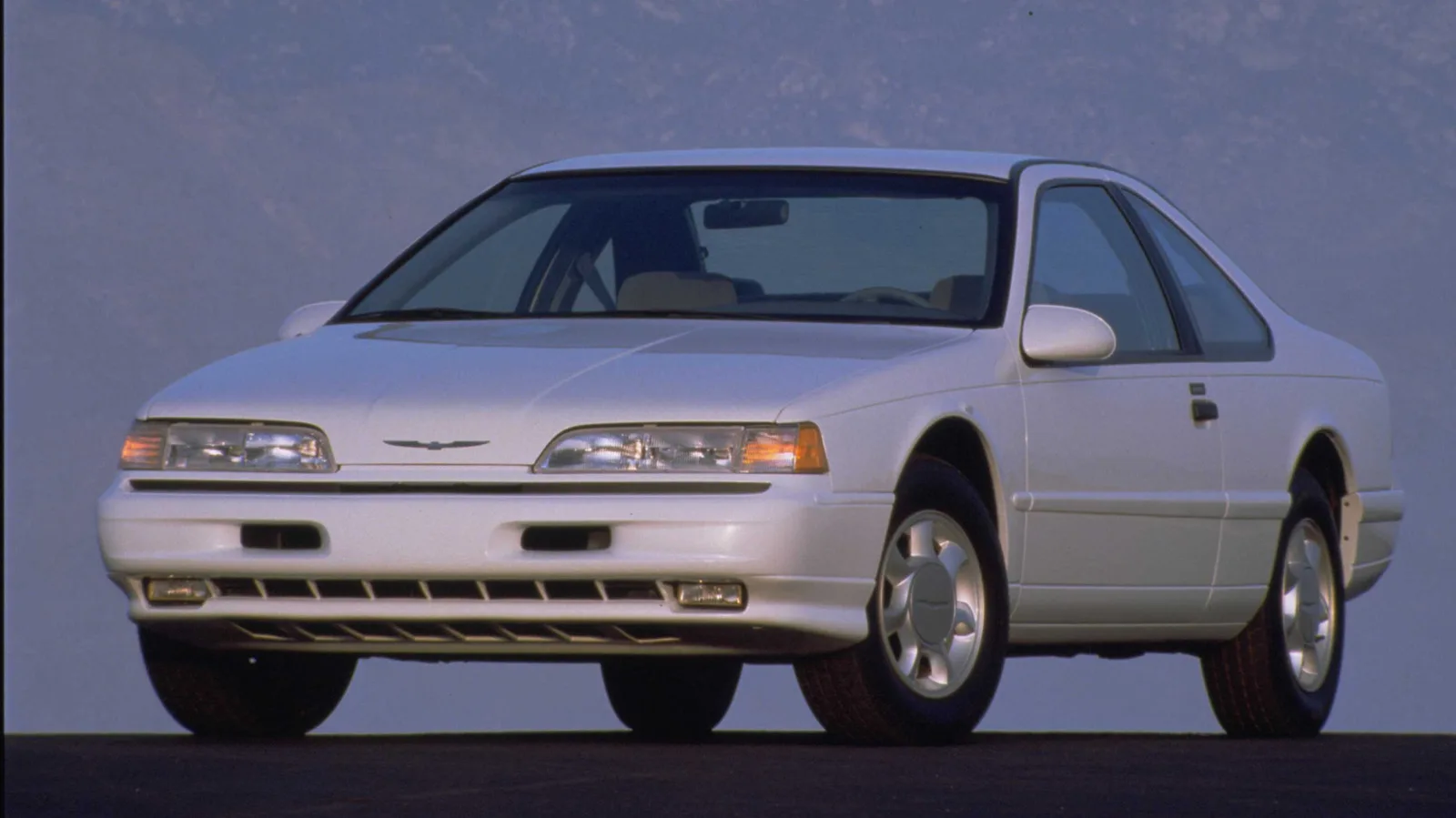
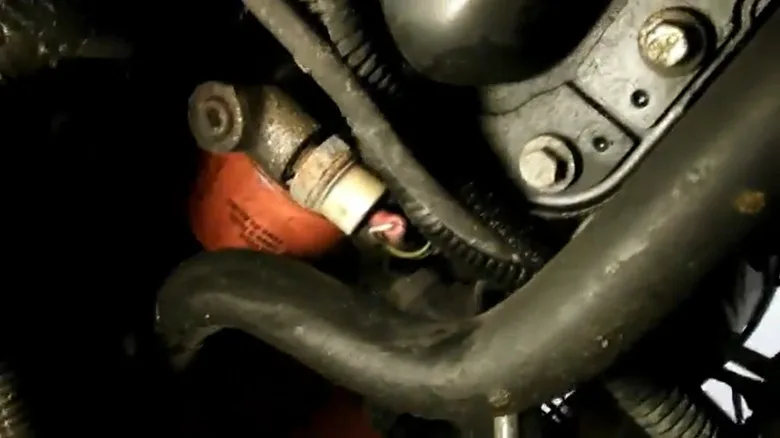
American drivers are holding onto their cars longer than ever amid sky-high repair costs, making DIY maintenance a necessity. But if you’re still piloting a 4.6-liter Ford Thunderbird from the 10th generation, you’re in for a special kind of frustration. The Thunderbird’s oil filter is mounted on the driver’s side, roughly midway up the engine block—an infuriatingly awkward spot that turns a routine oil change into a contortionist act. Unlike the Mustang or F-150, where the filter is easily accessible by hand with room to spare for tools, the Thunderbird forces you to snake extensions and swivel joints through the wheelwell just to reach it. The sway bar blocks access from below, and the filter’s lofty perch near the exhaust manifolds means you’re working in a cramped, high-heat zone where spent oil can drip everywhere. One YouTube DIYer’s struggle to remove the filter without making a mess highlights just how poorly this location was chosen.
Ford’s 4.6-liter “Mod Motor” engine, shared across multiple models, typically places the oil filter in more convenient spots. So why did Ford saddle the Thunderbird with this headache? History offers a clue. In the late 1980s, Ford was trying to reposition the Thunderbird as a premium coupe, aiming to compete with BMW’s 635CSi at a Ford price point. The automaker even collaborated with Porsche on an all-wheel-drive version, though the project was scrapped at the last minute. Despite strong sales and critical acclaim, the Thunderbird’s high-tech ambitions made it too expensive to produce profitably, and its weight ballooned beyond Ford’s targets.
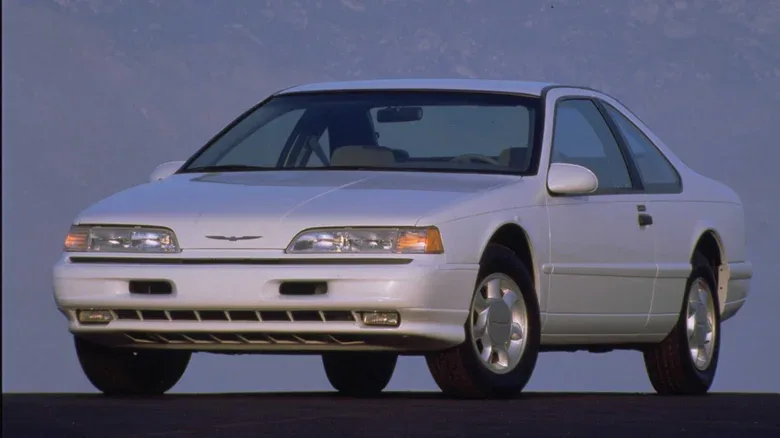
The car’s 1989 Super Coupe variant packed a supercharged 3.8-liter V6 making 210 horsepower and 315 lb-ft of torque, earning Motor Trend’s Car of the Year award. But internal corporate pressure and shifting priorities doomed the model. Public demand for a V8 led Ford to shoehorn a modified 5.0-liter engine into the 1991 Thunderbird, despite the MN12 chassis being designed around the smaller Essex V6. The swap required cramming in a heater, downsizing the intake, and routing exhaust in a convoluted path, sapping power. While the same 5.0 V8 made 225 horsepower in a Mustang, the Thunderbird’s version was detuned to just 200 horsepower. By 1994, Ford finally fitted the Thunderbird with the 4.6-liter Modular V8—already in use in the Crown Victoria since 1992—but never bothered to relocate the oil filter for easier access. The result? A maintenance nightmare that’s stuck with Thunderbird owners for life.
📱 Follow our Telegram channel for daily updates
Source: Jalopnik (Auto Culture & Tuning) (jalopnik.com)