🔔 Read us on Telegram — don’t miss the latest automotive news → t.me/motorhub_en
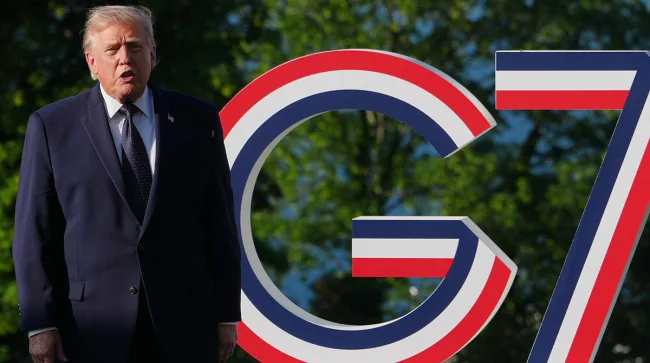
President Donald Trump insists the Strait of Hormuz will fully reopen to global shipping by June 19, but European allies at the June 15 G7 summit in Evian-les-Bains, France, remain deeply skeptical. The dispute centers on conflicting accounts of an interim U.S.-Iran agreement, mine clearance logistics, and security conditions required for toll-free navigation. One-fifth of the world’s oil and liquefied natural gas supplies typically transit the strait, making its reopening a critical global issue. Trump’s claim of imminent reopening clashes with European leaders’ practical concerns about de-mining operations, ceasefire conditions, and the absence of a finalized agreement. European officials, including Italian Prime Minister Giorgia Meloni, have tied their participation in de-mining missions to a cessation of hostilities in Lebanon, where recent Israeli strikes have escalated tensions. Within the U.S. administration, senior officials have privately cautioned that shipping traffic will ramp up gradually, with full normalization potentially taking weeks or even longer. A U.S. official noted that the interim deal explicitly states the strait will be open toll-free for 60 days, a provision the White House insists must be included in any final agreement. However, the lack of a publicly available document has fueled confusion, with Iran and the U.S. offering conflicting interpretations of the terms. Sen. Lindsey Graham (R-S.C.), a Trump ally, acknowledged the discrepancies, stating, ‘The way Iran describes it, it’s awful, the way we describe it makes sense to me.’ The accord is scheduled to be signed in Switzerland on June 19, though the timeline for releasing its full text remains unclear. Vice President JD Vance is expected to attend the signing. European leaders are preparing to propose a de-mining framework at the G7, contingent on Trump’s approval and a final U.S.-Iran agreement that guarantees unimpeded commercial navigation and a secure environment for military assets. However, deployment of de-mining teams will not begin until a permanent ceasefire is in place, according to Canada’s foreign minister, Anita Anand. German officials warn that securing an international mandate for such operations could take weeks. The complexity of clearing mines—if any exist—is compounded by uncertainty over their number and placement. Iran has alternately claimed to have mined the strait and denied doing so, while the U.K. and U.S. have provided conflicting assessments. MIT’s Caitlin Talmadge emphasized the painstaking nature of the task, noting that Iran’s cooperation in sharing mine placement data would significantly accelerate the process. The standoff highlights broader divisions over how to address Iran’s regional activities and the feasibility of reopening a waterway critical to global energy markets.
📱 Follow our Telegram channel for daily updates
Source: Transport Topics — Michelin & Tires (EN) (ttnews.com)