🔔 Read us on Telegram — don’t miss the latest automotive news → t.me/motorhub_en
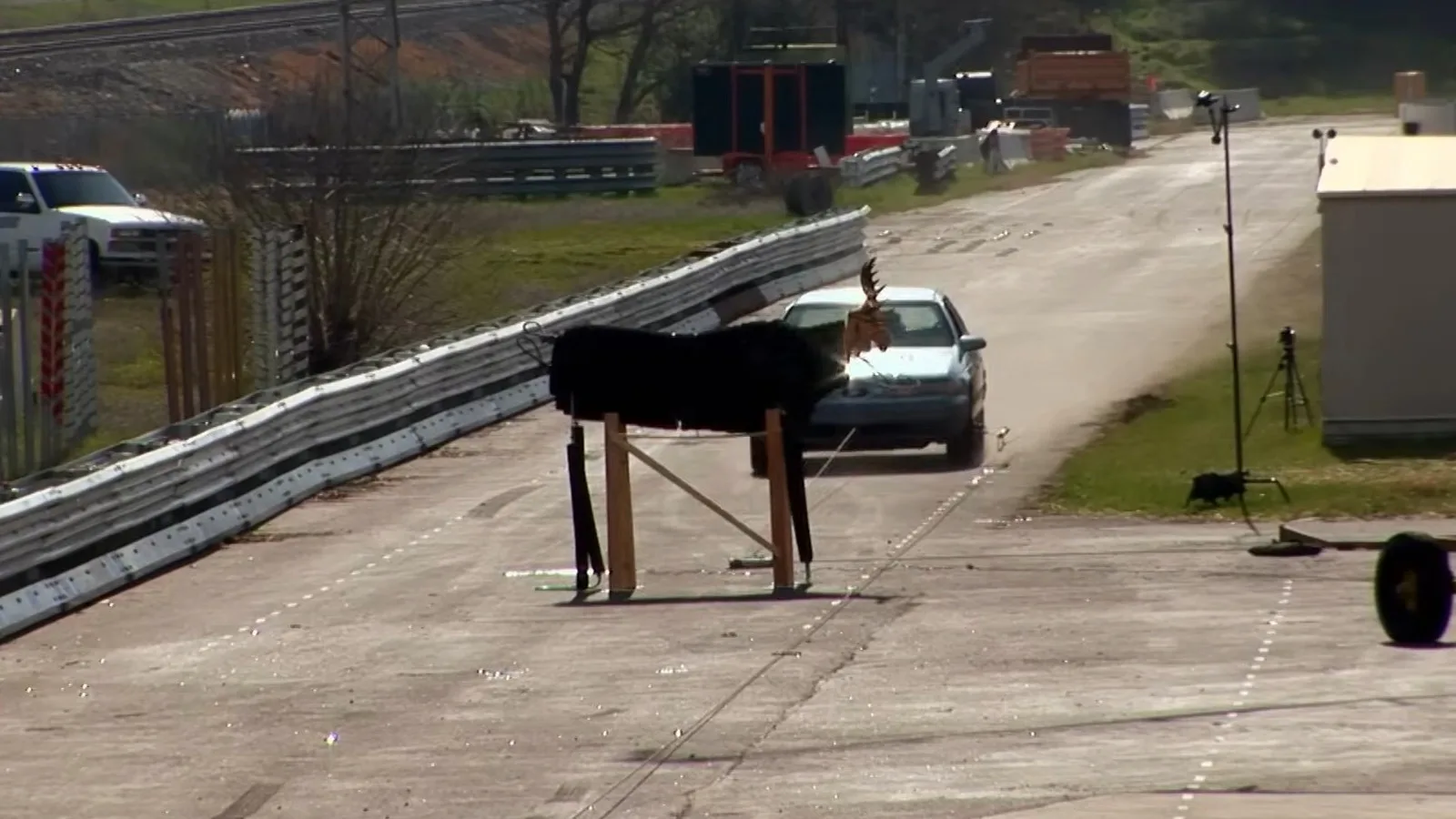
The MythBusters team put the urban legend to the test: if you can’t avoid hitting a moose, should you speed up or brake? The answer is brutal. In the show’s Alaska Special episode, hosts Kari Byron, Tory Belleci, and Grant Imahara built a 9-foot, 620-pound rubber moose replica with steel hip joints to simulate a real collision without the gore. The dummy moose was measured from a live captive animal and designed after a Swedish researcher’s thesis, ensuring realistic proportions.
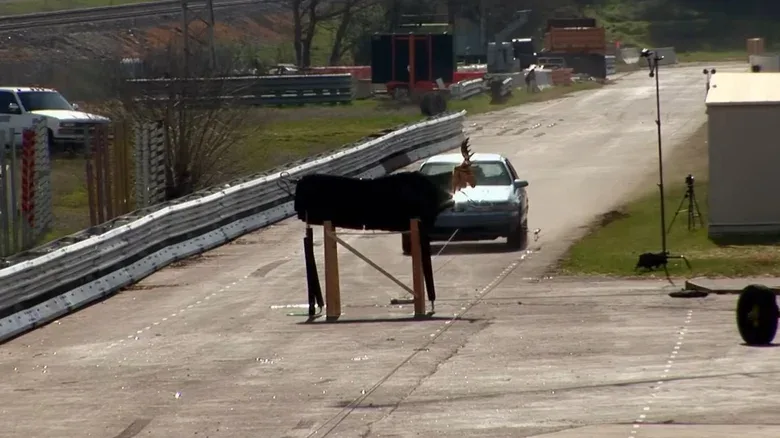
Two test cars were run into the moose on a closed track at E-TECH’s facility, with one car guided by a front hub bar to maintain a straight path. The first test car hit the moose at 45 mph, resulting in severe damage to the sedan’s A-pillars, which were nearly flattened. Next, the team fitted a second car with a remote-controlled braking system. When this car struck the moose, braking reduced the damage compared to the first run.
The third test accelerated a car to 51 mph before impact, and the fourth test sent a two-door coupe barreling into the moose at 75 mph — both resulted in catastrophic damage. Grant Imahara concluded that the only scenario where the myth might hold true is if you’re driving an F1 car at over 97 mph. The experiment, available on the official MythBusters YouTube channel, visually demonstrated that no matter what you do, hitting a moose will cause significant damage. The team avoided using real animals, opting instead for a realistic rubber moose built from sheets and cables, inspired by real moose measurements and Swedish research.
📱 Follow our Telegram channel for daily updates
Source: Jalopnik (Auto Culture & Tuning) (jalopnik.com)