
🔔 Read us on Telegram — don’t miss the latest automotive news → t.me/motorhub_en
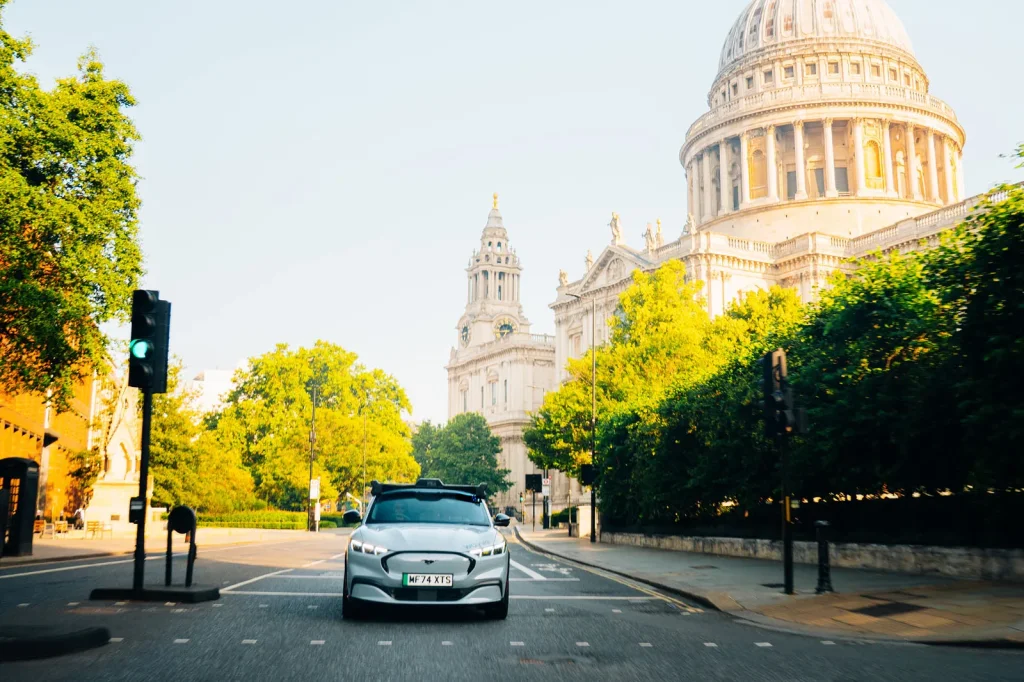
Following the launch of Uber’s autonomous ride-hailing cars in London, experts have told Autocar the technology is ready for a wider rollout, though some question whether it is the right solution for the capital’s congested streets. Uber launched the UK’s first autonomous taxi service in September after receiving operational permission from Transport for London (TfL). The deployment comprises 15 electric Ford Mustang Mach-Es guided by an AI system dubbed ‘AV 2.0’, developed by UK firm Wayve. The system uses GPS maps and sensors, learning from experience to navigate streets and avoid road users without relying on conventional high-definition mapping or hard-coded rules. Passengers can hail the cars via the Uber app, but TfL currently mandates that a supervising driver remain present in each vehicle to intervene if necessary, pending final government and DVLA regulatory approval for driverless operation. Kevin Vincent, director of Coventry University’s Centre for Connected and Autonomous Automotive Research, supports the rollout, noting that human error accounts for up to 90% of the roughly 1,600 annual UK road deaths. He believes self-driving vehicles will ultimately enhance safety, accessibility, and energy efficiency while easing congestion and emissions. Vincent noted that while the technology is ready, full deployment awaits final legislation, safety demonstrations, and authorization from the secretary of state and relevant agencies. Under the Automated and Electric Vehicles Act 2018, liability in an accident rests with the operator or manufacturer rather than the human occupant. While US statistics indicate robotaxis are generally involved in fewer accidents than human-driven cars, University of Central Florida researchers found they were five times more likely to crash in low-light conditions like dawn or dusk, and twice as likely when turning. Vincent also highlighted that much US safety data is self-reported by developers, and noted that Waymo’s US fleet size remains under one-tenth of New York’s yellow cab total. In London, early users noted occasional edge cases, such as a car mistaking a vehicle parked in the middle of Whitehall for the back of a queue and stopping until the safety driver intervened. While Vincent argues such issues are resolvable as the AI learns from experience, critics like Adam Tranter, former West Midlands cycling and walking commissioner, argue robotaxis are unsuited to London’s needs. Tranter claimed London does not need more cars—citing average occupancies of 1.2 people per car and even lower numbers for empty robotaxis—and warned that authorities might eventually restrict pedestrian freedom, such as jaywalking, to accommodate autonomous vehicles. Responding to these concerns, Wayve stated that its AI Drive technology is fully prepared for common London behaviors like jaywalking through simulation and experience, eliminating the need to restrict pedestrians, while also pointing to expected benefits in shared fleet use and routing efficiency.
📱 Follow our Telegram channel for daily updates
Source: Autocar UK