🔔 Read us on Telegram — don’t miss the latest automotive news → t.me/motorhub_en
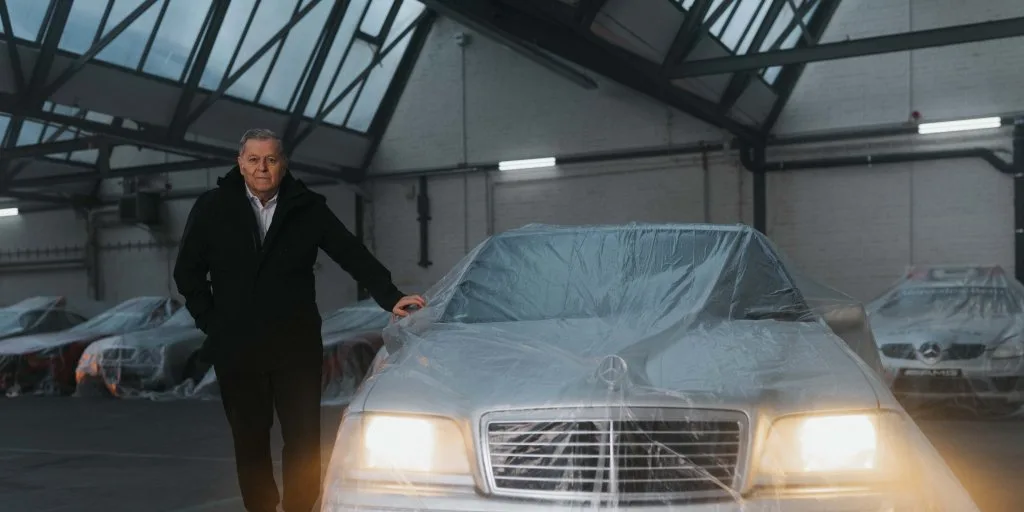
Exactly three decades ago, the Mercedes-Benz C 36 AMG made its debut in the premier class of motorsport. What was initially intended as a short-term solution in 1996 developed into a unique partnership that has endured to this day. The goal was to improve the safety of the racing series, defuse critical situations, and ensure a smooth race. To date, 13 different high-performance Mercedes-Benz and Mercedes-AMG vehicle models have fulfilled this responsible task in over 500 Grands Prix. Together with the Official FIA F1® Medical Car, which has also been provided by the brand with the star since 1996, they have shaped the safety concept of Formula 1®. All safety and medical cars have been powered by Mercedes-AMG engines since the beginning. The safety and medical cars have been an integral part of modern racing operations since 1993. After various brands initially provided the safety car, the series decided on a standardized model from the 1996 season. Former Formula 1® boss Bernie Ecclestone approached former Mercedes-Benz motorsport chief Norbert Haug to establish a safety car with Mercedes-Benz that would meet the increased safety and performance requirements. The Mercedes-Benz C 36 AMG was presented as a short-term solution at the French Grand Prix in Magny-Cours in 1996. The car used was the converted private vehicle of former DTM driver and current Official FIA F1® Safety Car driver Bernd Mayländer. Due to the short-term order, various models were used in the first season, which were provided by the respective national companies. For the 1997 season, two Mercedes-Benz CLK 320s were initially ordered, but Norbert Haug campaigned for the more powerful CLK 55 AMG, which was then used for three years and was also offered as a series model from 1999. In 1999, Charlie Whiting offered Bernd Mayländer a fixed role as the Official FIA F1® Safety Car driver. Mayländer took on the role and made his debut in the Formula 1® at the Australian Grand Prix in 2000 with the 350 horsepower Mercedes-Benz CL 55 AMG. Since then, Bernd Mayländer has been responsible for ensuring safety in critical situations for 26 years. In the event of an incident, he is on the track in a few seconds, sets the pace, and neutralizes the race. In consultation with the race management, he sets the pace depending on the situation – slow enough to ensure safety, but with sufficient speed to keep the Formula 1® vehicles within a solid temperature window. This task requires the highest concentration, experience, and trust. From the C 36 AMG to the GT Black Series: 30 years of innovation in the service of safety. What began as a short-term solution in 1996 has developed into a highly specialized vehicle over three decades. In this period, aerodynamics, communication technology, lighting systems, and safety equipment have been continuously developed to meet the increasing demands of Formula 1®. Despite this high standard and thousands of laps under sometimes difficult conditions, the deployability of the Official FIA F1® Safety Car has always been guaranteed. Since 2010, the Mercedes-Benz SLS AMG has been the first completely developed series vehicle to serve as the Official FIA F1® Safety Car. Since 2022, the 730 horsepower Mercedes-AMG GT Black Series has taken on this role. Despite all technical advances, the task remains unchanged: to be an indispensable part of the safety concept of Formula 1®. The Official FIA F1® Safety Cars from Mercedes-Benz and Mercedes-AMG have completed over 300 deployments, over 1000 racing laps, and have been used in 11 races that were finished behind the safety car. The most laps completed in one race were 33, achieved by the Mercedes-AMG GT S at Interlagos in 2016. The most consecutive laps were 19, achieved by the Mercedes-Benz CLK 63 AMG at Fuji in 2007. The most safety car phases in one race were six, achieved by the Mercedes-Benz SLS AMG at Montreal in 2011. The Mercedes-AMG GT Black Series has completed seven deployments and 23 racing laps so far in 2026.
📱 Follow our Telegram channel for daily updates
Source: Mercedes-Benz Press (EN) (media.mercedes-benz.com)