🔔 Read us on Telegram — don’t miss the latest automotive news → t.me/motorhub_en
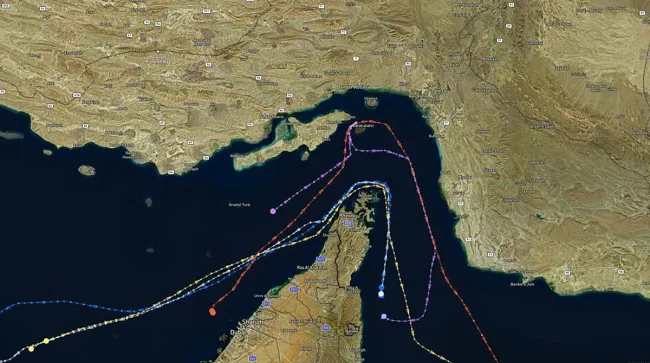
Vessel traffic through the Strait of Hormuz dipped slightly on June 29, 2026, after recent attacks on ships raised safety concerns among tanker owners, even as U.S.-assisted navigation remained uninterrupted. While vessels continued crossing the strategic waterway, fewer ships broadcast their positions via transponders, with some owners privately admitting the incidents had made transit less safe. On June 27, Iran was accused of attacking an oil tanker, following an earlier strike on a container ship near Oman’s coast—a region where American forces coordinate maritime transits. A military liaison confirmed on June 28 that U.S.-backed navigation support had not been disrupted, though traffic had fallen “slightly.” The reduced visibility in tracking is critical for global oil markets, as tanker companies’ risk tolerance determines whether millions of barrels of supply can flow normally. Five tanker owners told Bloomberg privately that they now consider the route less safe, though others reported no change in their assessments. The U.S. and Iran had recently agreed to halt mutual attacks during peace negotiations, offering cautious optimism for safer passages. Vessel-tracking data showed a Saudi Arabian supertanker and three bulk carriers entering the Gulf of Oman early June 29 with transponders off, suggesting they had passed through Hormuz undetected. Over the weekend, several vessels made open transits, including two empty supertankers entering the Persian Gulf and a French-flagged container ship, some after the latest tanker attack. Despite the drop in transponder signals, visible traffic remains higher than during most of the U.S.-Iran conflict. Two primary transit routes have emerged since the interim peace deal: one in Iranian waters and another near Oman’s coast, as recommended by Western navies. The International Maritime Organization reported about 80 mines in the main transit corridor on June 27. Iran has reiterated that ships cannot transit without its permission, warning that violations will be met with stronger measures. U.S. assistance has encouraged more shipowners to use the strait, including millions of barrels of oil per day before the ceasefire. Since the deal, some owners who previously avoided the route have resumed crossings, even after last week’s container ship attack. The departure of the Saudi supertanker marked the first shipment loaded at the Ras Tanura terminal since the ceasefire, with three other vessels either moored or recently departed from the facility. Following the attacks, the Joint Maritime Information Center raised the regional threat level to “substantial” from “moderate,” noting a slight traffic dip but no interruptions. Some vessels, including two laden Very Large Crude Carriers (VLCCs) and a Qatar-owned gas carrier, have not attempted fresh crossings post-attack. Inbound traffic is particularly significant, as empty tankers entering the Persian Gulf are vital for regional producers restarting output after prolonged shutdowns. Besides the two inbound VLCCs, a Norwegian-flagged products tanker, a U.S.-sanctioned tanker, and a liquefied-petroleum-gas carrier entered the gulf after the attack on the *Kiku*. Outbound traffic included three vessels, a products tanker, and a U.S.-sanctioned crude tanker. Some inbound vessels are now traveling with transponders off until arrival at loading terminals, further complicating tracking efforts.
📱 Follow our Telegram channel for daily updates
Source: Transport Topics — Michelin & Tires (EN) (ttnews.com)