
🔔 Read us on Telegram — don’t miss the latest automotive news → t.me/motorhub_en
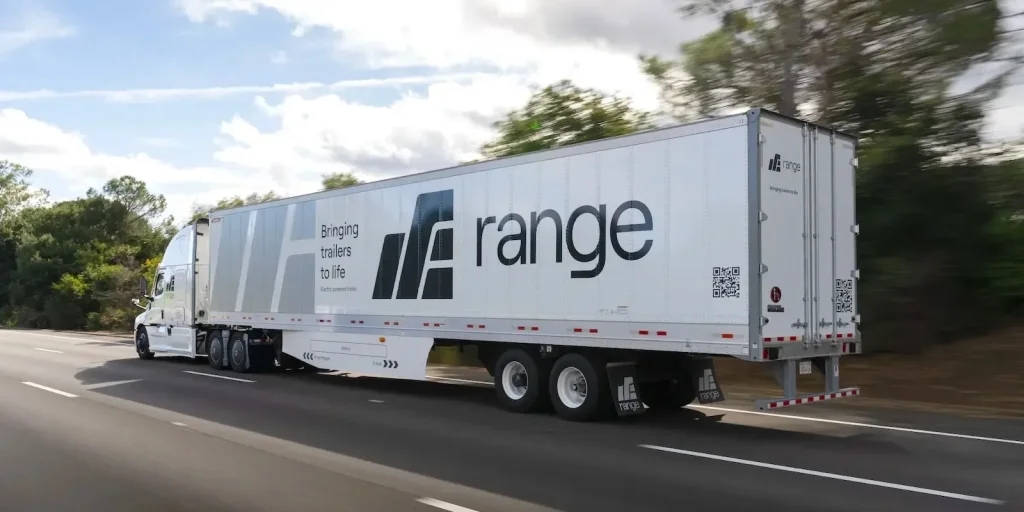
Range Energy, a California-based startup founded and staffed by former Tesla employees and other EV industry veterans, has published a white paper detailing comparative savings for fleets using its eTrailer versus the fully electric Tesla Semi. The analysis focuses primarily on refrigerated trailer units, known as reefers, which represent Range’s initial product focus. Range’s eTrailer features an integrated battery and motors, allowing the trailer to pull its own weight and significantly cut diesel usage on a standard tractor. Earlier testing by Range showed a 36% reduction in fuel use, while a pilot program with a California egg farm yielded a 50% to 70% improvement in diesel fleet fuel efficiency. The new white paper compares the eTrailer against the Tesla Semi, omitting other electric semi tractors currently on the market. According to the analysis, fleets can save money with the Range eTrailer and theoretically save more with the Tesla Semi in certain setups, though the numbers remain relatively close in the most common scenario. The Tesla Semi can incur higher costs if fleets rely entirely on public chargers rather than commercial utility rates at their own depots. Furthermore, optimizing Tesla Semi charging requires strategies such as having two Semis share the same charger alongside tight timings and overnight driving. A notable advantage of the eTrailer is its immediate integration capability with minimal operational changes, whereas deploying an electric tractor typically requires larger depot infrastructure projects to install heavy-duty chargers. Ultimately, Range found that its eTrailer saves slightly more money than the Tesla Semi in most evaluated scenarios, though the margin is narrow and each approach carries distinct strengths and weaknesses. Crucially, the two technologies are not mutually exclusive; an electrified trailer can still be paired with an electric tractor to extend range on long hauls with light loads. However, the analysis notes several limitations, including estimated future diesel costs, the exclusion of financing costs, a lack of real-world data for the Tesla Semi, and the omission of other electrified tractor or trailer options, regional incentives, and diesel emissions costs. Both solutions face timing hurdles as well. Tesla Semis have been on order for nearly a decade with production claims only recently starting in earnest, while Range expects volume production of its eTrailer to begin in late 2027.
📱 Follow our Telegram channel for daily updates
Source: Electrek