🔔 Read us on Telegram — don’t miss the latest automotive news → t.me/motorhub_en
Oil spills devastate marine ecosystems, and traditional cleanup methods often compound the damage. Now, engineers at RMIT University in Melbourne have built a pint-size aquatic robot that could make spills easier to handle—while also salvaging the oil for reuse.
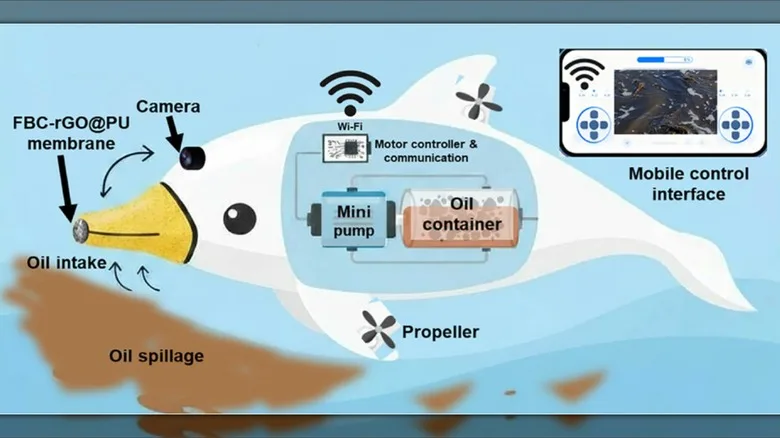
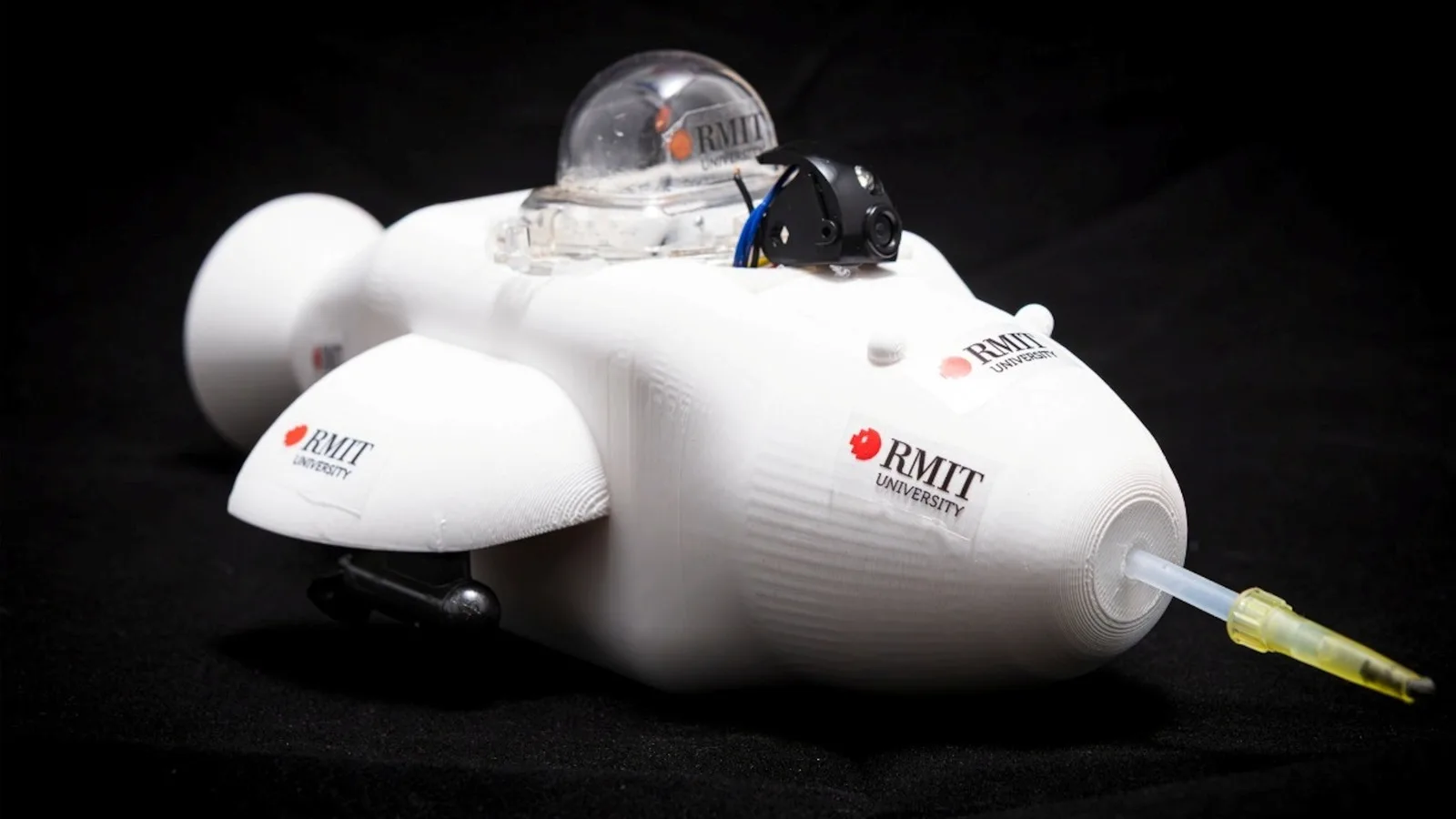
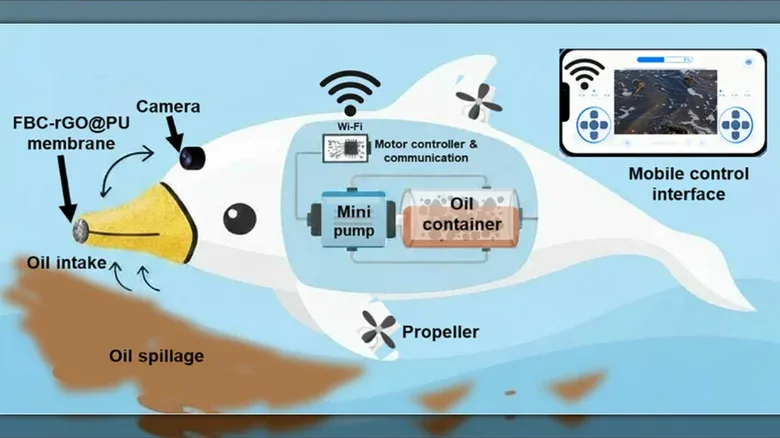
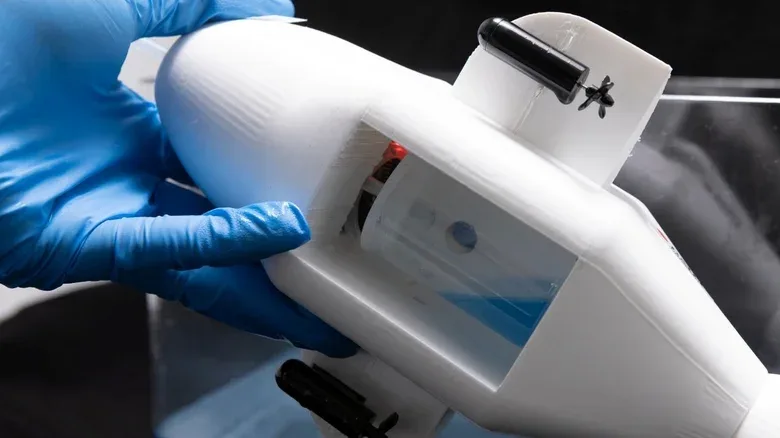
Meet the “Electronic Dolphin,” a minibot designed to skim oil from contaminated water with surprising efficiency and minimal environmental impact. The robot’s secret weapon is a filter coated with microscopic, sea-urchin-like spikes that repel water yet soak up oil.
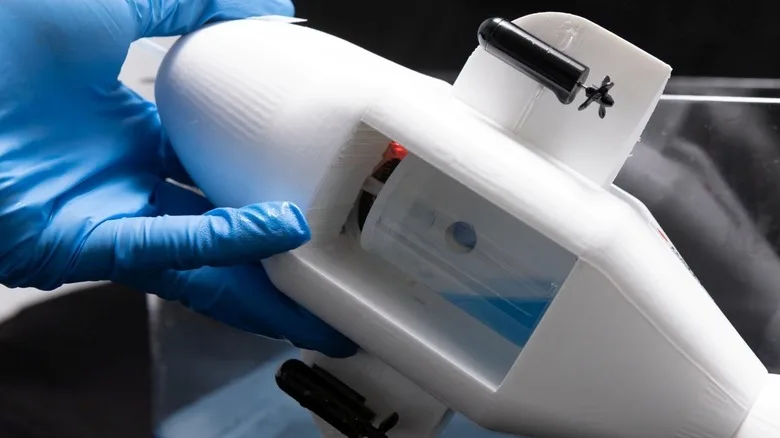
A small pump inside the housing draws the captured crude into an internal reservoir, leaving the surrounding water untouched. In lab tests, the device achieved a 97 percent oil-removal rate, outperforming many chemical dispersants, controlled burns, and even hair-mat skimmers.
Unlike chemical treatments—which can introduce PFAs into the water—or burning, which releases toxic fumes, the minibot offers a cleaner path to containment. Current cleanup alternatives include floating booms to corral the slick, mechanical skimmers deployed by large boats, and absorbent mats made from human hair, but none of these recover oil for repurposing.
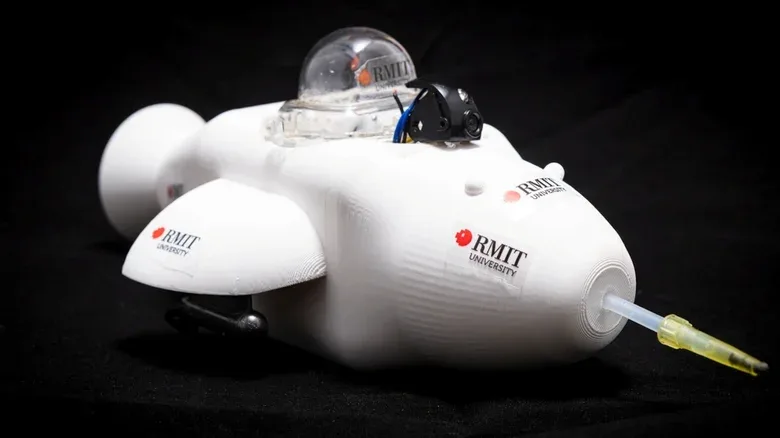
The Electronic Dolphin, by contrast, collects the crude intact, turning a liability into a resource. The prototype’s 15-minute battery life and small size mean real-world deployment would require coordinated swarms working in shifts—a logistical challenge that researchers are already tackling by scaling up the filter and extending runtime.
While the concept is still in early stages, the team envisions a future where fleets of these robots could tackle spills of any scale, from coastal refinery leaks to major maritime disasters. The technology could prove especially valuable in crisis zones like the Strait of Hormuz, where repeated tank breaches and wartime damage have left fragile ecosystems like Iran’s Shidvar Island—an internationally protected Ramsar wetland—covered in crude.
Satellite imagery has shown slicks stretching for miles, yet cleanup efforts often lag for months, leaving wildlife to suffer the consequences.
📱 Follow our Telegram channel for daily updates
Source: Jalopnik (Auto Culture & Tuning) (jalopnik.com)