🔔 Read us on Telegram — don’t miss the latest automotive news → t.me/motorhub_en
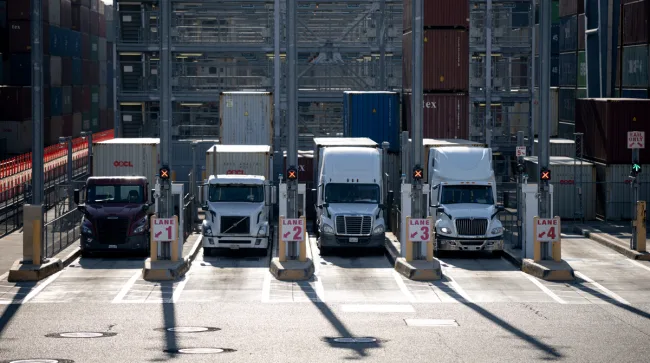
Port trucking companies operating at major U.S. seaports remain under severe financial strain despite a rebound in May import volumes, according to industry leaders. The Harbor Trucking Association’s CEO, Robert Loya, described the current climate as a “freight recession,” noting that carriers are still grappling with weak freight rates, soaring fuel costs, chronic congestion, and persistent appointment delays—even as overall container imports surged. Descartes Systems Group reported that U.S. container imports rose 11.5% year-over-year in May to 2,428,758 twenty-foot equivalent units (TEUs), a 6.6% sequential increase, but warned of ongoing geopolitical risks, including trade tensions and instability in key shipping lanes like the Strait of Hormuz. The Port of Los Angeles saw container volume jump 17% to 840,165 TEUs, while the Port of Long Beach climbed 31.7% to 842,030 TEUs, figures that port officials framed as signs of resilience amid tariff uncertainty. However, Loya emphasized that these gains have not translated into better conditions for truckers, who continue to face a “race to the bottom” on rates. He attributed much of the import surge to shippers frontloading cargo ahead of a potential tariff increase scheduled for July 24, but stressed that the market remains uneven, with some carriers thriving while others—particularly smaller operators—struggle to stay afloat. Fuel cost declines have provided little relief, as brokers increasingly demand all-in rates, and many port-dependent carriers lack the flexibility to exit unprofitable routes. The challenges extend beyond Southern California, with Loya observing worsening conditions further up the West Coast. To cut costs, carriers are adopting AI-driven logistics, outsourcing back-office functions, and exploring creative operational adjustments, though larger companies have more resources to adapt than smaller or mid-sized firms. Meanwhile, IMC Logistics reported ongoing throughput issues at terminals in Newark, New Orleans, and Mobile, Alabama, citing congestion, stressed chassis availability, and delays in securing appointment slots. Newark Terminals averaged 2.5 hours per gate move compared to 1–1.5 hours at other terminals, a problem that has persisted for over a year. Oakland’s International Container Terminal also faces throughput struggles, though volume there remains flat. Appointment delays at most terminals have worsened, with waits now exceeding 1.5 days upon discharge—up from one day just 30 days prior. Other major ports reported mixed results: the Northwest Seaport Alliance saw a 5.1% decline in container volume, South Carolina Ports Authority reported a 2.2% drop, while Port Houston and the Port of Oakland posted modest gains of 4% and 1.9%, respectively. Despite these challenges, ports are pushing forward with sustainability initiatives, such as Long Beach’s recognition of Bali Express Services for establishing a green truck corridor to Mexico, reflecting broader efforts to reduce emissions amid growing trade with the country.
📱 Follow our Telegram channel for daily updates
Source: Transport Topics — Michelin & Tires (EN) (ttnews.com)