🔔 Read us on Telegram — don’t miss the latest automotive news → t.me/motorhub_en
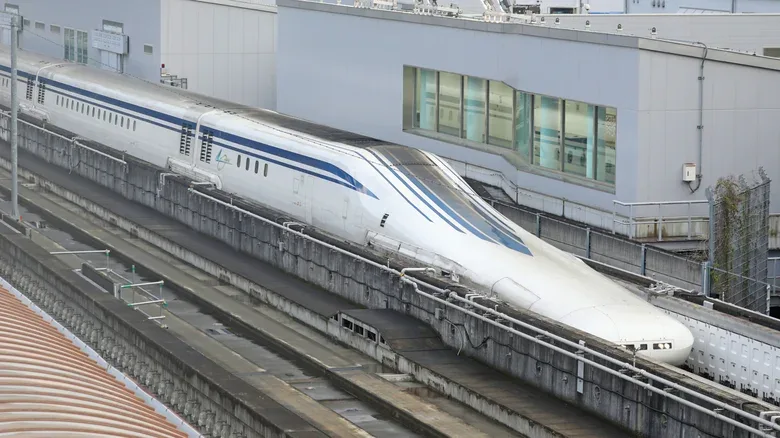
Japan’s Central Japan Railway Company (JR Central) L0 Series maglev train holds the Guinness World Record for the fastest passenger train ever built, achieving a verified top speed of 375 mph (603 kph) in 2015. However, this record-breaking run was not part of regular passenger service. The fastest maglev train currently available for regular rides is the Transrapid Maglev Shanghai, which operates an 18-mile route between Shanghai’s Pudong District and Shanghai Pudong International Airport in about eight minutes, reaching speeds of 267 mph. The Shanghai maglev holds the Guinness World Record for the fastest maglev in regular service, with a top speed of 311 mph (501 kph).
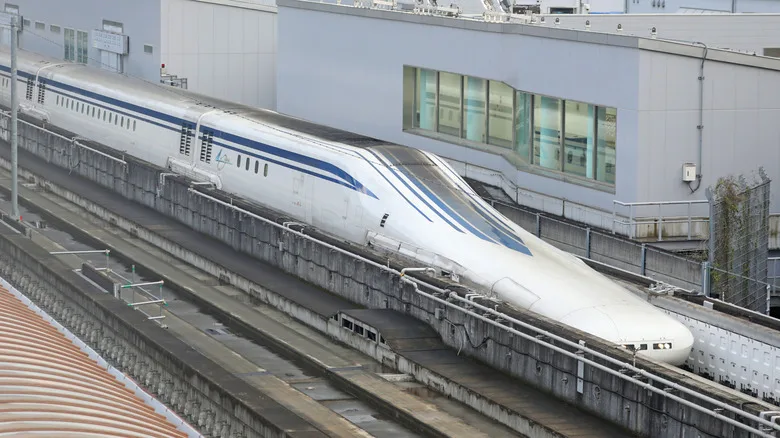
Maglev technology uses magnetic levitation to eliminate friction between the train and the track. Instead of traditional steel wheels on rails, maglev trains ride on a guideway, where electromagnets on the train interact with the guideway to lift the train and propel it forward. Japan’s L0 Series maglev uses wheels for speeds below 93 mph (150 kph), but at higher speeds, the magnetic force increases, lifting the train four inches off the ground. This eliminates wheel friction and allows for smoother, faster travel. The L0 Series is designed to ride higher than the Shanghai maglev to provide additional clearance in case of track distortion during earthquakes, a common concern in Japan.
A major challenge with maglev systems is managing the heat generated by strong magnetic fields. JR Central addresses this by cooling the electromagnets with liquid helium and nitrogen, though the company is researching alternative magnet materials to simplify the system and reduce cooling requirements.
While the L0 Series set the speed record, passengers cannot regularly ride it yet. The long-awaited Chuo Shinkansen line, which will connect Tokyo to Nagoya using L0 Series maglev technology, is not expected to open until 2037 due to construction delays and environmental concerns. Until then, there’s a workaround: JR Central occasionally offers public test rides on the L0 Series. These runs are not on a fixed schedule but occur semi-regularly, and tickets cost 4,400 yen (approximately $27).
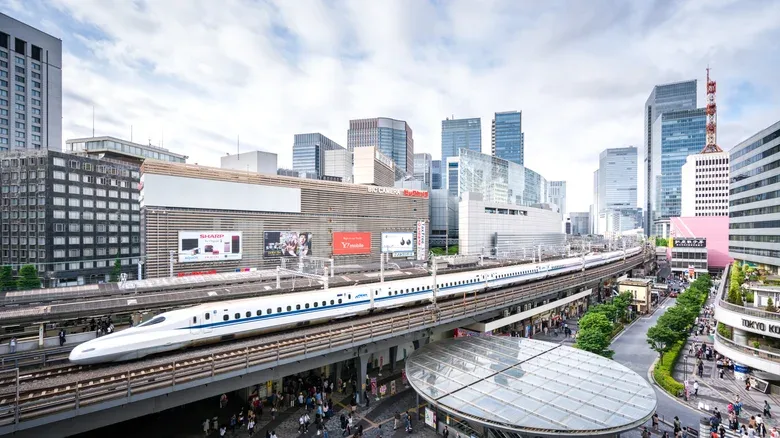
Other maglev systems around the world are far slower. South Korea’s Incheon Airport Maglev operates at just 25 mph (40 kph), while Japan’s Linimo line in Nagoya, which connects to the Toyota Automobile Museum, reaches a top speed of 62 mph (100 kph). Even China’s CR400 Fuxing conventional bullet train, which tops out at 217 mph (350 kph), outpaces most maglevs in average speed over longer distances.
China is not standing still in the maglev race. Researchers at the Donghu Laboratory High-Speed Magnetic Levitation Electromagnetic Propulsion Technology center in Hubei province demonstrated a maglev train capable of speeds up to 800 kph (500 mph) last year. While this technology is not yet available for public use, it signals China’s ambition to push maglev speeds beyond what Japan has achieved. The push for faster trains reflects a broader trend: in some cases, high-speed maglevs could eventually surpass air travel for short to medium distances, offering a faster, more efficient alternative to planes.
📱 Follow our Telegram channel for daily updates
Source: Jalopnik (Auto Culture & Tuning) (jalopnik.com)