🔔 Read us on Telegram — don’t miss the latest automotive news → t.me/motorhub_en
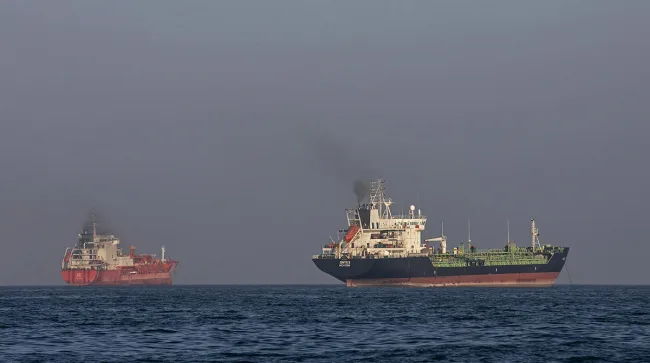
Global shipowners and traders are reacting with caution to a US-Iran deal aimed at reopening the Strait of Hormuz within days, insisting they need concrete details before risking safe passage through the critical chokepoint. The agreement, which President Donald Trump has said will take effect on June 19, 2026, promises 60 days of free transits before Iran begins charging for navigation services, according to Iran’s semi-official Fars News Agency. However, industry leaders warn that past false starts and ongoing security risks—including mine clearance needs and coordinated vessel movements—could still derail any resumption of normal traffic. The strait, a vital artery for global oil and gas flows, has seen transits plummet to a fraction of the prewar average of about 135 daily, with hundreds of vessels stranded in the Persian Gulf and Gulf of Oman. Major Japanese shipping firms Mitsui OSK Lines and Nippon Yusen KK emphasized that safe navigation hinges on finalized agreements, close government coordination, and insurance firm approvals before they resume transits. BIMCO, the world’s largest shipowners’ trade group, stressed that key details—such as security assurances and mine clearance—remain unclear. “From the bridge and the engine room where we’re sitting, right now it looks very different to what the headlines may say,” said Angad Banga, CEO of The Caravel Group, which manages one of the world’s largest ship fleets and has crews trapped in the Persian Gulf. “We’ve seen positive signals before, and I think ultimately what matters is what holds.” Traffic remains uneven, with only 29 verified vessel crossings recorded between June 10 and 14, 2026, covering crude, refined products, LPG, chemicals, methanol, and general cargo. Activity spiked on June 11 and 12, but the broader market is still assessing risks, with Greek shipowners reportedly more willing to take chances compared to Japanese, Korean, and Chinese operators. The strait’s congestion and electronic interference—complicating vessel tracking—add further layers of uncertainty. While the deal has driven Brent oil futures down nearly 5%, shipowners are prioritizing practical concerns over optimism. Even if transits resume, logistical hurdles like hull maintenance and crew readiness could delay full recovery. Security remains the paramount issue, as past agreements have collapsed with Iranian forces seizing vessels or firing on ships. Iran’s plan to charge for navigation services after 60 days—covering safety, environmental, and insurance costs—has yet to be clarified in detail.
📱 Follow our Telegram channel for daily updates
Source: Transport Topics — Michelin & Tires (EN) (ttnews.com)