🔔 Read us on Telegram — don’t miss the latest automotive news → t.me/motorhub_en
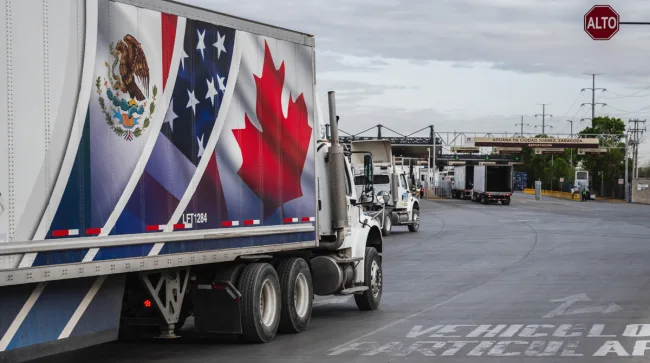
The U.S. has declined to renew the U.S.-Mexico-Canada Agreement (USMCA) for another 16 years, instead choosing to implement annual reviews of the trade pact, U.S. Trade Representative Jamieson Greer announced on July 1, 2026. The existing USMCA will remain in force for at least another decade unless one of the three countries decides to exit. The decision introduces significant uncertainty for North American supply chains, which saw intraregional trade exceed $1.6 trillion in 2024, up from $1 trillion when the agreement took effect in 2020. Annual reviews replace the planned long-term renewal, opening the door to prolonged negotiations over rules governing continent-wide supply chains, tariffs, and trade terms critical to automakers, farmers, retailers, and energy companies. Greer stated the Trump administration is “not prepared to rubber stamp the agreement,” citing “substantial issues” and the need for changes to address imbalances. The move marks a sharp reversal from 2020, when then-President Donald Trump championed USMCA as the “best and most important trade deal ever made.” His stance shifted during his second term due to dissatisfaction with protections against tariffs and limited progress in reducing trade deficits with Mexico and Canada. While the U.S. decision was not entirely unexpected, it underscores broader tensions in North American trade relations. USMCA has underpinned economic stability in the region, accounting for nearly a third of global GDP, despite Trump’s tariff conflicts with China and other major trading partners. His administration’s push to reshore manufacturing jobs and extract concessions from trading partners has added pressure ahead of the July 1 milestone. Key flashpoints include ongoing U.S. duties on autos and metals, which remain contentious in negotiations with Mexico and Canada. Under the new framework, the three countries can attempt to reach an agreement over the next decade. If no resolution is achieved, the pact will expire in 2036. Patrick Childress, co-lead for Holland & Knight’s USMCA team, noted the lack of a short- or medium-term deadline creates uncertainty for businesses. Washington has already engaged in formal talks with Mexico but has largely excluded Canada from negotiations. Tensions with Prime Minister Mark Carney have further complicated discussions, as Canada seeks to reduce its trade dependence on the U.S. Geopolitical factors, including China’s assertive trade posture, add another layer of complexity. Critical USMCA issues include a minimum threshold requirement for American auto parts and stricter rules of origin for autos to prevent transshipments of Chinese inputs. The U.S. has also raised concerns about Chinese investment in Mexico and Canada, questioning the alignment of these countries with American national-security priorities. Greer criticized Canada for sending “mixed messages,” noting its willingness to support U.S. industrialization efforts while pursuing Chinese investment. The prolonged negotiating process, combined with Trump’s leverage-driven approach, could deter companies from making long-term investments. Lobbying groups such as the U.S. Chamber of Commerce and the Business Roundtable have urged governments to strengthen and retain the agreement. Madeline Chalecki of the Atlantic Council’s GeoEconomics Center warned that supply chains, which require decades-long visibility, could suffer from the uncertainty. In May, associations representing most of the North American auto market wrote to Greer, advocating for a strengthened and extended deal. In June, the U.S. Chamber of Commerce mobilized over 70 business partners to lobby lawmakers on Capitol Hill, pressing for the maintenance of the existing framework and full compliance from all parties.
📱 Follow our Telegram channel for daily updates
Source: Transport Topics — Michelin & Tires (EN) (ttnews.com)