🔔 Read us on Telegram — don’t miss the latest automotive news → t.me/motorhub_en
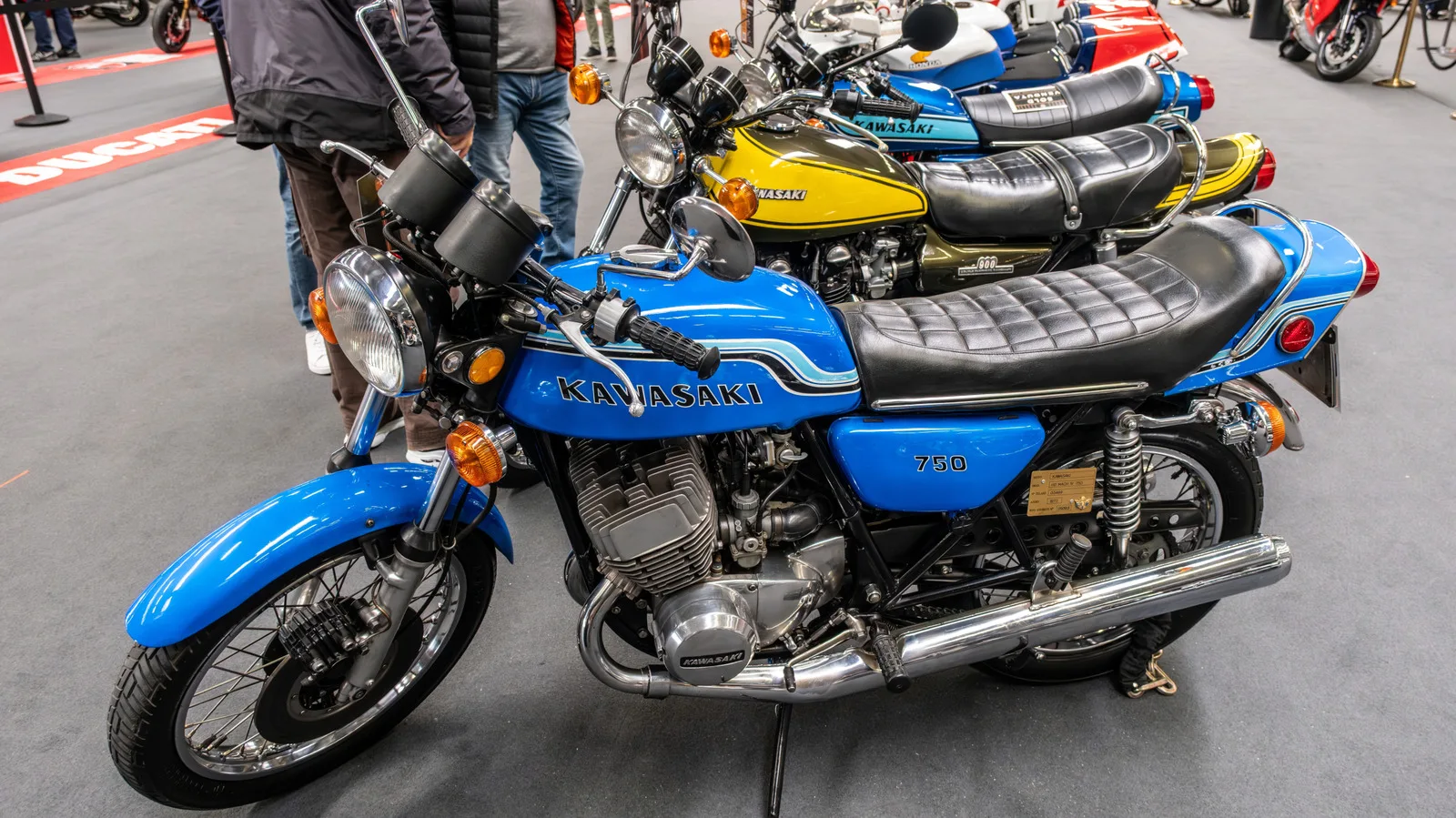
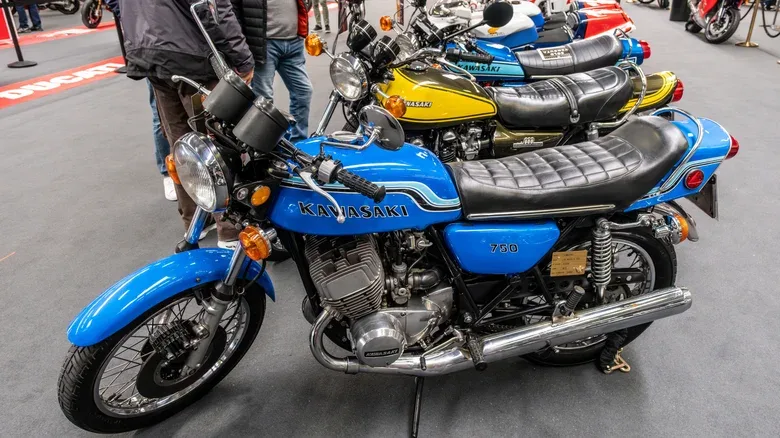
In the early 1970s, Kawasaki’s Mach IV H2 750 became infamous as “The Widowmaker”—a two-stroke triple that delivered brutal acceleration but demanded a rider’s full attention. With a 748cc air-cooled two-stroke triple churning out 74 horsepower, the H2 could hit the quarter-mile in under 12 seconds, outpacing most rivals. But its aggressive power delivery was a double-edged sword. Below 4,000 rpm, the bike was docile, but once the revs climbed past that mark, torque surged instantly, threatening to break rear traction or send the lightweight chassis into a high-speed wobble.
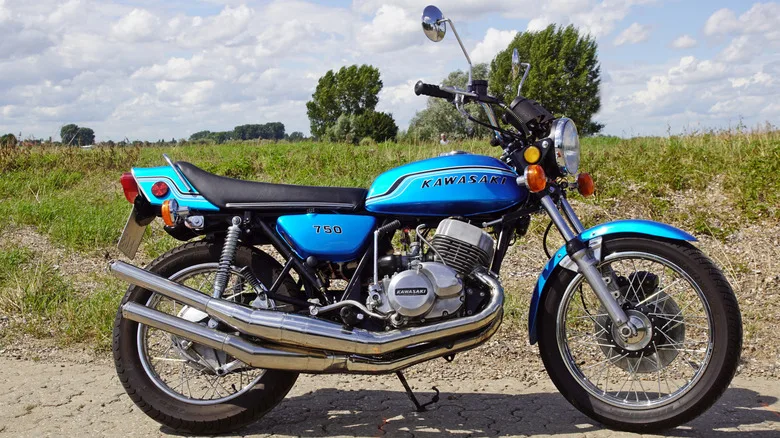
The short wheelbase, flexible frame, and light front end made matters worse, frequently flinging riders off mid-corner. The H2’s lethal reputation wasn’t just hype—it was earned. By 1974, Kawasaki knew it had to act. Engineers didn’t redesign the engine but instead reworked the chassis and exhaust to tame the beast.
They lengthened the swingarm and stretched the wheelbase to keep the front tire planted, while sharpening the steering rake from 28 degrees to 26.5 degrees and increasing trail to 4.09 inches for high-speed stability. Inside the engine, subtle port timing tweaks and a revised exhaust system smoothed out the torque curve, shaving peak horsepower to 71 in 1974 and 70 in 1975. The result? A more predictable powerband and a motorcycle that was far less likely to betray its rider.
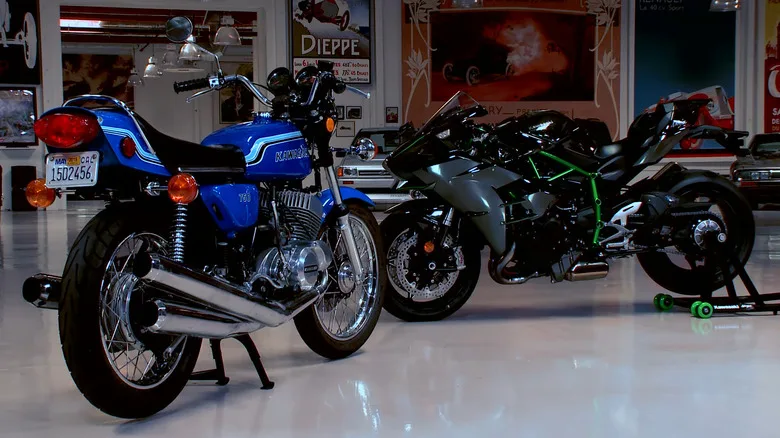
The trade-off was a slight loss in raw acceleration, but the H2 became safer and more rideable. Yet the changes dulled some of its legendary edge. The H2’s reign was already doomed by external forces. The 1970s oil crisis, tightening emissions standards, and the US Clean Air Act made big two-strokes obsolete—dirty, loud, and thirsty.
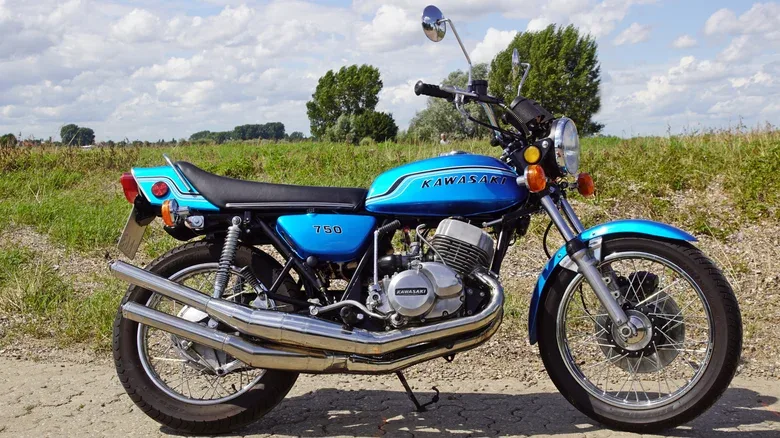
Early H2s trailed thick blue smoke due to dealer-set oil pumps, and two-strokes were inherently unfriendly to the environment. By 1975, Kawasaki abandoned two-stroke development entirely, pivoting to four-strokes like the legendary Kawasaki Z1 900, a four-cylinder superbike that proved performance didn’t have to feel like a death wish. Today, the original 1972 H2s are prized by collectors, with pristine examples fetching $30,000 to $50,000 at auction. In an era where electronic nannies and sanitized performance dominate, the H2 remains a brutal reminder of what unfiltered, terrifying power once felt like.
📱 Follow our Telegram channel for daily updates
Source: Jalopnik (Auto Culture & Tuning) (jalopnik.com)