🔔 Read us on Telegram — don’t miss the latest automotive news → t.me/motorhub_en
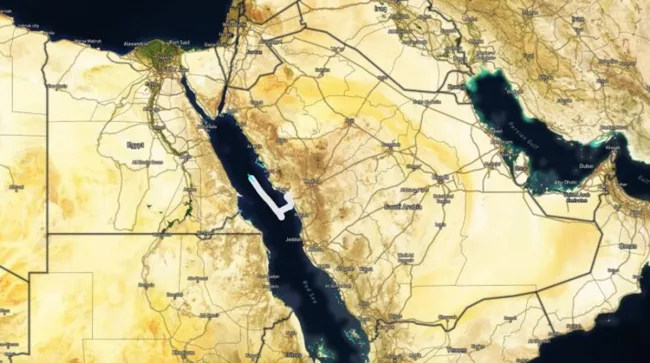
Global oil markets are now grappling with a dual supply-risk crisis as Houthi threats against Saudi-linked shipping at the Bab el-Mandeb Strait force tankers and vessels to reroute or pause transits, compounding existing strains from U.S.-Iran hostilities. Brent crude futures have surged past $95 a barrel amid the escalating disruptions, while freight costs are expected to rise as shipping companies reassess Red Sea routes. The Bab el-Mandeb Strait, a narrow chokepoint at the southern end of the Red Sea, has become a critical flashpoint after Yemen’s Iran-backed Houthi rebels announced an embargo on Saudi oil exports through the strait. Tracking data shows vessels are diverting north toward the Suez Canal—adding up to 30 days of sailing time in some cases—or pausing journeys entirely. No crude oil tankers have been observed transiting Bab el-Mandeb since the Houthis issued warnings to shipowners this week, though some may have passed with transponders turned off. The disruption comes as global oil markets remain volatile due to renewed hostilities in the Gulf and the collapse of a U.S.-Iran ceasefire. Brent futures have already climbed more than 30% this month, breaching $95 a barrel. At Saudi Arabia’s Yanbu port, a key export hub for Saudi oil bypassing the Strait of Hormuz, only two of seven oil-export berths were in use on July 22, according to tracking data. The European Union’s naval force in the Red Sea has advised merchant vessels linked to Saudi Arabia and the U.S. to avoid transiting near Yemen and to turn off transponders if calling at Saudi ports. “Middle East risk has become a two-chokepoint problem,” wrote Standard Chartered analysts Emily Ashford and team. “The cost of moving barrels is likely to increase while the risk persists.” To maintain oil flows, Saudi Arabia has redirected exports across the country to its western Red Sea terminals, shipping a record 5.9 million barrels per day from Yanbu in the week ending July 17, according to Bloomberg tanker tracking. The Houthi embargo now threatens this flow, despite the militants having not attacked a ship since September 2025, per EU data. The first operational responses to the escalating risks are already visible. MarineTraffic data shows two laden crude tankers—the Singapore-flagged *Xin Long Yang* and the Liberia-flagged *Rodos*—altering their routes, while at least six crude tankers destined for Yanbu have turned back or stalled in the Arabian Sea near the Bab el-Mandeb approach. On July 21, the Greek-owned Suezmax tanker *Amazon*, loaded with over 1 million barrels of crude from Yanbu, rerouted to the Suez Canal en route to India. Owned by Dynacom Tankers Management, the vessel had previously operated in the Persian Gulf despite early Iran war disruptions, though several of its ships have been targeted in both the Strait of Hormuz and the Black Sea in recent days. The escalation risks tightening global supply further. “The escalation of violence between the U.S. and Iran now threatens even those few Middle Eastern crude barrels that have been able to bypass Hormuz,” noted Braemar analysts Henry Curra and team. “Unless the chaos in the Middle East can be resolved quickly, we are likely to see a re-emergence of our ‘urgency premium’ for freight.” The Joint Maritime Information Center, a global naval security monitoring body, confirms Houthi militants are positioned near Bab el-Mandeb and ready to attack shipping. With vessels disguising their positions to avoid strikes, tracking movements in the region has become increasingly difficult, adding to market uncertainty.
📱 Follow our Telegram channel for daily updates
Source: Transport Topics — Michelin & Tires (EN) (ttnews.com)