🔔 Read us on Telegram — don’t miss the latest automotive news → t.me/motorhub_en
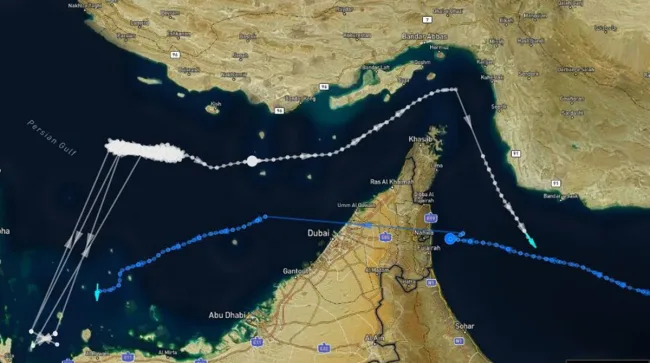
Maritime traffic through the Strait of Hormuz has rebounded in recent days despite persistent hostilities in the Middle East, with U.S. officials confirming that Navy escorts helped maintain oil and gas flows from the Persian Gulf. On July 29, 14 commodity vessels crossed the strait in both directions, up from single-digit crossings last week, according to data from market intelligence firm Kpler. The uptick follows a mid-July decline triggered by escalating U.S.-Iran tensions, which briefly disrupted shipping activity. Qatar’s first liquefied natural gas (LNG) cargo in three weeks departed the Persian Gulf early July 30 aboard the Al Areesh, while the liquefied petroleum gas (LPG) carrier CYH Yongchun transited the strait with its transponder off, ship-tracking data shows. A crude supertanker has also been provisionally booked at nearly $500,000 per day to load a cargo at an unnamed Persian Gulf port next week for delivery to China. Shipowners and traders are closely monitoring maritime activity through Hormuz and the Bab el-Mandeb strait in the Red Sea, where vessel movements continue to reflect shifting security risks. Traffic through these waterways has fluctuated in response to waves of attacks, including strikes on tankers. Hostilities resumed this week after a brief pause, but Energy Secretary Chris Wright stated that oil flows have continued with U.S. military support. Wright noted that about 6.5 million barrels of oil per day exited the Persian Gulf via Hormuz over the past week, emphasizing the role of U.S. military escorts in restoring global oil and refined product supplies. In the Red Sea, some tankers were observed entering the Gulf of Aden, signaling plans to call at the Saudi Arabian port of Yanbu despite threats from Iran-backed Houthi militants. Additionally, Asian buyers appear to be sourcing cargoes at Egypt’s Mediterranean port of Sidi Kerir, where Saudi Arabia exports crude.
📱 Follow our Telegram channel for daily updates
Source: Transport Topics — Michelin & Tires (EN) (ttnews.com)