🔔 Read us on Telegram — don’t miss the latest automotive news → t.me/motorhub_en
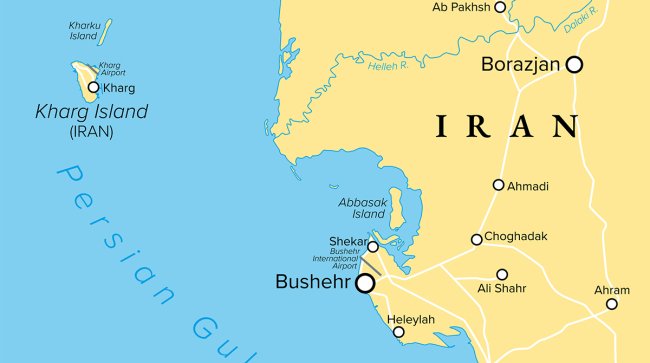
U.S. President Donald Trump escalated tensions with Iran on June 11, 2026, by threatening to launch major strikes and seize “total control” of Iran’s oil and gas industries, including the critical Kharg Island oil terminal. In a social media post, Trump warned Iran that the U.S. would hit the country “VERY HARD TONIGHT” and later take over its energy sector, drawing a parallel to the U.S. intervention in Venezuela’s oil sector after the capture of Nicolás Maduro in January. The threats followed a second consecutive day of U.S.-Iran strikes, with American airstrikes intensifying into the morning of June 11 in Iran. Iran retaliated by firing missiles at Kuwait, Bahrain, and Jordan, mirroring its response from the previous day. The conflict has disrupted global energy flows, with Iran asserting control over the Strait of Hormuz—a vital chokepoint for oil shipments—while the U.S. enforces a blockade on Iranian ports. The U.S. military confirmed it disabled a tanker attempting to transport Iranian oil, and an Indian official reported that a U.S. strike earlier in the week killed three Indian sailors aboard a merchant ship. Kharg Island, located 21 miles off Iran’s coast, is the backbone of Iran’s oil industry, handling 90% of its exports due to the shallow waters along most of Iran’s coastline. The island’s proximity to the mainland makes any U.S. military presence there highly vulnerable to Iranian missile, drone, and artillery attacks. Diplomacy remains stalled, with Iran’s Foreign Ministry calling U.S. attacks a move that “effectively rendered the ceasefire meaningless,” though it did not explicitly abandon the truce. The U.S. Central Command disputed Iran’s claim that the Strait of Hormuz was closed, stating that commercial ships continued to transit the waterway. The two sides are also deadlocked over Iran’s nuclear program, which the U.S. and Israel allege is aimed at developing atomic weapons, despite Iran’s insistence that its program is peaceful. The war, which began on February 28, was initially framed by the U.S. and Israel as a preemptive strike to prevent Iran from acquiring nuclear capabilities. Iran has tied any peace deal to the cessation of fighting in Lebanon between its ally Hezbollah and Israel, but Israeli Prime Minister Benjamin Netanyahu has vowed to destroy the militant group. The latest U.S. airstrikes targeted Iranian military surveillance, communication systems, and air defense sites, with explosions reported in Tehran, Bandar Abbas, and other southern areas near the Strait of Hormuz. Iran’s Revolutionary Guard claimed the strikes hit a manufacturing complex, a military barracks, and a local Guard base outside Tehran. Kuwait briefly closed its airspace during the attacks, though it did not report any damage. Jordan intercepted 20 Iranian missiles fired toward an area hosting American bases. The conflict has sent global fuel prices soaring and exacerbated supply chain disruptions, with food and other essential goods becoming more expensive across the region and beyond.
📱 Follow our Telegram channel for daily updates
Source: Transport Topics — Michelin & Tires (EN)
Source: Transport Topics — Michelin & Tires (EN) (ttnews.com)