🔔 Read us on Telegram — don’t miss the latest automotive news → t.me/motorhub_en
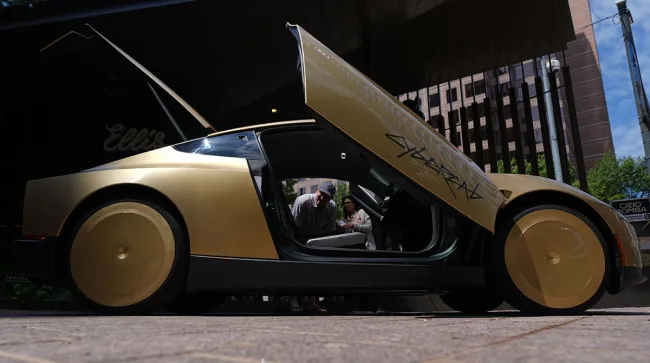
Government Business Technology Safety Autonomous Tesla Cybercab launch draws NHTSA probe the next day Federal agency will audit safety self-certification for the company’s 2-seat driverless taxis Bernard Condon | Associated Press September 4, 2026 4:30 PM, EDT A Tesla Cybercab is displayed in downtown Austin, Texas, on Sept. 3. (Eric Gay/Associated Press) Key Takeaways: Federal regulators opened an investigation into whether Tesla’s steering-wheel-free Cybercabs complied with safety rules after Sept. 3 service began in Austin, Texas. Tesla shares fell more than 5% early Sept. 4 as the company faced several federal investigations into its self-driving technology. NHTSA will audit the process and technical data Tesla used to self-certify Cybercabs that lack steering wheels, mirrors and brake pedals. [Stay on top of transportation news: Get TTNews in your inbox.] NEW YORK — Federal regulators are opening an investigation into whether Tesla’s new steering-wheel-free taxis comply with safety rules a day after the company began offering rides in the vehicles. The National Highway Traffic Safety Administration said it was looking into whether Tesla was in full compliance with federal rules in deploying Cybercabs in Austin, Texas, given that the two-seater cars lack steering wheels, mirrors or brake pedals typically required of all vehicles. The head of the company, Elon Musk, kicked off his Cybercab service in Austin on Sept. 3 with fanfare, sending dozens of the futuristic taxis into the city streets and holding a launch event for invitees. Tesla stock was down more than 5% to $357.38 in early trading Sept. 4 on news of the probe, reversing many of the gains a day earlier. Tesla did not respond immediately to a request for comment. Before the launch, Tesla had said it had relied on a self-certification procedure to make sure the Cybercabs were in compliance, but the agency apparently is unsure if the taxis do indeed meet standards. In its filing, the agency said it will now conduct an audit to “examine the process and technical data” that Tesla used in the certification. The Austin service started what Musk says will be a national rollout of a cheap, driverless taxi service that he promises to transform the way people travel. Musk plans to integrate Cybercabs, which lack manual controls so passengers could take over in an emergency, into the company’s existing cab service that up to now uses just normal Tesla vehicle. That robotaxi network has been operating in Austin for more than a year but has also begun offering rides in five other Texas and Florida cities. The company is facing several federal investigation into the safety of its self-driving software. One probe is examining the software’s role in several Tesla crashes in fog, sun glare and other low-visibility conditions, including one in which a pedestrian was killed. Another is investigating dozens of incidents in which Teslas using partial self-driving software ran red lights or drove on the wrong side of the road, sometimes crashing into other vehicles and causing injuries. A third is examining why Tesla apparently violated regulatory requirements by failing to report crashes promptly. More Content About: Tesla, NHTSA, robotaxi, Elon Musk Related Articles GM Revives Plans for Personal Self-Driving Car Tesla Posts One of Worst Sales Quarters in Years Uber to Deploy 100,000 Nvidia-Powered Robotaxis
📱 Follow our Telegram channel for daily updates
Source: Transport Topics — Michelin & Tires (EN) (ttnews.com)