🔔 Read us on Telegram — don’t miss the latest automotive news → t.me/motorhub_en
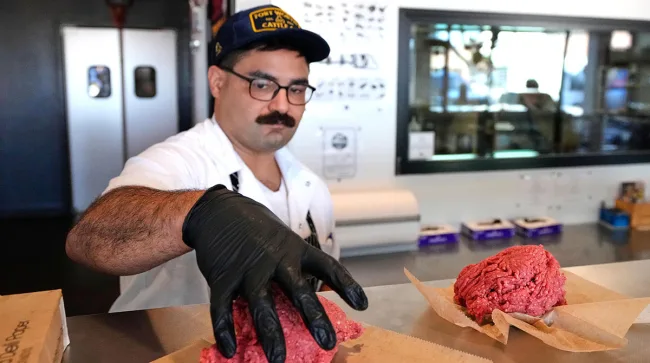
President Donald Trump indicated on August 26, 2026, that he is open to reducing federal regulations on beef processing after conservative radio host Glenn Beck criticized existing rules during a live interview. Speaking on Beck’s show, Trump acknowledged the issue, stating that less regulation “could be a very good call for ranchers or farmers — no, for the country,” though he did not specify what changes might be considered. The remarks come as U.S. beef prices remain historically high, with ground beef averaging $7.116 per pound in July—a 9% increase from the previous year and a 47% jump over five years, according to the U.S. Bureau of Labor Statistics. The elevated prices are driven by a severe cattle shortage, compounded by higher production costs and drought conditions that have made it harder for ranchers to raise livestock. Beck, who has experience as a rancher, argued that excessive federal regulations were stifling the industry, stating, “We can’t butcher with all of the federal regulations,” and urging Trump to “break the back of those processing plants.” The beef processing sector is highly consolidated, with just four companies— Tyson Foods, Cargill Inc., JBS NV, and National Beef Packing Co.—controlling about 85% of U.S. cattle purchases, according to the Department of Agriculture. The Justice Department’s ongoing antitrust investigation into the meatpacking industry aims to address these concerns, while the USDA has committed up to $500 million in payments to support midsize processors amid rising costs. Meanwhile, the Trump administration has taken steps to ease prices, including allowing 300,000 tons of beef imports over the next 90 days at reduced tariff rates. Agriculture Secretary Brooke Rollins emphasized the move as a “short temporary fix” to address supply shortages caused by record-low cattle herds and a 14-month border closure due to the New World screwworm outbreak. However, the strategy risks undermining ranchers’ profitability, as cheaper imports could discourage domestic herd rebuilding—a process already slowed by drought and market uncertainty. Long-term stabilization of beef prices will depend on rebuilding the domestic cattle herd, though imports are expected to reach a record 19% share of total U.S. supply this year.
📱 Follow our Telegram channel for daily updates
Source: Transport Topics — Michelin & Tires (EN) (ttnews.com)