🔔 Read us on Telegram — don’t miss the latest automotive news → t.me/motorhub_en
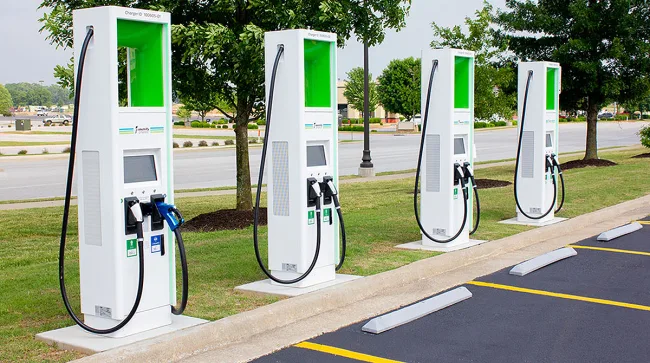
Retail giant Walmart has rapidly expanded into the electric-vehicle charging business, opening 46 high-speed stations with 380 cords through June 2026 and positioning itself as a major competitor in the sector. The buildout leverages Walmart’s nationwide store footprint—now spanning about 326 of its 4,600 U.S. locations—to boost retail sales while serving the 7.6 million plug-in vehicles on American roads. According to the U.S. Department of Energy, Walmart’s network now includes roughly 380 charging cords across 46 high-speed stations, with an estimated 300 additional stations under construction, according to Paren, a charging consultancy. The company has overtaken Costco and other established charging providers, trailing only Tesla in growth. Walmart’s charging stations are now branded in-house across all its EV sites, replacing third-party operators like Electrify America, which had hosted chargers since 2018. The rollout includes four high-speed stations in Bentonville, Arkansas—Walmart’s headquarters—despite the state’s lagging EV adoption. Analysts highlight the strategic value of Walmart’s real estate, which provides widespread access to charging and aligns with the company’s broader retail strategy. Charging an EV takes longer than fueling a gas car, but Walmart views this as an opportunity to drive in-store sales while offering cheaper public charging. Walmart declined to disclose further expansion plans but emphasized its real estate advantage in a statement: “Our broad footprint positions us to make EV charging more accessible for communities while expanding the way we serve customers.” Despite a recent slowdown in EV sales following the expiration of federal incentives, the installed base of plug-in vehicles remains significant. S&P Global reports 7.6 million plug-in vehicles on U.S. roads, with an estimated 90% of Americans living within 10 miles of a Walmart. The company’s charging network is expanding even as EV demand fluctuates, with analysts split on future market trajectories. Walmart is not alone in this space; Target operates 150 high-speed charging stations, Costco has chargers at 42 locations, and Home Depot and Lowe’s combined host 101 stations. Industry estimates suggest that adjacent charging can increase a store’s sales by 5%, with one in five fast-charging stations projected to be located at big-box retailers by 2030. Walmart’s charging rates are reported to be cheaper than the national average, with additional discounts for loyalty members, potentially accelerating EV adoption in regions resistant to electric vehicles. Bill Ferro, cofounder of Paren, described Walmart’s expansion as a strategic move: “They’re steamrolling. It’s the right time to do this and they’ve got the right locations.”
📱 Follow our Telegram channel for daily updates
Source: Transport Topics — Michelin & Tires (EN) (ttnews.com)