🔔 Read us on Telegram — don’t miss the latest automotive news → t.me/motorhub_en
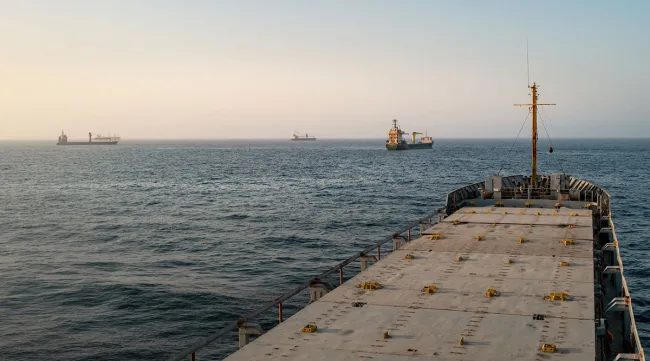
A cargo ship was struck by an unidentified projectile in the Strait of Hormuz on June 25, 2026, just hours after several freighters turned around while attempting to exit the critical waterway. The incident, which UKMTO classified as an attack, damaged the ship’s side and bridge but caused no casualties or environmental harm. The vessel was able to continue sailing. Oil prices surged above $75 a barrel following a Wall Street Journal report that Iran’s Islamic Revolutionary Guard Corps (IRGC) was responsible for the strike. A White House official stated that the U.S. was investigating the incident, including whether it was an IRGC-ordered action or a rogue decision by lower-level personnel. Iran’s foreign ministry did not immediately respond to requests for comment. The attack threatens to undermine fragile confidence among shipowners and crews in the safe reopening of the Strait of Hormuz, a key energy shipping corridor. Earlier in the day, a handful of tankers turned around after reportedly receiving warnings from the Iranian Navy not to cross. Iran’s Persian Gulf Strait Authority (PGSA) reiterated that any transit outside its framework would not be eligible for insurance coverage or protected by “safe-passage guarantees.” Vessels had been rapidly exiting Hormuz since an interim U.S.-Iran peace deal took effect the previous week, boosting global oil supply. Following the attack, the International Maritime Organization (IMO), the UN’s global shipping regulator, paused its evacuation operations in the strait. IMO Secretary-General Arsenio Dominguez stated that the safety of seafarers was paramount and that the evacuation plan would remain paused until further clarity was obtained. The IMO had previously announced on June 23 that it had received safety guarantees allowing hundreds of ships to exit the Persian Gulf through the strait. However, even before the IMO plan was formalized, traffic through the crucial waterway was increasing. Two key exit routes through Hormuz have emerged over the past several weeks due to concerns that the normal central route may have been mined—one near Iran and another hugging Oman’s coastline, protected by the U.S. Earlier on June 25, at least three commercial vessels, including two oil supertankers, appeared to turn around while attempting to cross Hormuz outbound on the Oman side. Shipping intelligence firm Windward Maritime reported that the U-turns followed IRGC instructions delivered via radio and social media. Not all ships turned back simultaneously, according to Bloomberg’s tracking data. Iranian media also claimed that Tehran was reasserting control over transits. The IMO canceled a media briefing scheduled for June 25 minutes before it was due to start, citing unspecified urgent matters. Traffic through Hormuz had surged after the interim U.S.-Iran peace deal took effect, but disruptions persisted, including Iran’s weekend claim that the waterway was shut. The PGSA had stated that no ships could transit Hormuz without its permission. In addition to the three outbound U-turns, a fourth ship appeared to reverse course after sailing toward Hormuz from the Gulf of Oman, according to vessel tracking data.
📱 Follow our Telegram channel for daily updates
Source: Transport Topics — Michelin & Tires (EN) (ttnews.com)