🔔 Read us on Telegram — don’t miss the latest automotive news → t.me/motorhub_en
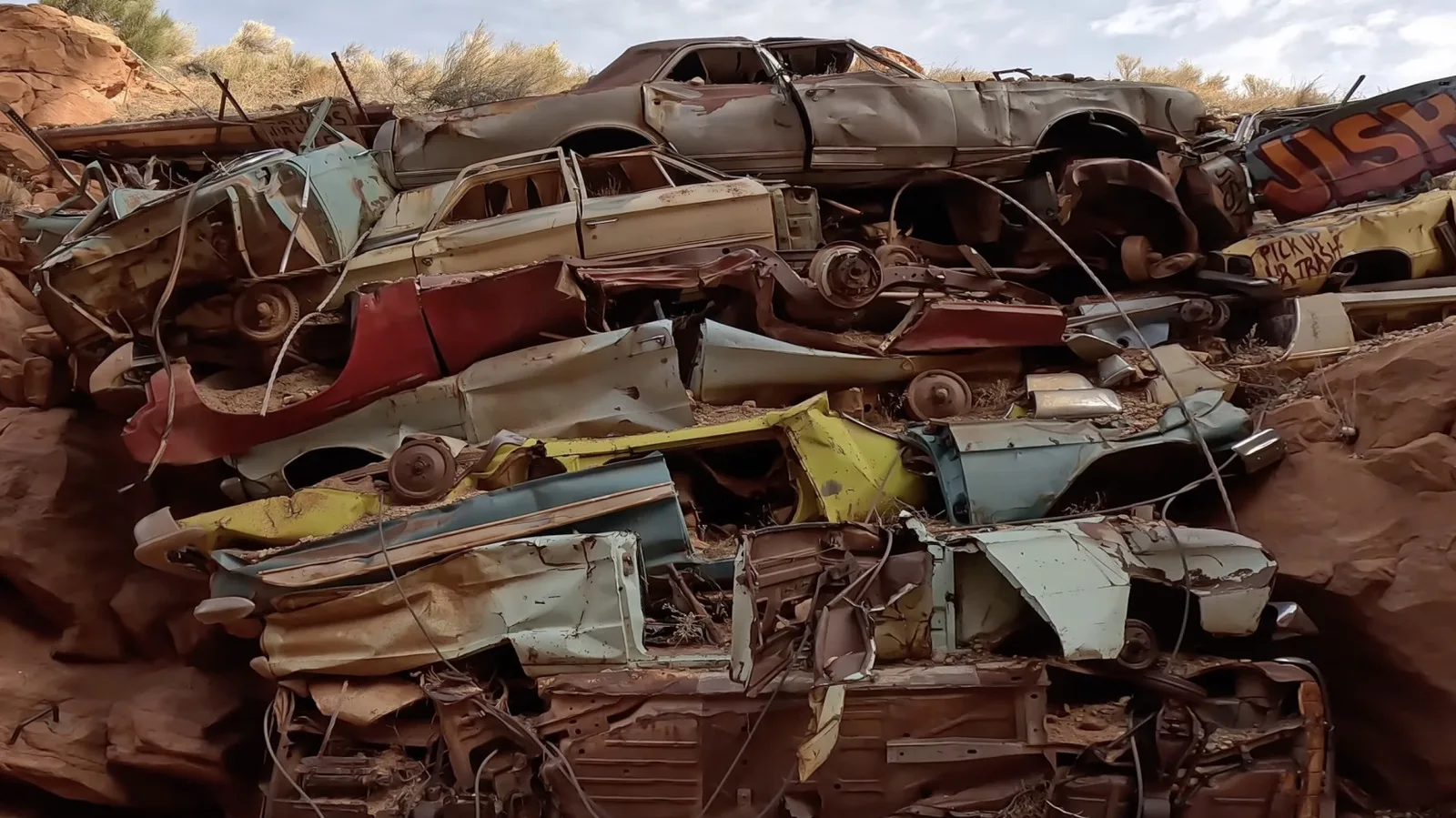
In a narrow sandstone wash off Highway 89 in Southern Utah, a wall of stacked, crushed classic American cars has been sitting for roughly sixty years. This unique structure, known as riprap, was a genuine engineering solution used to resist erosion when engineers were cutting Highway 89 through Catstair Canyon in the 1960s. The cars, filled with gravel, were considered a practical substitute to stabilize the embankment and prevent loose sand from washing away.
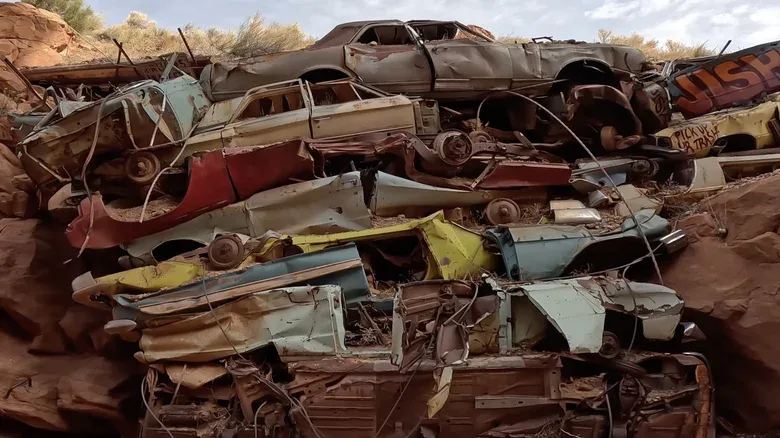
The reasoning behind using junk cars was that they were as resistant to erosion as stone, given their size and ability to be stacked tightly together. The cars were stacked, covered in dirt, and a road was built atop them. Today, the wall remains, preserved by the dry desert air, and has supported the weight of six decades of traffic, compressing the vehicles into a solid mass of rusted steel.
Visitors can hike down into the wash and see the stacks of cars, which include bumpers, headlights, and body panels from popular 1960s American cars. The site is accessible from a small dirt pullout just past the House Rock Valley Road turnoff and requires only minor scrambling to reach. The cars have been there since before most of the people visiting them were born, and they might just outlast the oldest roads in the country.
📱 Follow our Telegram channel for daily updates
Source: Jalopnik (Auto Culture & Tuning) (jalopnik.com)