
🔔 Read us on Telegram — don’t miss the latest automotive news → t.me/motorhub_en
Scammers are weaponising AI to flog non-existent cars on the web, and the cons are getting slicker by the week.
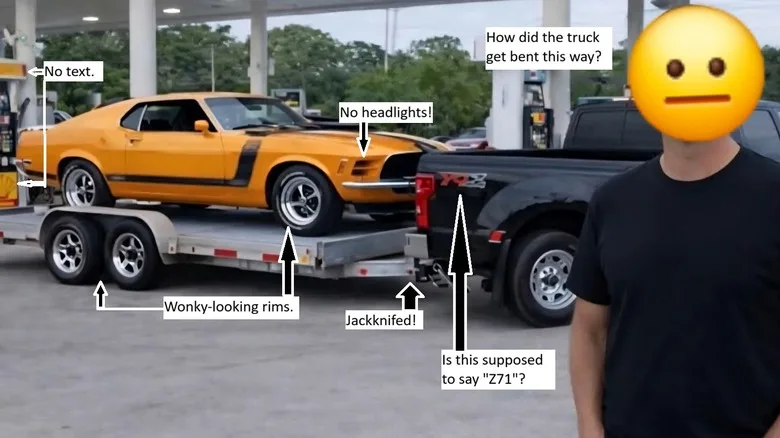
The trick isn’t just to warn Grandma about monkey-CPR videos; it’s to teach everyone how to sniff out an AI-generated car advert before the cash changes hands.
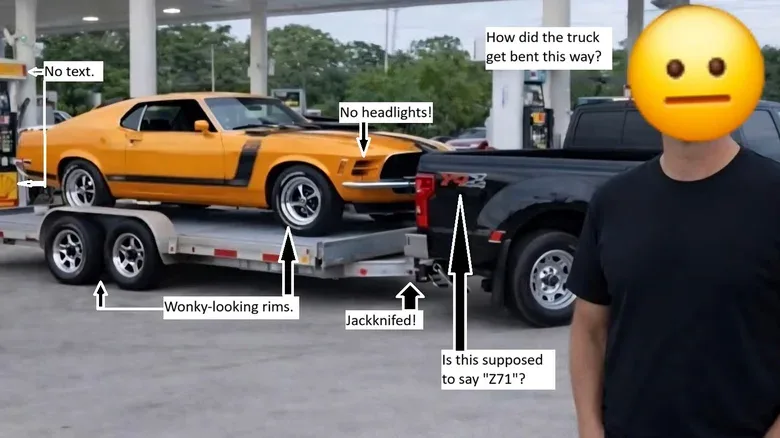
The giveaways are often hiding in plain sight: warped bodywork, wonky badges, tyres whose sidewall text looks more like abstract art, and headlights that have simply vanished.
Reverse-image search is your first line of defence—drag the photo into Google Images and see if the same warped grille or bent truck bed appears elsewhere.

AI text can be polished to a mirror sheen, but it usually lacks the typos, slang, and grammatical rule-breaking that human writers can’t resist.
Asking for a live video call is smart, but remember voices and faces can be cloned or deepfaked in real time; watch for mismatched mouth movements, hair edges that don’t track, or requests to move fingers in front of a light to reveal rendering glitches.
Even the dealership itself might be a clone: prices suspiciously low, contact details swapped, yet the site looks pixel-perfect.

If the seller dodges an in-person meet-up or insists on payment before you’ve seen metal in daylight, trust the instinct that says something’s off.
In short, scrutinise every pixel, read every sentence for the human fingerprint, and never hand over cash until you’ve kicked the tyres yourself.






📱 Follow our Telegram channel for daily updates
Source: Jalopnik (Auto Culture & Tuning) (jalopnik.com)