
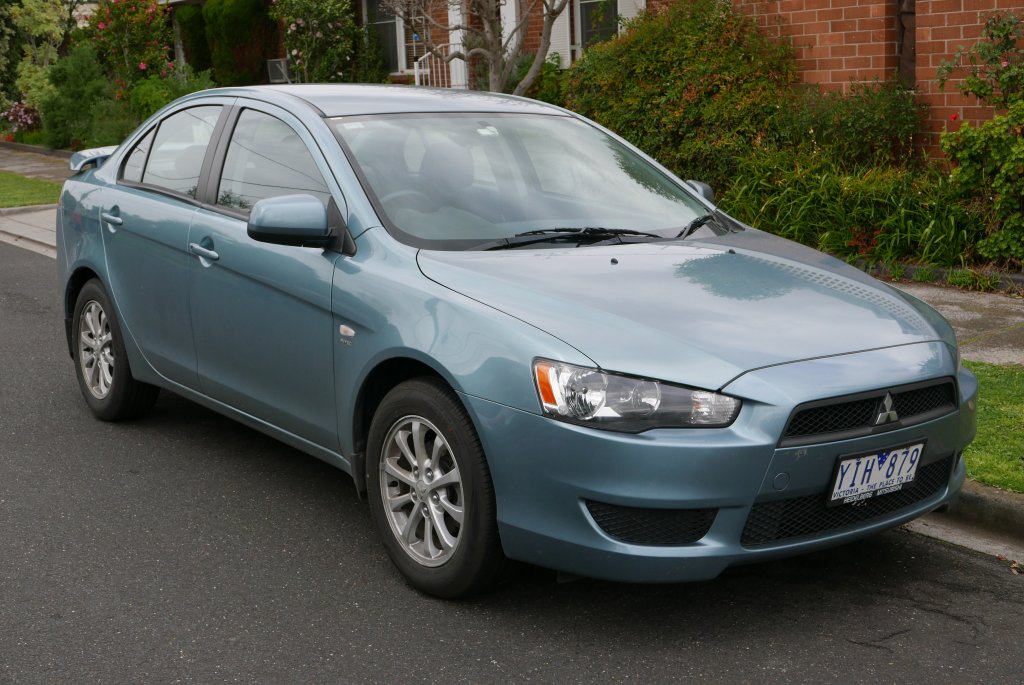
The tenth-generation Mitsubishi Lancer (often called Lancer X) landed around 2007–2008 as a global compact sedan — and, in some markets, a hatch. It brought tighter safety rules, newer electronics, and a wide spread of kits: simple naturally aspirated cars, CVTs, and all-wheel drive depending on the region.
Separate the badges early. Classified ads say “Lancer X” for civilian cars. The Lancer Evolution X is the performance branch: different powertrain character, stronger chassis duty, higher ownership cost. A body kit on a civilian shell does not make an Evo.
One name, many cars
There is no single worldwide Lancer X. Engines, gearboxes, equipment, and even model names differed across the US, Europe, CIS, Australia, and Asia. In Japan, closely related cars also wore other labels (including Fortis). Comparing a “typical internet profile” to a specific VIN without paperwork is pointless.
Powertrains were mostly inline fours from families such as 4B1 and market neighbours. CVT, manual, and AWD combinations drive almost the entire used-car maintenance budget.
Why it left showrooms
By the mid-2010s buyers had moved to crossovers. Mitsubishi attention shifted toward Outlander and compact SUVs. Several regions dropped Lancer without a same-class sedan successor — the name lives on used lots at 150–300k+ km.
- Read engine and gearbox codes in the documents, not just the ad title.
- Separate civilian Lancer from Evolution by hardware, not the bumper.
- Rust and crash history matter as much as on any 15-year-old sedan.
Overview only. Specs and intervals belong in the manual for your VIN.
Photo: Wikimedia Commons (CC)