🔔 Read us on Telegram — don’t miss the latest automotive news → t.me/motorhub_en
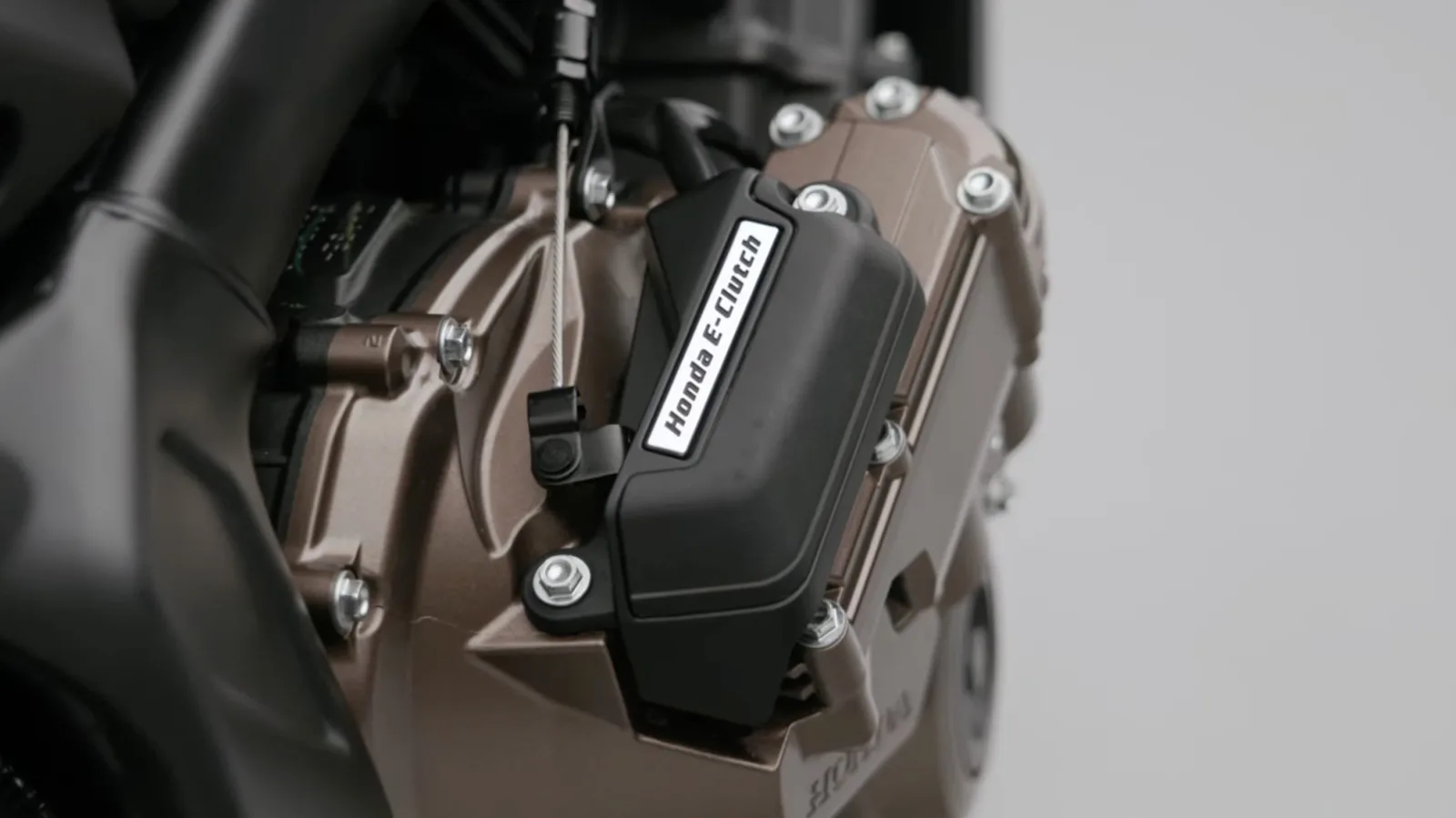
Honda’s E-Clutch system bridges the gap between traditional manual clutch control and fully automatic transmissions, offering riders the best of both worlds without the risk of stalling. Unlike DCT or AMT bikes that eliminate the clutch lever entirely, E-Clutch retains the physical lever while automating clutch disengagement through electronic actuators. The system uses two electric motors and a control unit linked to the ECU, processing inputs like shift pedal load, engine RPM, and gear position to disengage the clutch automatically when the rider operates the lever. The magic lies in Honda’s multi-part shaft design, which splits the clutch linkage into a manual side and a motor-controlled side. The manual side disengages the clutch as usual when the lever is pulled, while the motor-controlled side uses a push-style mechanism to achieve the same result electronically. This dual-shaft setup ensures seamless operation whether the rider chooses to use the electronic assist or override it entirely. The override function is instant and doesn’t require navigating menus, making it unobtrusive even for experienced riders. E-Clutch isn’t just a convenience—it enhances low-speed control by reducing rollback risk on slight inclines and smoothing initial take-up, thanks to its fully electronic actuators. This precision contrasts with centrifugal-type anti-stall systems, like BMW’s Easy Ride Clutch or MV Agusta’s Smart Clutch System, which rely on automatic engagement mechanisms that behave differently in the clutch’s friction zone. Currently, Honda offers E-Clutch as standard on five motorcycles in the United States: the 2024 CB650R, CBR650R, Rebel 300, CB750 Hornet, and Transalp adventure bike. Internationally, the lineup expands to include the CL300, CB500 Hornet, NX500, and CBR500R, according to Cycle World. On ride-by-wire bikes like the CB750 Hornet and Transalp, E-Clutch doubles as an auto-blipper, enabling smoother rev-matched downshifts. However, on bikes with cable throttles, such as the 650 twins, downshifts can feel a bit choppy. The system’s versatility and rider-friendly design make it a standout feature for both novices and seasoned riders looking to simplify clutch management without sacrificing engagement.
📱 Follow our Telegram channel for daily updates
Source: Jalopnik (Auto Culture & Tuning) (jalopnik.com)