🔔 Read us on Telegram — don’t miss the latest automotive news → t.me/motorhub_en
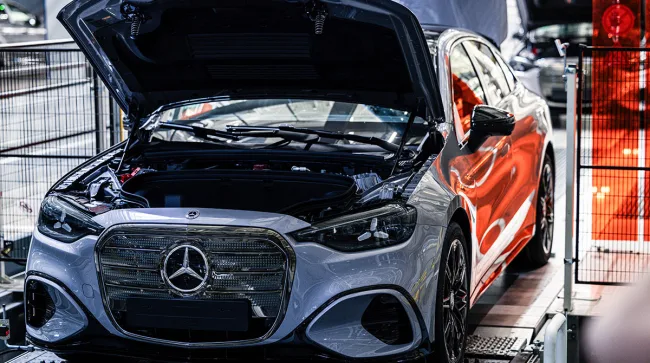
A U.S. Senate committee has unanimously advanced the Connected Vehicle Security Act, a bill that could prohibit the sale of connected vehicles in America if automakers exceed a 15% ownership threshold held by Chinese entities. The legislation, passed by the Senate Commerce, Science and Transportation Committee on July 22, 2026, now heads to the full Senate for consideration, though its future remains uncertain due to internal divisions. The bill’s key provision targets automakers with more than 15% Chinese ownership, a threshold Mercedes-Benz Group AG currently exceeds. The German automaker is nearly 10% owned by China’s state-backed BAIC Motor Corp., while billionaire Li Shu Fu, founder and chairman of Geely, holds another nearly 10% stake in Mercedes, pushing the total Chinese ownership to nearly 20%. Mercedes has lobbied against the bill, pushing for an increase in the threshold to 25%. During the committee hearing, Senator Ted Cruz (R-Texas), chair of the Senate Commerce Committee, argued that the 15% rule was arbitrary and designed to disadvantage competitors, including Mercedes, while benefiting domestic brands like General Motors’ Cadillac. Cruz suggested replacing the quantitative threshold with qualitative national security assessments similar to those conducted by the Committee on Foreign Investment in the U.S. (CFIUS). Senator Bernie Moreno (R-Ohio), the bill’s co-sponsor, countered that the legislation was not intended to target Mercedes specifically. He stated that if the bill becomes law, Mercedes would have until 2030 to comply or seek a waiver from the Commerce Department. Moreno, a former Mercedes dealer, emphasized that the goal was not to ban Mercedes-Benz vehicles in the U.S., noting his family still operates a Mercedes franchise. The bill’s advancement reflects growing bipartisan concerns in Congress over national security risks posed by connected vehicles with ties to Chinese manufacturers. The legislation comes amid broader tensions between the U.S. and China over trade, technology, and industrial policy, with automakers caught in the crossfire as lawmakers seek to safeguard critical infrastructure.
📱 Follow our Telegram channel for daily updates
Source: Transport Topics — Michelin & Tires (EN) (ttnews.com)