🔔 Read us on Telegram — don’t miss the latest automotive news → t.me/motorhub_en
Vespa’s racing chapter began not with motorcycles, but with scooters—tiny, buzzing machines that defied expectations by tearing up race tracks in the late 1940s and early 1950s. Piaggio, the Italian conglomerate that had built planes during World War II, pivoted to scooters as a peacetime solution, and racing became its boldest marketing tool. The result? A parade of bizarre, record-smashing racers that blurred the line between scooter and race bike, proving that even the humblest two-wheeler could be a champion—or at least a headline grabber.
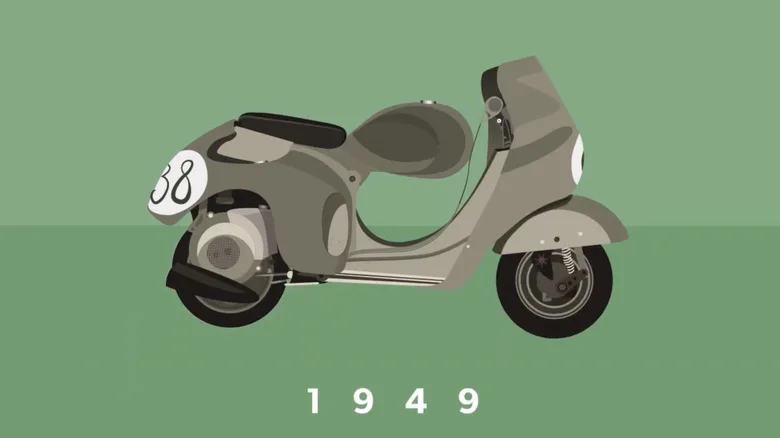
The Vespa’s racing journey kicked off in 1947 with the **98 Corsa**, a stripped-down, track-ready version of the original 98 cc scooter. Debuting at the Viareggio Circuit, it quickly proved its mettle by winning the scooter class in the Naples Grand Prix and dominating the hill climb at Rocca di Papa in Rome. But Piaggio wasn’t satisfied with just victories—it wanted records. The 98 Corsa “Circuit” followed, featuring a smaller fairing, lighter handlebars, and a ventilated engine casing to keep the 98 cc two-stroke cool under pressure. Still, competition from Morini and MV Agusta in the 100 cc class pushed Piaggio to step up to the 125 cc class with the **Super Sport**, a bike that swapped the original’s steel body for aluminum in a bid for speed and agility. The aluminum version, however, wobbled at high speeds due to flex, leaving the steel-bodied model to notch wins for Piaggio.
By the 1950s, Vespa’s racers had evolved into something far stranger—and faster. The **Super Sport** of the era ditched the scooter aesthetic entirely, adopting an aeronautical theme with aluminum alloy construction, riveted panels, and a fuel tank stretched between the seat and handlebars for endurance. This machine, with its lower handlebars and full fairing, looked like a race bike reborn, capable of hitting **80 mph** and securing a 1-2 finish at the Bologna Grand Prix with riders Giuseppe Cau and Dino Mazzoncini at the helm.
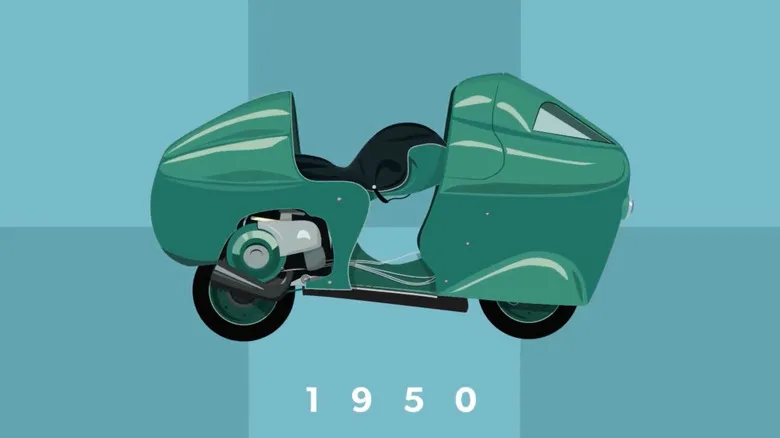
But Piaggio wasn’t done breaking records—or egos. After losing to Innocenti in the 1948 national scooter race at Circuito di Genova, Vespa fought back in 1949 with the **Super Sport Montlhery**, a purpose-built beast sent to France’s Montlhery circuit. There, a trio of riders shattered **17 world records**, including fastest averages over an hour, 100 miles, 500 miles, 1,000 km, and 10 hours. The Montlhery didn’t just look like a race bike—it looked like a car, with tall, sculpted fairings designed to slice through air at speed.
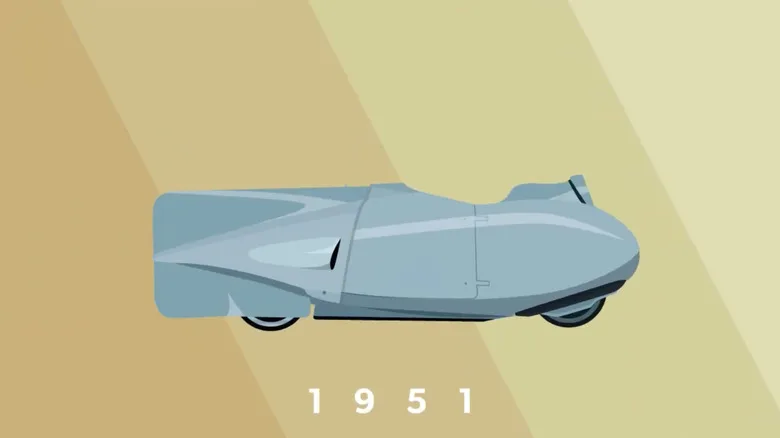
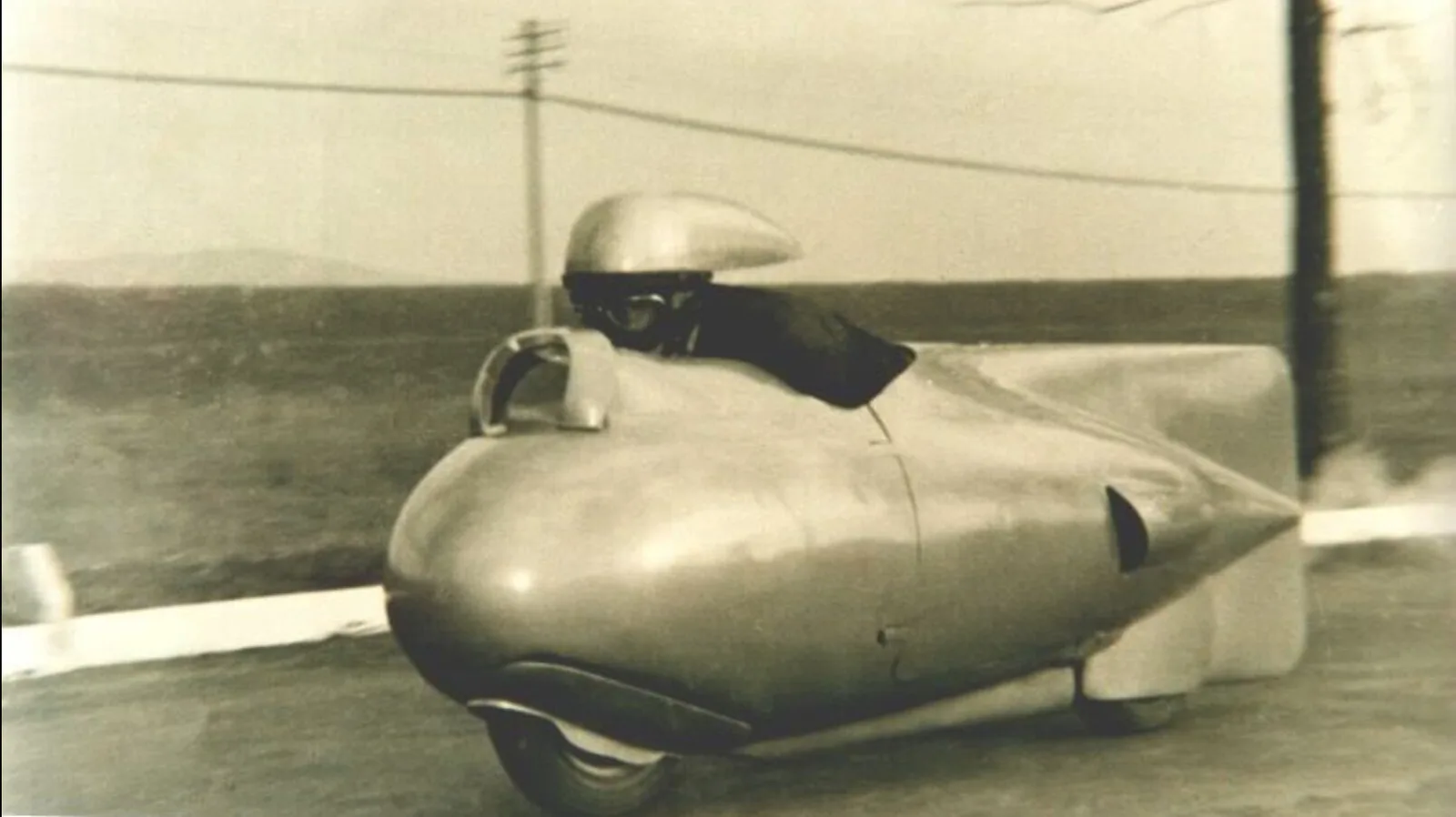
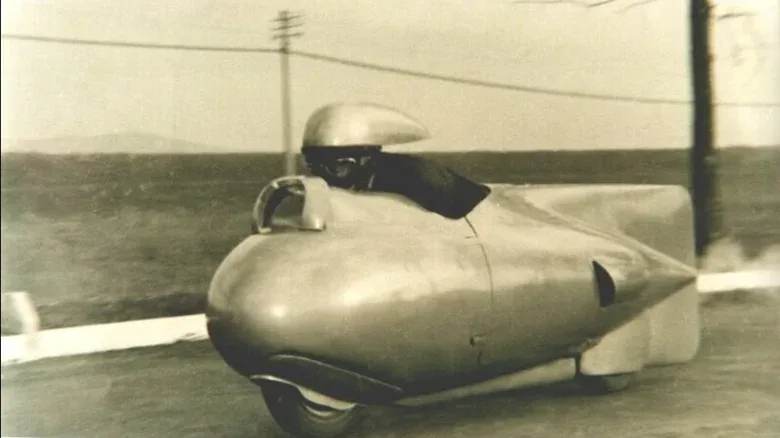
Then came the **Siluro**, or “torpedo,” a machine so bizarre it defied categorization. Resembling a jet-powered rocket on two wheels, the Siluro came in two configurations: one with the driver seated forward, the other with the rider kneeling. Powered by a 125 cc two-stroke single-cylinder engine with opposed horizontal pistons—running on alcohol—it produced **18 HP** and was built to obliterate the standing kilometer record. In 1951, it delivered, blasting through the 100-meter dash from a standstill in **20.24 seconds** with an average speed of **106 mph**.
Vespa’s racing obsession peaked with the **125 6 Giorni**, a durable endurance racer with a reinforced frame, a spare tire mount, and a mission to prove Vespa’s toughness. It dominated the National Trophy and racked up nine gold medals at the 26th International Six Days Trial (now the International Six Days Enduro). By the mid-1950s, Piaggio had had enough of the track. The Vespa returned to its roots as a practical scooter—though its racing legacy, from the Siluro’s torpedo shape to the Montlhery’s record haul, remains one of the weirdest and most audacious chapters in two-wheeled history. Decades later, Piaggio toyed with a racing comeback, but the golden age of Vespa on the track had already cemented its place as a legend.
📱 Follow our Telegram channel for daily updates
Source: Jalopnik (Auto Culture & Tuning) (jalopnik.com)