🔔 Read us on Telegram — don’t miss the latest automotive news → t.me/motorhub_en
A 500-horsepower V8 is a magic number in the car world, and Ford’s Coyote-based powerplant has been hitting that benchmark for years. The 5.0-liter Coyote V8 debuted in the 2011 Ford Mustang GT, replacing the outgoing 4.6-liter 3V V8 and jumping from 315 to 412 horsepower.
As the S197 platform gave way to the S550 and later the S650, the Coyote evolved, eventually pushing 486 horsepower in the S650 GT with a performance exhaust. Ford then took the Coyote to its natural limit in the Mustang Dark Horse, adding forged connecting rods and a specially balanced crankshaft to coax 500 horsepower and 418 pound-feet of torque from the naturally aspirated V8.
That’s enough to launch the Dark Horse from 0-60 mph in 3.7 seconds with its 10-speed automatic transmission. But 500 horsepower isn’t exclusive to modern pony cars.
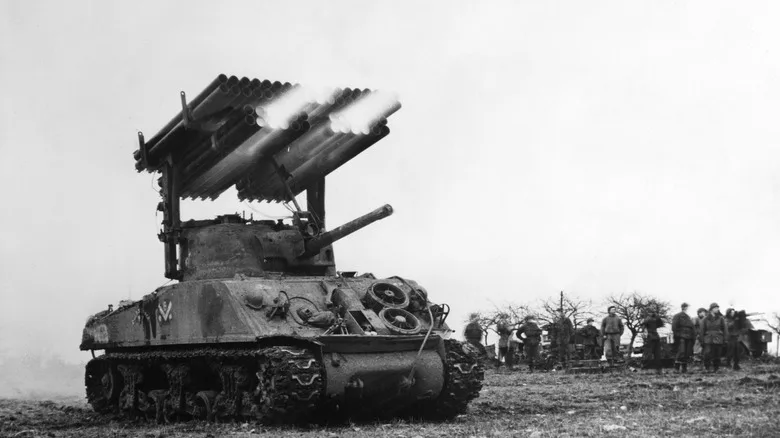
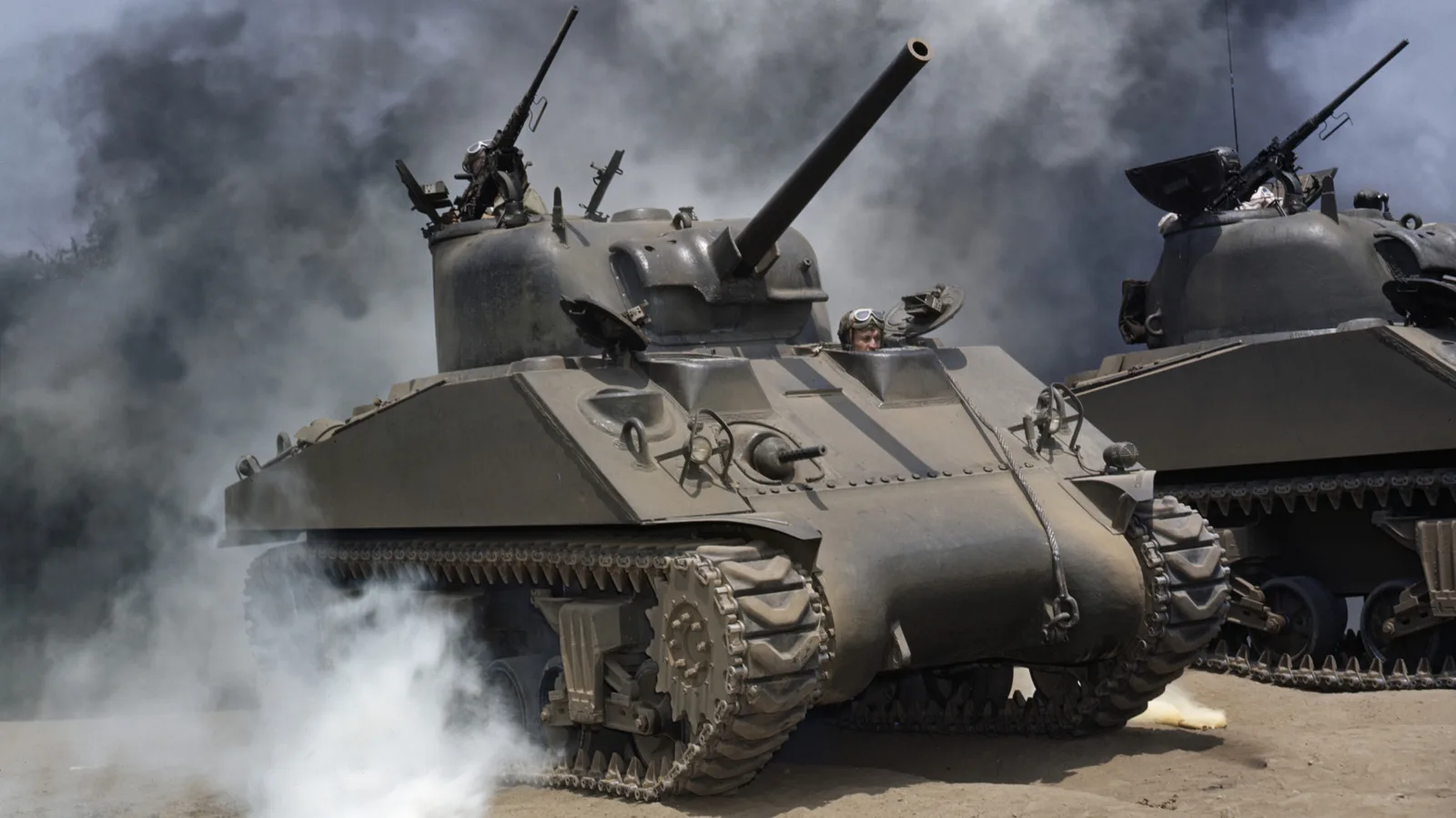
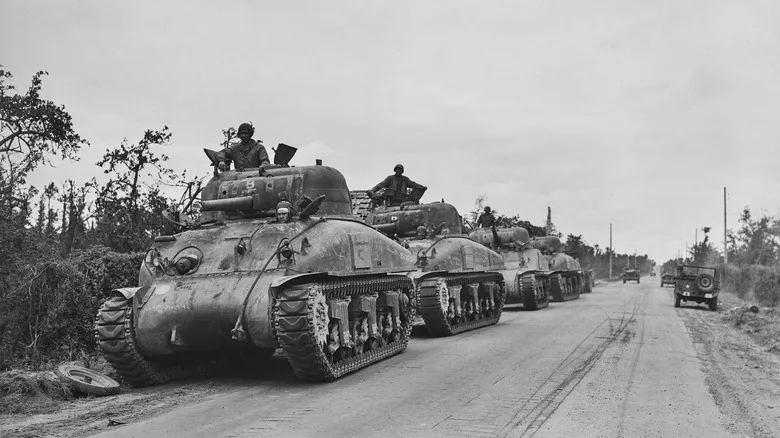
Decades earlier, the Ford Motor Company built a 500-horsepower V8 for a very different kind of war machine: the M4 Sherman medium tank. The Ford GAA was a massive 18-liter (roughly 1,100 cubic-inch) gasoline V8, Ford’s largest-ever gasoline-powered engine.
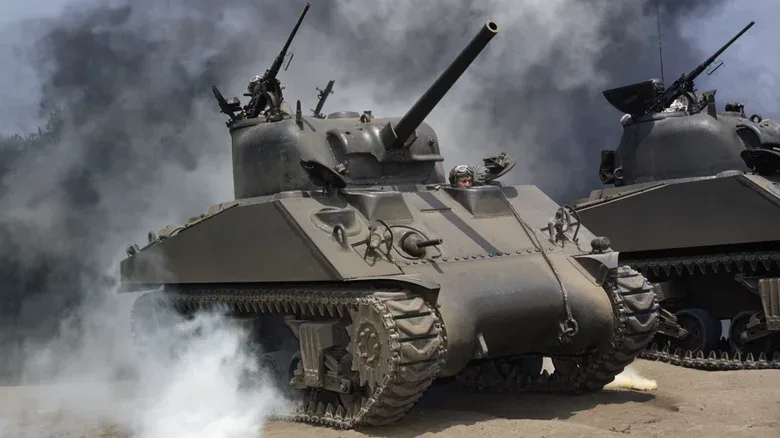
It produced 500 horsepower at just 2,600 RPM—far below the Dark Horse’s 7,500-RPM redline. The Sherman tank, powered by the GAA in the M4A3 variant, weighed over 68,000 pounds and topped out at around 26 mph on level ground.
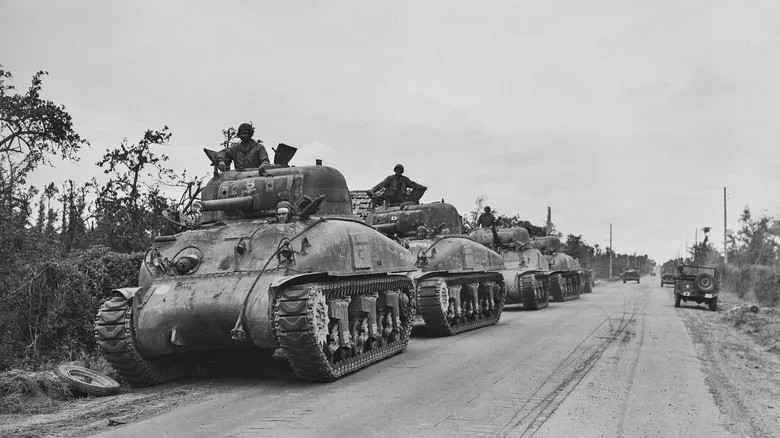
While the Dark Horse’s 500 horses translate to neck-snapping acceleration, the Sherman’s power was all about reliability and ease of repair in the field. The Sherman’s nickname, “Ronson,” referenced a popular lighter brand and its slogan “lights every time,” a nod to the tank’s tendency to catch fire when hit.
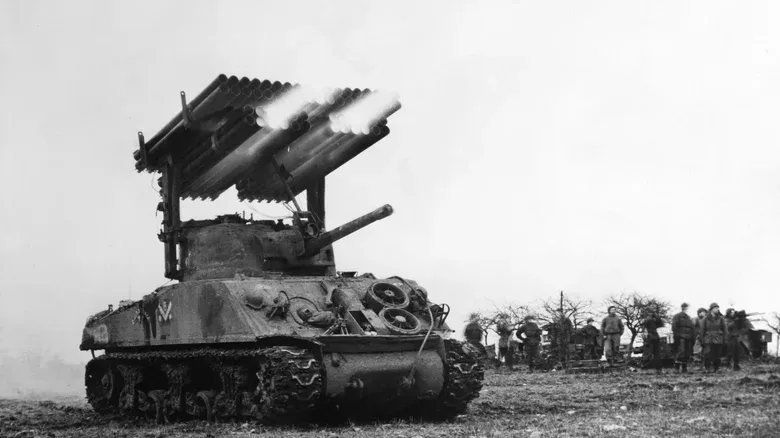
Despite its flaws, the Sherman’s real strength was its massive production run—over 50,000 units built from 1942 to 1945—thanks to America’s industrial might, including Ford’s contributions. The Ford GAA wasn’t the only engine option for the Sherman; the Chrysler A57 used a multi-bank design with five inline-sixes to get the tank moving.
But whether it’s a Mustang Dark Horse tearing up a drag strip or a Sherman rumbling across a battlefield, 500 horsepower is a benchmark that transcends eras and applications.
📱 Follow our Telegram channel for daily updates
Source: Jalopnik (Auto Culture & Tuning) (jalopnik.com)