
🔔 Read us on Telegram — don’t miss the latest automotive news → t.me/motorhub_en
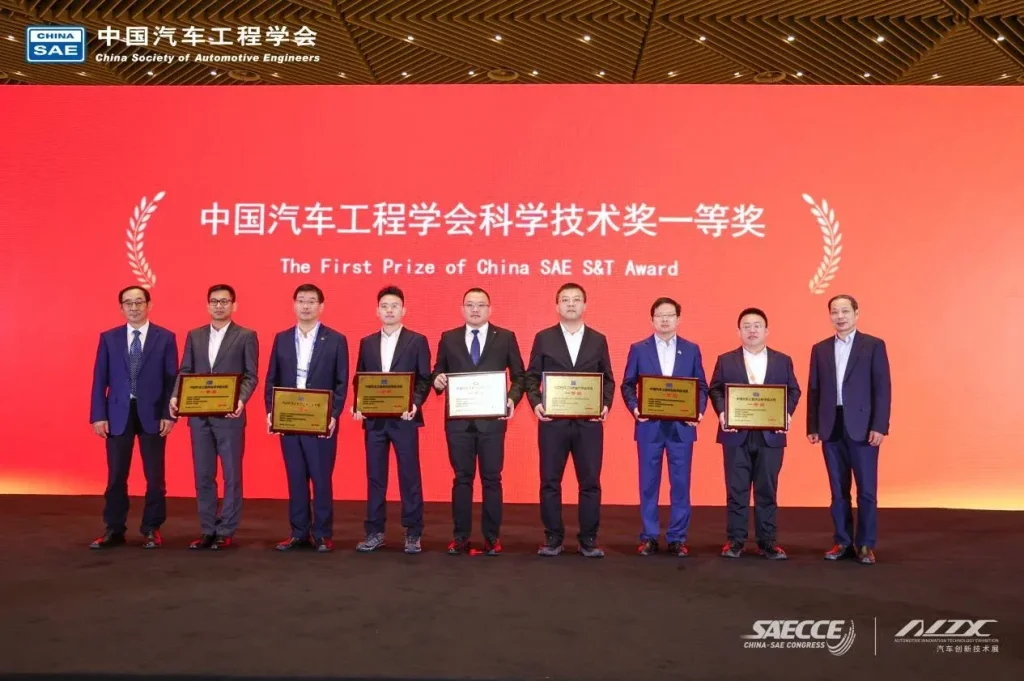
EV Nio’s 925V motor packs 19 kW/kg and doubles as a 200 kW charger to take top engineering prize 4 min to read Nov 2, 2026 5:16 AM CET Nio 900V electric drive unit. Credit: Nio Understand China EV’s Market Real-time notifications when critical EV data is released All important data in one place 2,000,000+ data points Become a member A Nio -led electric drive project has won First Prize at the 2026 China Society of Automotive Engineers (China-SAE) Science and Technology Progress Awards, with newly disclosed figures showing a motor power density of 19.06 kW/kg, a controller power density of 226.92 kW/L and peak voltage-boosted charging power of 202.78 kW. Announced on October 28, the award recognises a 925V continuous-wave winding electric drive system developed by Nio, Tongji University, Harbin University of Science and Technology, and Baoshan Iron & Steel. The project covers three areas: mass-producing high-voltage-insulated continuous windings, integrating thermal management into a compact drive unit, and reusing electric drive hardware for voltage-boosted charging. The technology entered mass production in December 2024 and is now used in several Nio and Onvo models. The award disclosures detail the manufacturing challenges behind the winding design, particularly forming long, rigid copper conductors without damaging their insulation. Motor density and the 925V architecture The project reports a motor power density of 19.06 kW/kg and a controller power density of 226.92 kW/L. These figures describe separate components and should not be compared directly with ratings for complete integrated drive units, which can include a reduction gearbox, differential, inverter and housing. The 925V architecture places greater demands on winding insulation, making material selection and manufacturing consistency central to the development. How Nio industrialised continuous wave winding Nio’s W-Pin architecture uses continuous rectangular copper conductors formed into the stator winding, rather than assembling numerous separate copper segments through bending and welding. The manufacturing process uses 12 flat copper wires, each five meters long, which precision tooling forms into 24 bends. Their length and rigidity make it difficult to preserve conductor geometry and insulation during forming. The engineering team initially tried a 180-degree flip-bending method. Repeatedly rotating the conductors caused them to stretch and threatened insulation integrity. The team abandoned the approach in favour of a planar forming process that bends the wires without repeated rotation. The resulting process controls the insulation layer to 0.14 mm and keeps motor assembly tolerances within 0.02 mm. Damage to a continuous conductor or its insulation can compromise the winding assembly. Unlike conventional hairpin windings, which use separate copper segments joined at their ends, the continuous design reduces intermediate electrical joints. It requires precise control of conductor positioning and insulation throughout production. Nio received the First Prize at the 2026 China-SAE Science and Technology Progress Awards during the SAECCE congress. Credit: China-SAE High-voltage endurance and boost charging The 925V architecture places additional demands on electrical insulation, particularly under rapid switching by the silicon carbide (SiC) power electronics. Testing included 1,300 hours of continuous high-temperature operation without failure. A separate high-altitude programme accumulated more than 500 hours under simulated conditions at 5,500 meters, combining sustained high-voltage operation, switching at up to 15,000 times per second and sudden increases in motor speed. Other tests included three-axis random vibration at up to 5.5g and exposure to temperatures ranging from -40°C to +85°C for more than two months. Reduced atmospheric pressure at high altitude can lower the dielectric strength of air gaps, increasing demands on winding insulation. The drive system also incorporates voltage-boosted charging, reusing electric drive hardware instead of requiring a separate dedicated boost converter. The motor windings provide the inductance needed for voltage conversion, while the inverter’s switching devices control the process. This allows incoming DC voltage from lower-voltage charging infrastructure to be raised for the high-voltage battery. The project reports peak voltage-boosted charging power of 202.78 kW, although actual output depends on the charger and vehicle operating conditions. Production across Nio and Onvo models Nio began developing electric drive technology in 2015 and has since progressed through four generations. The continuous wave-winding system entered mass production in December 2024, with the project disclosures reporting million-unit-scale production. The technology is used in the Nio ET9, ES8 and ES9, as well as the Onvo L90 and L80. The project also cites 146 authorised patents and contributions to six Chinese national automotive standards. The Nio ET9’s technical debut introduced the company’s high-voltage electric drive direction. Everyone’s a China auto expert lately. Trusted by industry professionals for 16 years. See the information you trust first: Add CarNewsChina as a preferred source on Google. Add as preferred source Nio Recommended for you Nio’s Firefly launches 60 kWh battery version: same size, same weight, more range Nio’s Firefly upgrades lineup with new 60kWh battery model launching October 23, report says China’s busiest holiday reveals Nio’s swapping efficiency triples BYD’s Flash Charging Most important news in your inbox. Recaps · scheduled All you need, in one email. Instant alerts · real-time Ping me when an article goes live. 0 of 27 topics selected Bundle into one email per day — instead of one email per article Follow us for EV updates Join our Telegram Follow us on Google News Comments
📱 Follow our Telegram channel for daily updates
Source: Car News China