🔔 Read us on Telegram — don’t miss the latest automotive news → t.me/motorhub_en
With gasoline prices hovering near four-year highs, fuel efficiency has become a top priority for buyers shopping for a new car. Toyota, which commands nearly half the hybrid market in the U.S., offers two strong contenders: the Prius hatchback and the Camry sedan. Both are now hybrid-only in their latest generations, making them direct rivals in the quest for maximum miles per gallon (MPG).
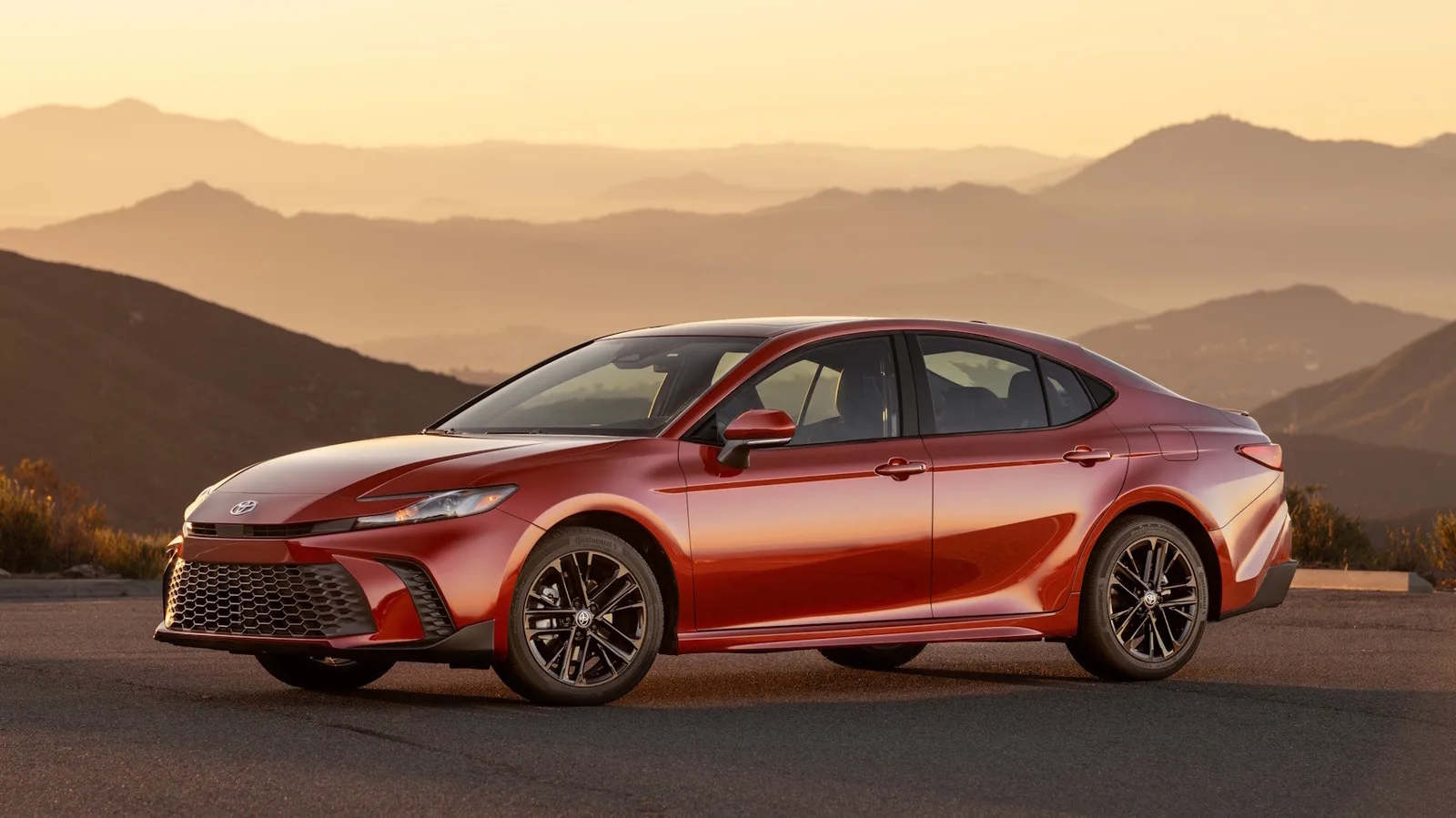
The 2026 Toyota Camry delivers a combined EPA-rated fuel economy of 51 MPG in its base LE trim with front-wheel drive (FWD). Opting for all-wheel drive (AWD) reduces that figure to 50 MPG. Higher trims like the SE, Nightshade, XSE, or XLE drop combined fuel economy to 47 MPG with FWD, and as low as 44 MPG with AWD on the XSE. Real-world testing by Consumer Reports found the Camry SE with FWD achieving 48 MPG overall—1 MPG better than the EPA’s estimate—while highway fuel economy hit 54 MPG, 7 MPG above the government rating.
The 2026 Toyota Prius, meanwhile, starts at 57 MPG combined in its base LE trim with FWD. AWD versions of the Prius LE are rated at 54 MPG combined. Moving up to higher trims such as the XLE, Nightshade, or Limited with FWD drops combined fuel economy to 52 MPG, while AWD versions of these trims fall to 49 MPG. Consumer Reports’ real-world testing of a Prius XLE with FWD returned 51 MPG overall—1 MPG below the EPA rating—but an impressive 59 MPG on the highway, 7 MPG higher than the official estimate.
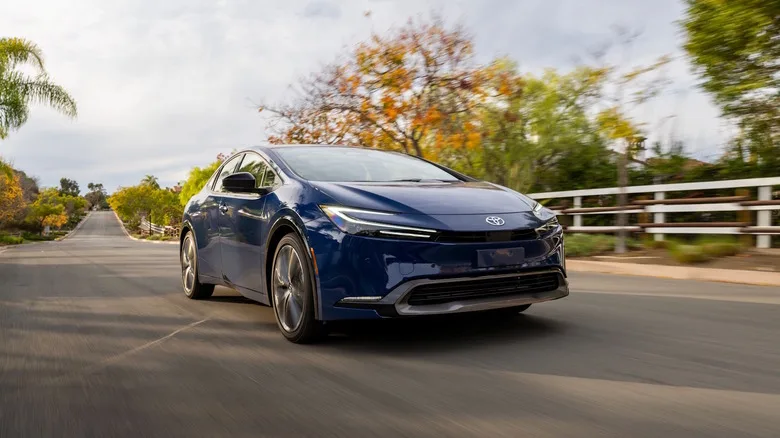
The EPA calculates combined MPG using a weighted blend of 55% city and 45% highway driving. While the Prius consistently outperforms the Camry in fuel economy across most trims and drivetrains, the gap narrows significantly when comparing higher-spec models or AWD variants. For buyers prioritizing maximum efficiency, the Prius remains the clear winner, especially in base trims. The Prius also holds the world fuel-economy record at 93.2 MPG, a testament to its engineering focus on efficiency.
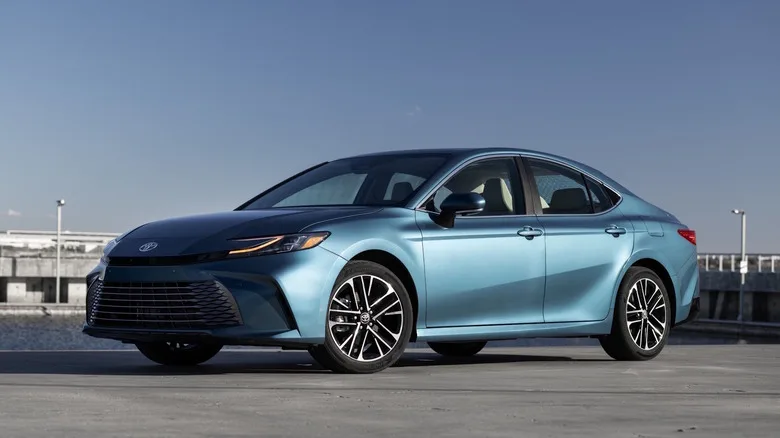
Price-wise, the 2026 Camry LE starts at $32,120 with FWD, while the Prius LE begins at $29,845. Adding AWD increases the Camry LE’s price by $1,525 and the Prius LE’s by $1,400. At the top end, the Camry XSE is priced at $42,230, and the Prius Limited at $40,370. Both vehicles share a hybrid powertrain architecture, but their outputs differ: the Camry’s 2.5-liter inline-four hybrid system produces 225 horsepower with FWD (232 HP with AWD), while the Prius’s 2.0-liter inline-four hybrid unit generates 194 horsepower (196 HP with AWD). Despite the Camry’s higher output, both cars achieve nearly identical 0-to-60-mph acceleration times of around 7.0 to 7.1 seconds with FWD.
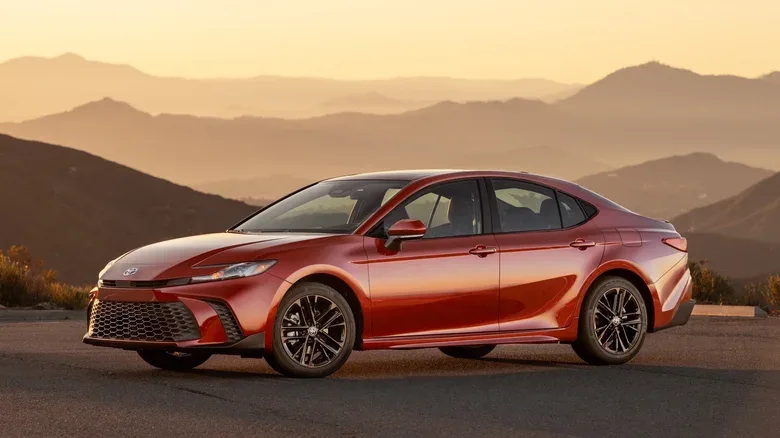
Beyond fuel economy and performance, body style and interior space set the two apart. The Camry is a traditional sedan with up to 99.9 cubic feet of passenger volume, 42.1 inches of front legroom, and 38.0 inches of rear legroom. The Prius, a five-door hatchback, offers 91.2 cubic feet of passenger volume, 43.2 inches of front legroom, and 34.8 inches of rear legroom. For buyers who value cargo flexibility and a more upright hatchback design, the Prius may have the edge, while the Camry appeals to those preferring a conventional sedan layout and slightly more rear seat space.
📱 Follow our Telegram channel for daily updates
Source: Jalopnik