
🔔 Read us on Telegram — don’t miss the latest automotive news → t.me/motorhub_en
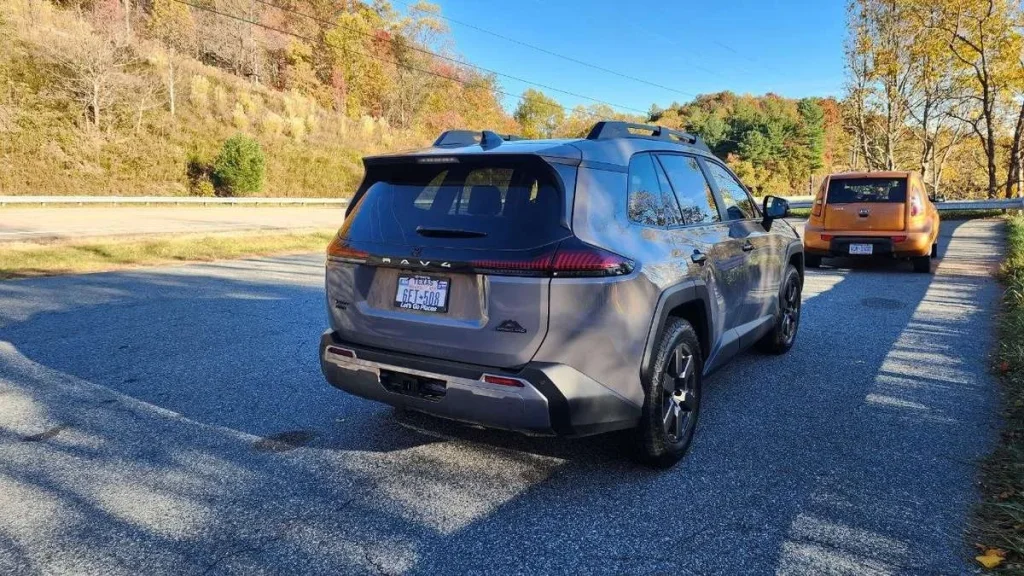
A Toyota Highlander owner recently traded their 18-MPG SUV for a RAV4 Plug-In Hybrid and managed to drive 62 miles on pure electric power during an initial trip in Colorado. To see if the switch makes sense for everyday drivers, a week-long test covering roughly 450 miles was conducted in a 2026 Toyota RAV4 Woodland Plug-In Hybrid. Testing revealed that even without plugging the vehicle in a single time, the trip computer averaged 38.4 MPG, beating the EPA’s 37 MPG gas-only rating. The vehicle was driven from Charlotte to Blowing Rock in the North Carolina mountains at over 3,500 feet elevation, around Charlotte, and about 90 miles south to Columbia, South Carolina. Gas was purchased once in Hickory for $2.89 a gallon. Based on 15,000 miles of driving per year and gas at $2.89 a gallon, the 18-MPG Highlander costs about $2,408 annually in fuel, while the uncharged RAV4 Plug-In Hybrid costs about $1,129, resulting in a yearly savings of about $1,279 or roughly $6,400 over 5 years. However, moving from a Highlander to a RAV4 means giving up a third row of seating and some cargo space. Under the hood, the RAV4 Plug-In Hybrid combines a 2.5-liter four-cylinder engine with electric motors to pump out 324 horsepower, making it the most powerful RAV4 available. The Woodland trim comes with a tow hitch receiver and a 4-pin connector, rated to tow up to 3,500 pounds. Comparing costs, the regular RAV4 Hybrid Woodland starts at $41,350 including destination, while the Plug-In Hybrid Woodland tested starts at $46,750 including destination, representing a price difference of about $5,400. The test vehicle specifically was a 2026 RAV4 Woodland Plug-In Hybrid AWD in Urban Rock, built in Obu, Aichi, Japan. The window sticker breakdown showed a base price of $45,300, a power tilt and slide moonroof for $850, an accessory-ready LED lantern for $160, black chrome wheel locks for $90, and a delivery, processing, and handling fee of $1,450, bringing the total to $47,850. Standard Woodland equipment includes 18-inch alloy wheels with all-terrain tires, Rigid Industries LED fog lights, raised black roof rails with cross bars, a power liftgate, a Panoramic View Monitor with Multi-Terrain Monitor, all-weather floor and cargo liners, a 120-volt, 1,500-watt cargo power outlet, heated front seats, a heated steering wheel, a windshield de-icer, a 10.5-inch touchscreen, a 12.3-inch digital gauge cluster, wireless Apple CarPlay and Android Auto, a wireless charger, and five USB-C ports. The 2026 model features a CCS1 charging port capable of DC fast charging, whereas the 2027 model will switch to a Tesla-style NACS port. Additionally, Toyota is reducing complimentary ToyotaCare maintenance from 2 years to 1 year for the 2027 model year, meaning the 2026 model keeps 2 years or 25,000 miles of free maintenance. Ultimately, the plug-in hybrid makes sense for drivers who can charge at home, keep most daily trips under 40 miles, do not need a third row, and want maximum power and towing capacity. Drivers who cannot charge at home are better off buying the regular hybrid to save the initial $5,400 price difference.
📱 Follow our Telegram channel for daily updates
Source: Torque News