
🔔 Read us on Telegram — don’t miss the latest automotive news → t.me/motorhub_en
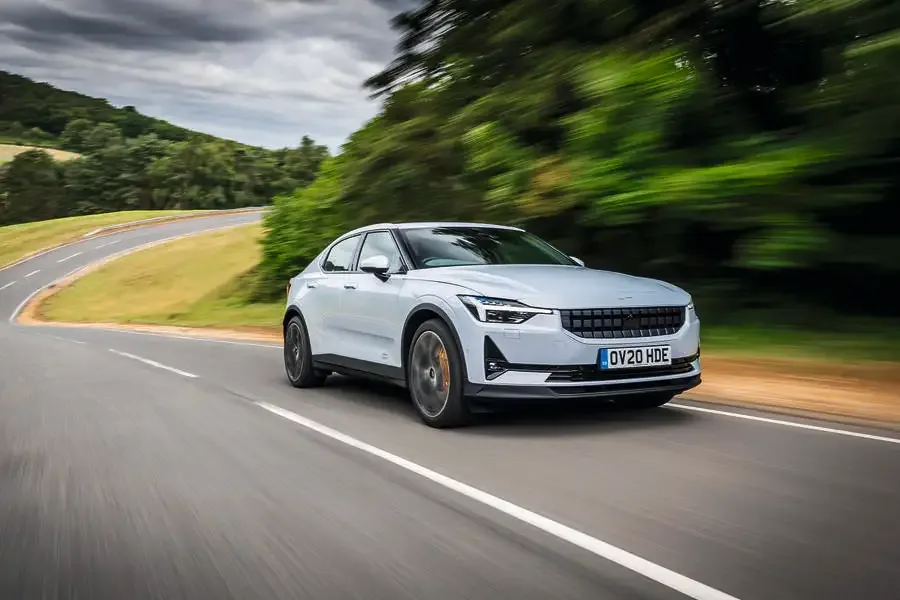
As Polestar 2 production ends, we reflect on the UK’s peculiar affection for this Scandi-cool EV A car maker finishing production of a hatchback when its replacement is just around the corner wouldn’t always count as significant news. But there’s something about the Polestar 2 and the way it has defined the brand – plus the timing of its departure and its replacement coming at a particularly uncertain-feeling juncture – that makes it feel unusually important. The 2 was the defining Polestar model but not the first Polestar. As its name suggests, amid Polestar’s daft naming policy, which only makes sense when listing the order in which its cars were introduced, it was the second Polestar to arrive. Just after the Volvo spin-off stopped being a performance variant of the Swedish mothership and morphed into a car maker in its own right, Polestar was going to be an all-electric brand, owner Geely told us, just as it introduced the Polestar 1, a plug-in hybrid and formerly a Volvo concept (some say it achieved as many genuine UK sales as the number in its name). But we liked it. I nominated it as my car of the year in one of those blind-prejudice Christmas features in 2020, having spent time in Sweden with Polestar’s development engineers and thrown around a test track as they demonstrated the finer elements of its handling tuning that included showing off the capabilities of the 1’s swanky adjustable Öhlins dampers. It looked then like this was a car – a brand, maybe – for car geeks beyond the level of a GTI driver who might scroll through a touchscreen to set their preferred adaptive damping level for their local roads; no, this was for those prepared to get grubby around the wheels to twiddle actual knobs to optimise ride and handling. The 2 duly arrived with an option to do just that, if you chose the Performance Pack variant. I ran one as my daily wheels for six months. It was written in the manual that one should put the car on stands and remove the front wheel and wheel-arch lining to gain access to the clickers on the front dampers. But I have the forearms and dexterity of a chipmunk so, with the front wheels on lock, could reach through the liners to adjust them without using any tools. This was so much simpler that I think I did it all of twice. But the 2 was pretty good to drive all the time – and genuinely good if you could get the dampers in the right mood. In this gig it’s not always the case that I’ll remember specific cars, let alone individual journeys, yet I distinctly recall being on a back road in the Hertfordshire/Essex borderlands when it felt that the longer my drive went on, the better the 2 dealt with that B-road.
I wondered if it was because the dampers were getting more fluid and responsive as they warmed up, thanks to the challenging inputs. Never did quite find out if that was a possibility. The fine damping joined decent steering and spectacular straight-line performance, of the kind to which we’re blithely accustomed now but weren’t then. With four-wheel drive and up to 402bhp at launch, the 2 would have been many former diesel owners’ first taste of, literally and figuratively, electrifying acceleration. Also their introduction to some less welcome car industry initiatives: for £1000, Polestar would turn up the power output remotely via a software update, from 402bhp to 470bhp. Which meant the performance existed in the car in the first place, and only a line of code was needed to unlock it. Proponents of the idea pointed out that it was quite normal for, say, two diesel engines to be sold that were mechanically identical but that one had more power than the other owing to the software they were equipped with. But somehow it still stuck in the craw a bit: the power existed, the code was written, it’s not like it really cost £1000 to send it. Still, at least if you bought it, it was then yours to keep. Later, Polestar gave the Performance Pack 470bhp as standard. The range, for the time, was fine, with its 75kWh battery giving, in the real world, up to around 240 miles, although improvements to the car and the wider market have improved since. It’s not something that would warrant mention now – not when a BMW i3 or Mercedes-Benz CLA, cars in a similar vein, can cover more than 500 miles. And the 2 was updated during its life to retain some kind of competitiveness against an EV market that was at first catching and then pulling away from it, and it succeeded in a market surprisingly willing to accept new brand names – unlike some other countries. As a result of that, plus a few other things, like Polestar failing to gain traction in the skip fire of the Chinese market, where new brands are spammed into existence in the hope something will stick (with some of the surplus coming here), plus it being delisted from the US on security grounds for being from a Chinese-owned manufacturer, the UK has become not just the 2’s but the brand’s biggest market. Of the near 200,000 2s that were sold globally over the past six years before the production plug was pulled earlier this month (UK stocks will last well into next year), some 40,000 were sold here.
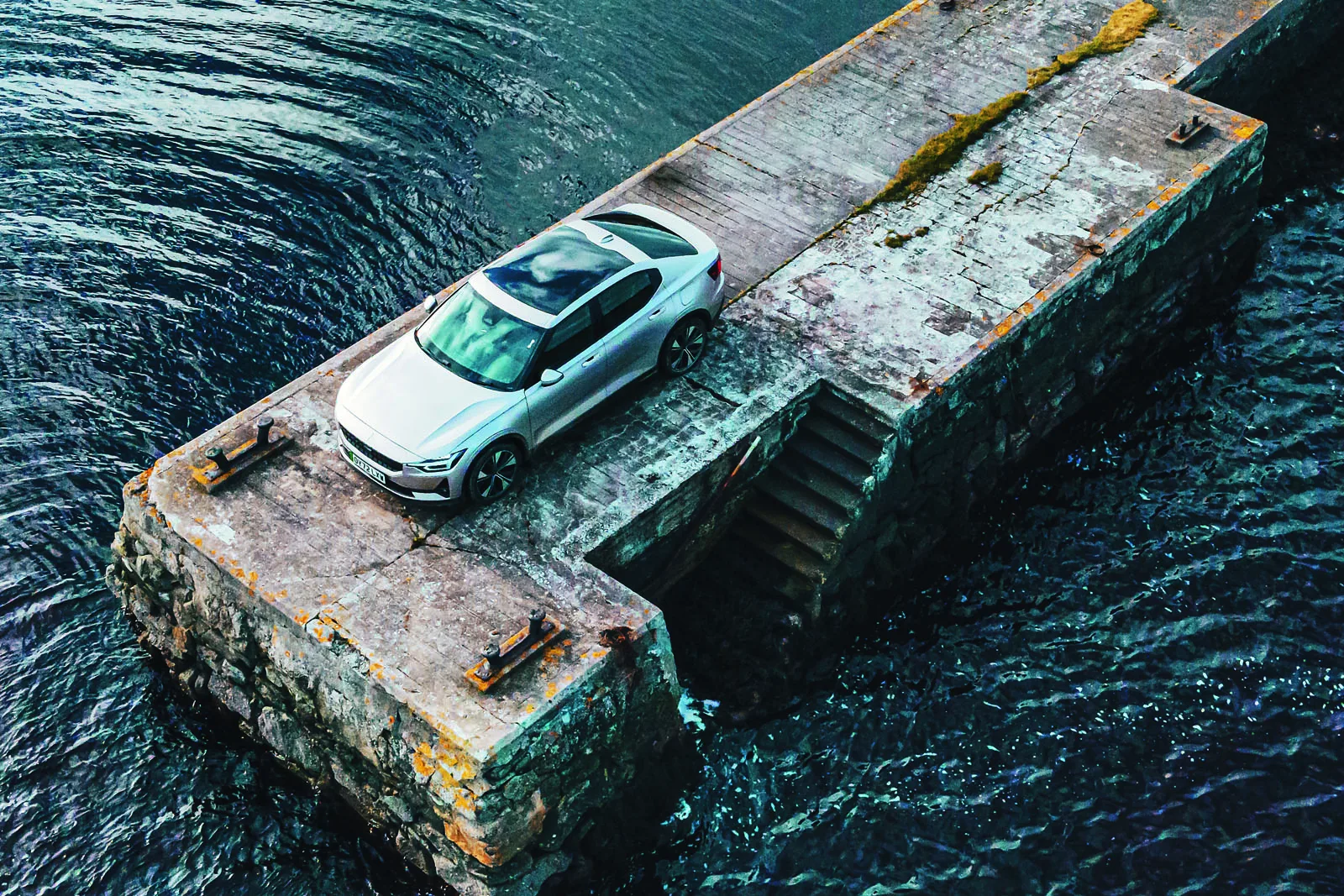
It’s unusual for the UK to hold such significance to a multinational brand’s future, but here we are: Polestar and the specialist car business. Who knew Ariel and a weird former subsidiary of Volvo would have so much in common, beyond both offering manually adjustable dampers? Anyway, also funny to think that a major car company would imagine owners are prepared to kneel on the ground to change the suspension of their cars while thinking those same owners can’t be bothered to twiddle an interior button to change the media source so it should all go on a touchscreen. It’s almost as if the widescale move to de-button cars’ interiors and put everything on screens wasn’t about customer desires…. Presumably, starting with the 2’s incoming replacement, that is due to change. “Customers are very outspoken about that,” Polestar’s CEO Michael Lohscheller told us recently. “They say ‘we want more buttons’. It’s that simple. And yes, we will do buttons.” Beyond that, and beyond some cues from the new Formula 2030 concept car, it’s not entirely clear what other form the 2’s replacement will take. An aerodynamic liftback shape that’s also practical is a given. As are a range and performance that are up to scratch with a market that has now caught what was once a bit of a pace-setter. The new 2 is said to have been fast-tracked to arrive early next year rather than later, so, as yet, other details are pretty sparse. The UK, though, has always been considered a mature market, and it’s thought that if a car performs well here and can please British customers, it ought to be able to please everywhere. We did take the 2 to our hearts in curiously enthusiastic fashion. I’m sure Polestar will be pleased if the same is true of its successor – but more so if it gets more traction elsewhere.
📱 Follow our Telegram channel for daily updates
Source: Autocar UK