
🔔 Read us on Telegram — don’t miss the latest automotive news → t.me/motorhub_en
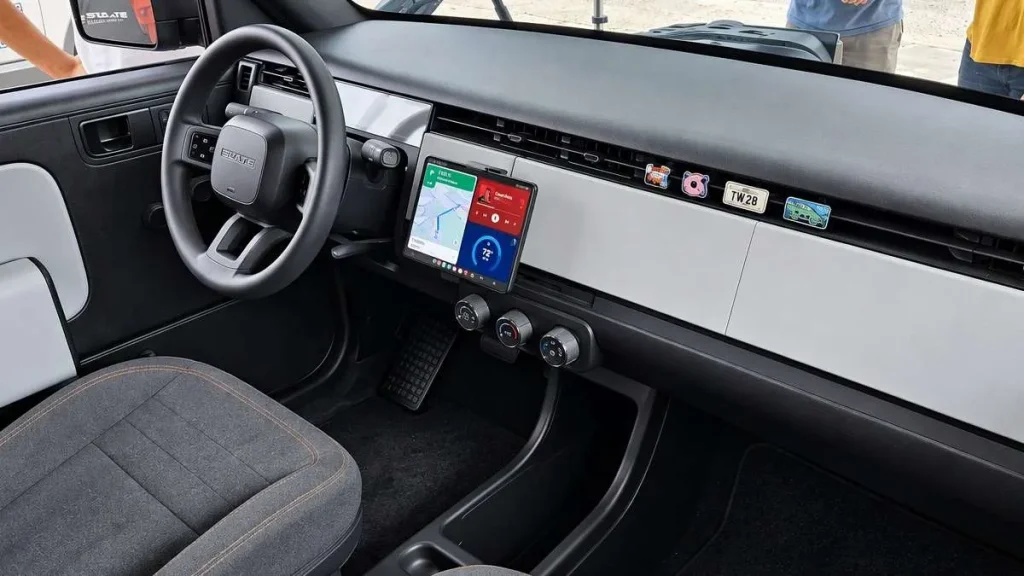
Slate recently introduced a $30 Rand McNally 2027 road atlas tongue-in-cheek as a Screenless GPS, touching a nerve in the automotive community and highlighting a growing debate over whether factory vehicle software is actually improving the driving experience. Former Ford F-150 Lightning owner Blake Lowry reflects on the merchandise, noting that it resonates because many truck buyers are questioning the relentless addition of giant touchscreens, digital interfaces, voice assistants, and subscription services. During his time owning an F-150 Lightning, Lowry increasingly relied on Android Auto via his Samsung Galaxy Z Fold for navigation, music, podcasts, messages, and voice commands, finding that digging into native Ford SYNC menus felt like a step backward. This realization mirrors Slate’s design philosophy for its $24,950 base pickup, which skips a center touchscreen and built-in stereo entirely. Instead, Slate provides a universal phone mount and offloads audio to optional accessory speakers or portable Bluetooth devices, while using a mobile app to handle vehicle data like battery state of charge, efficiency metrics, health, and charging information. Meanwhile, Ford is taking the opposite approach with its upcoming 2027 Ford Fathom. Starting at $28,350 before destination, the Fathom targets similar value-conscious EV truck buyers but bets heavily on vehicle software as a competitive advantage. Built on Ford’s new Universal EV Platform, the Fathom features a centralized software architecture, a large touchscreen, embedded Apple Maps navigation, Apple CarPlay and Android Auto support, BlueCruise-capable hardware, digital-key functionality, and frequent over-the-air updates. The core question facing the industry is whether automakers can build software that drivers actually prefer over the smartphones they carry every day. While nobody is navigating cross-country with a paper atlas, Slate’s joke highlights a broader philosophical split: one approach strips the dashboard back to the essentials and relocates software to the driver’s phone, while the other doubles down on integrated connected services and centralized digital ecosystems.
📱 Follow our Telegram channel for daily updates
Source: Torque News